

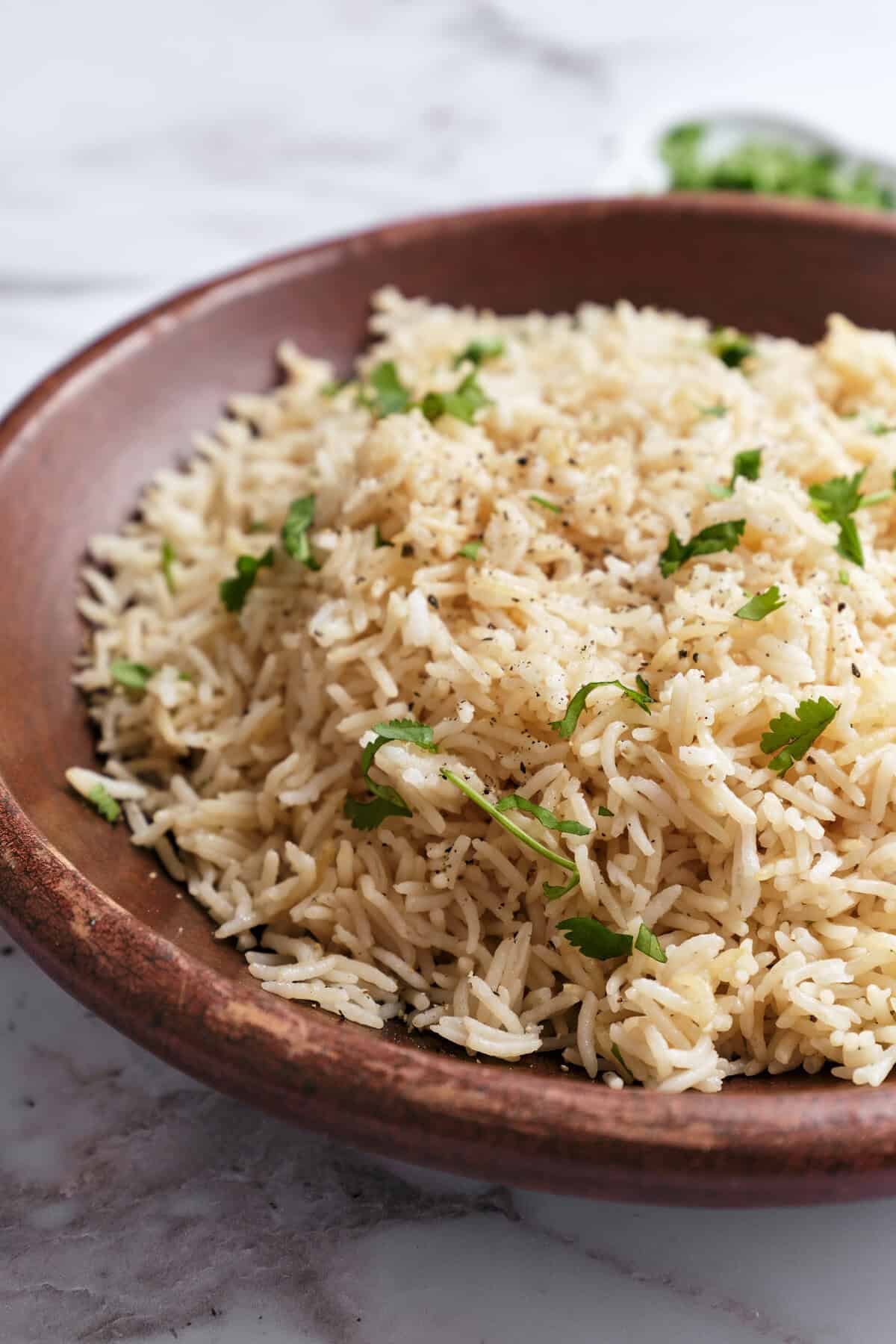
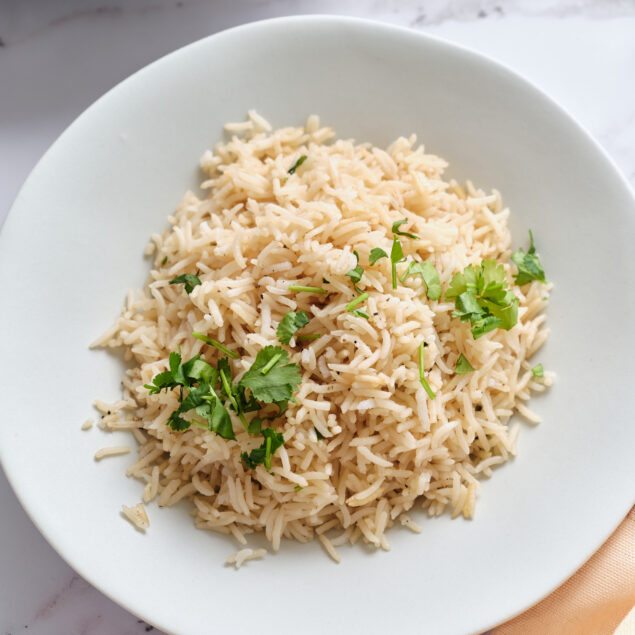
Swap water for bone broth when cooking rice to create a dish rich in amino acids and collagen!
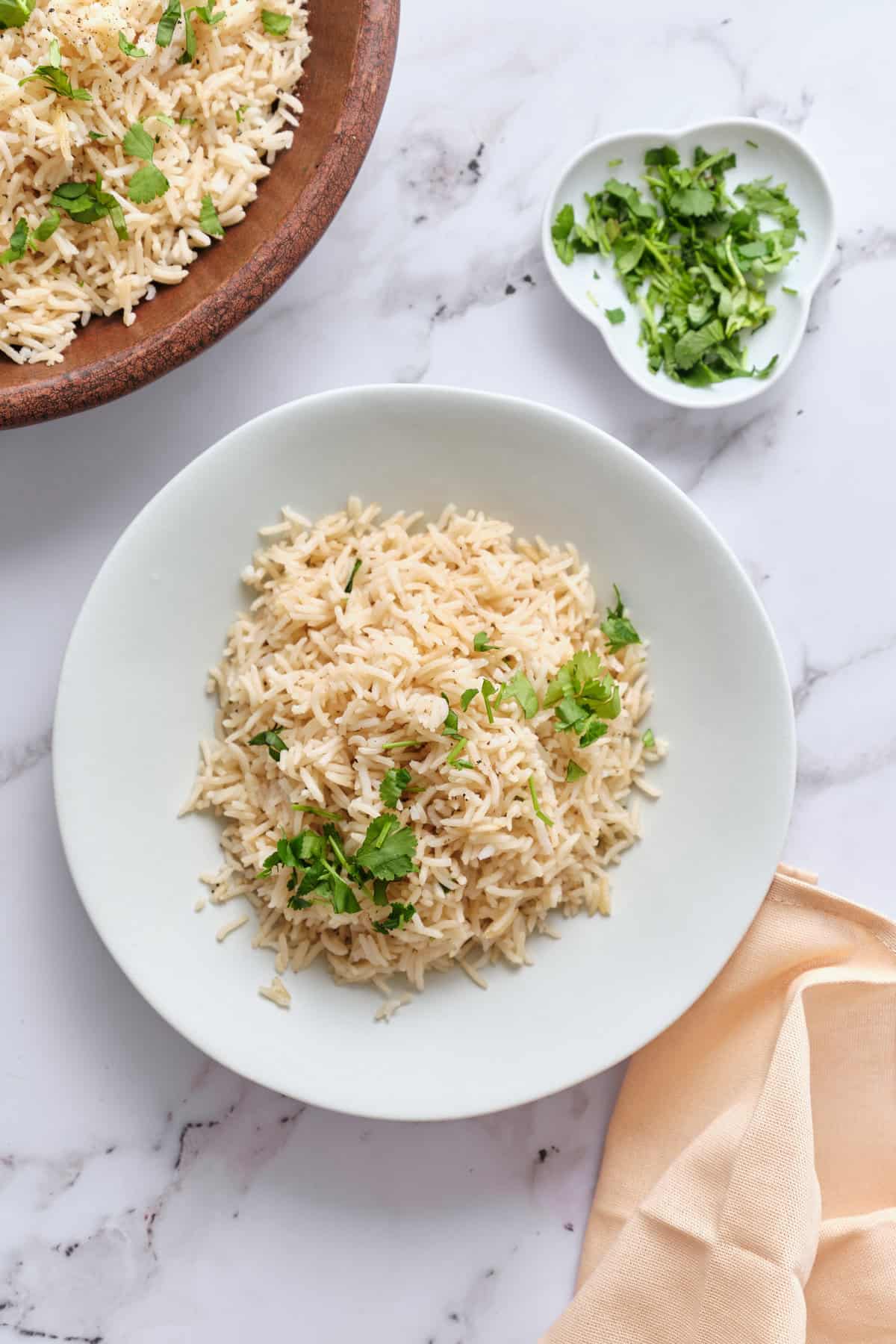
I’ve long used regular chicken or vegetable stock or broth when making plain white rice that was not going to be used in a dish featuring a sauce, but I never thought about using bone broth before. I’m here to tell you that once you try this recipe, you may never go back to using water or regular stock again.
Not only does this recipe offer incredible depth of flavor and nutritional benefits, but it is also incredibly easy to prepare. All you need to do is swap out the water for broth and add some butter or ghee (or olive oil, if preferred). I like to use ghee (clarified butter) as it provides exceptional richness to the rice.
You can prepare this recipe using the stove, Instant Pot, rice cooker, or slow cooker. Just follow the same cooking directions you usually use and sit back and wait for the results. You can thank me later. Make sure to tell us in the comments what you served with the rice. We want to hear about your delicious meals.
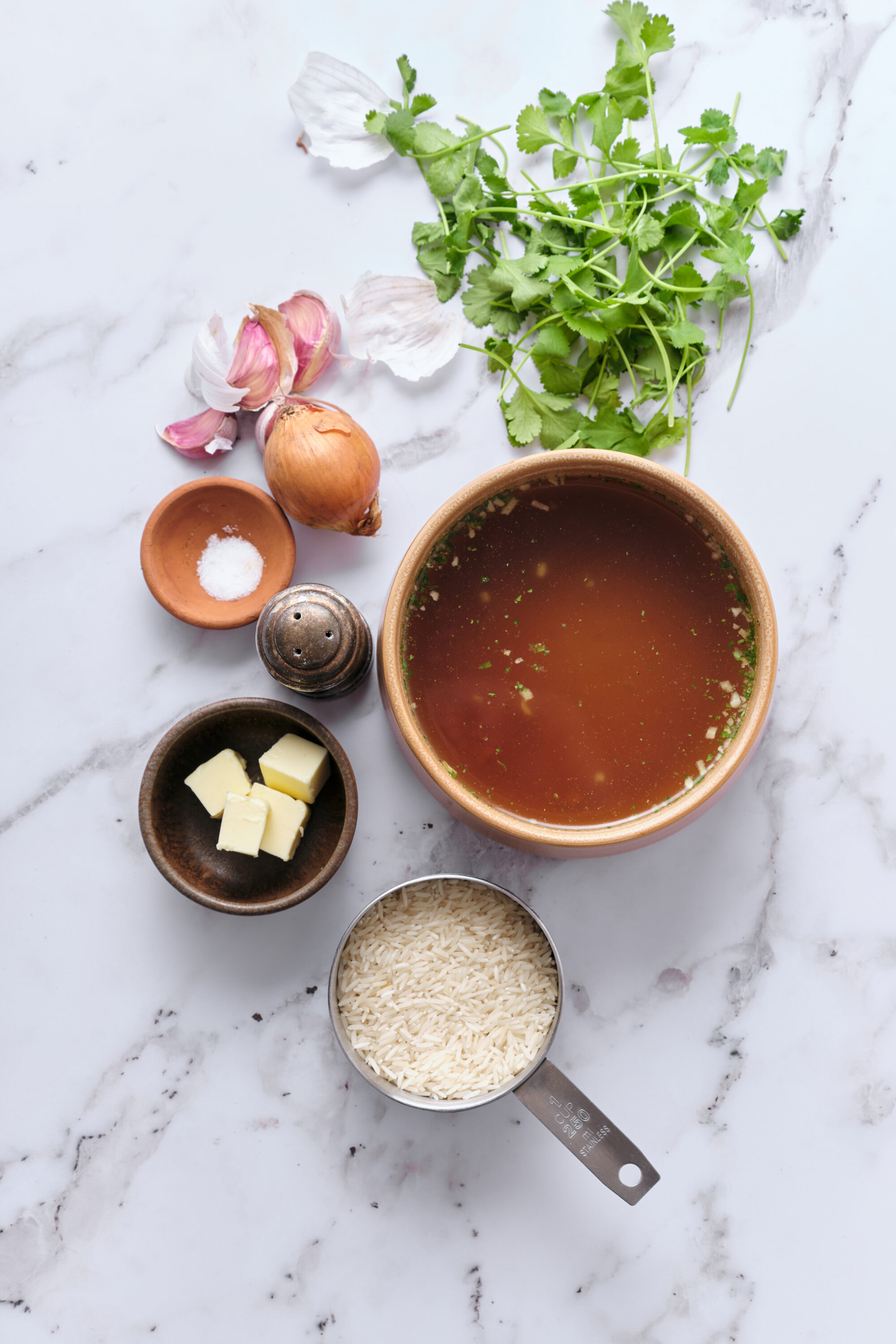
What is the difference between bone broth and regular broth or stock?
There are significant differences between bone broth, regular broth, and stock.
- Bone broth:
This is the most nutritious option of the three, as bone broth, made from animal bones, typically simmers for 12 to 24 hours. During that time, the liquid extracts significant minerals, nutrients, and collagen from the bones. This savory broth is rich in amino acids, protein, and vitamins and can congeal during chilling due to the higher collagen content.
- Regular broth:
Any meat-based broth is typically prepared with meat and vegetables, although it may or may not include bones. Vegetable broth, on the other hand, contains only vegetables as the primary ingredient. The cooking time for this type of base is typically the shortest, usually one to two hours. Broth has the thinnest consistency and often has more flavor than stock.
- Stock:
It is primarily made from the bones of animals (such as chicken, turkey, and cow) and simmers for four to six hours. It has a slightly thicker consistency than broth due to the breakdown of collagen in the bones that seeps into the liquid. While broth is more flavorful, the taste of stock is typically richer and more complex, making it an ideal base choice for soups and sauces.
How do I store leftovers?
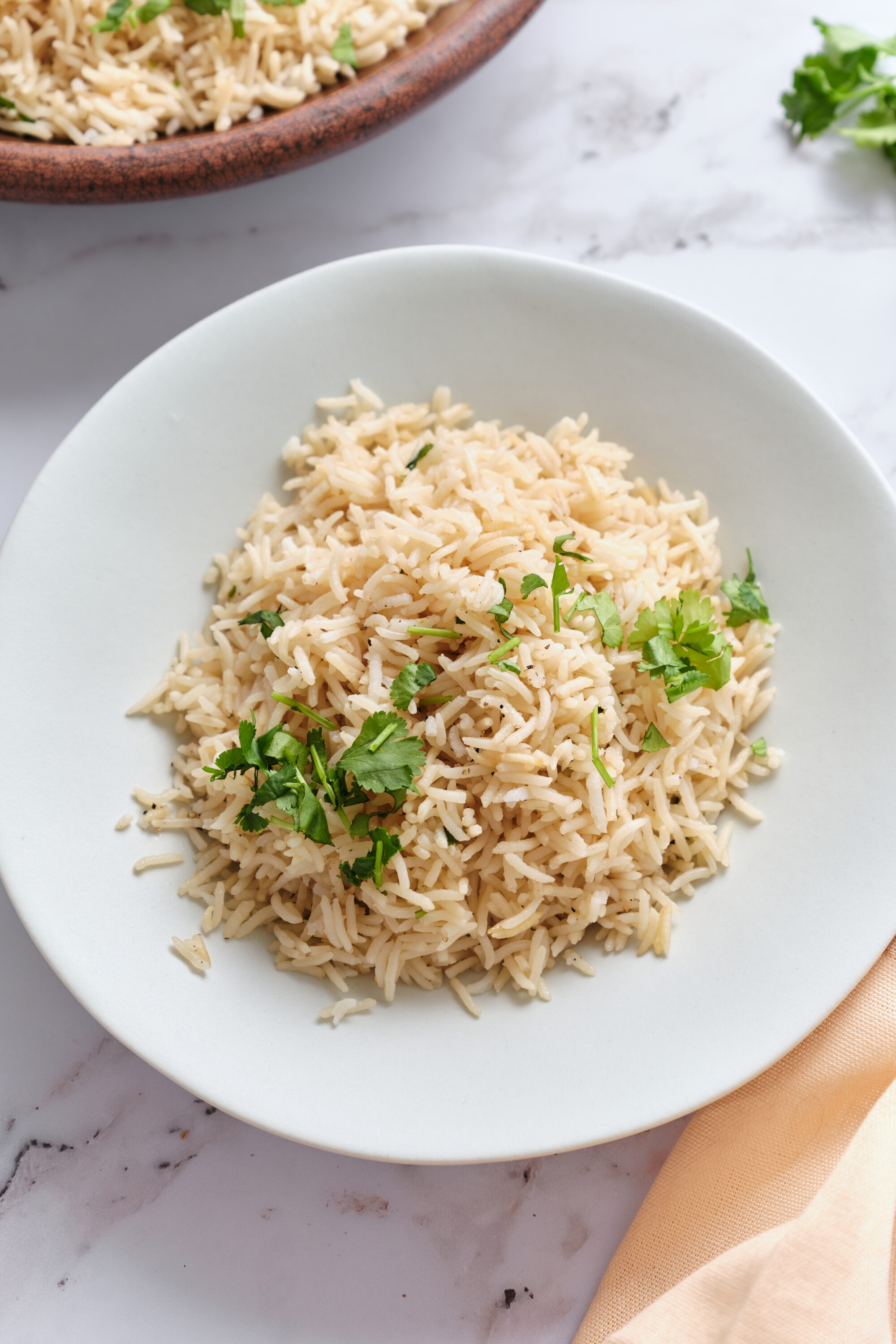
Let bone broth rice cool to room temperature before refrigerating in an airtight container for up to 4 days. Alternatively, you can freeze the bone broth rice in a freezer-safe container for up to 3 months. Defrost the frozen rice overnight in the fridge before reheating.
Serving suggestions
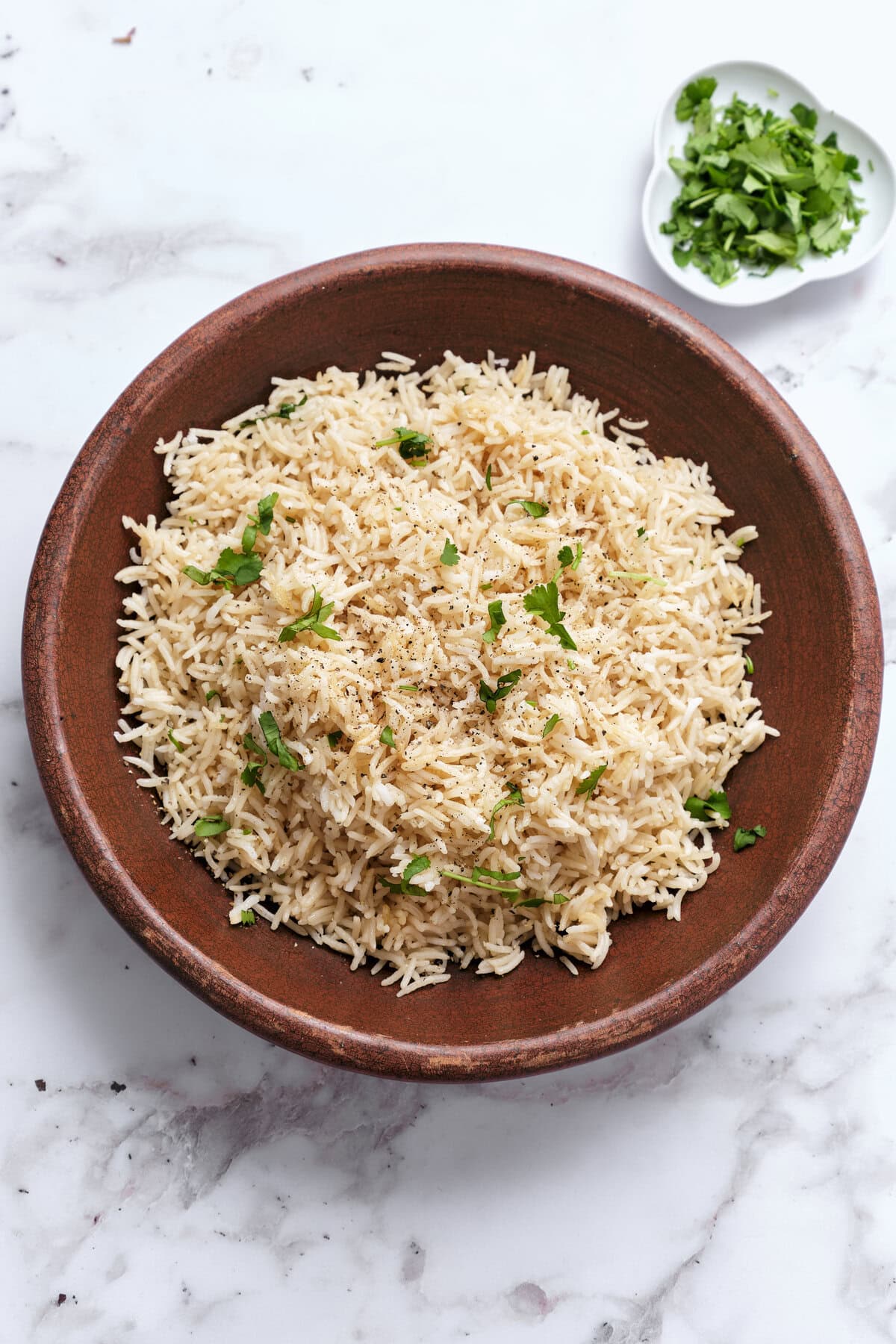
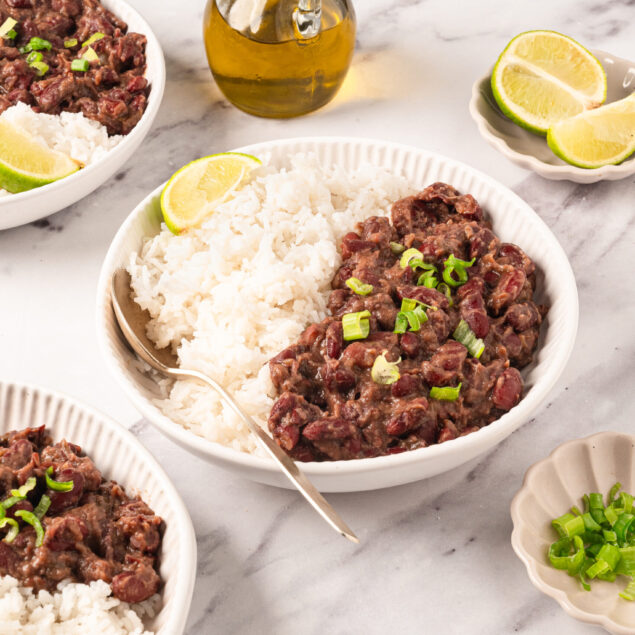
Bone broth rice goes great with most types of protein. I recommend serving it with dishes like Fish En Papillote, Pan-Seared Salmon, Rosemary Steak, Air-Fryer Chicken Drumsticks, and Breaded Pork Chops. Some excellent vegetable side dishes include Roasted Cauliflower And Carrots, Fried Green Beans, and Roasted Brussels Sprouts And Sweet Potatoes.
Ingredients
- 3/4 cup jasmine rice
- 2 teaspoons butter or ghee
- 2 cups bone broth
- Salt to taste
- Pepper to taste
- 2 teaspoons fresh cilantro chopped, plus more for garnish
Instructions
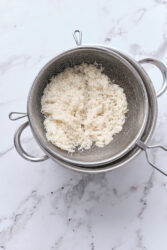
- Place the jasmine rice in a mesh sieve and rinse it under cold water for at least 1 minute to remove excess starch.
- Transfer the rinsed rice to a large saucepan. Add the butter or ghee and pour in the bone broth.

- Bring the mixture to a boil over medium-high heat. Cover the saucepan, reduce the heat to low, and simmer for about 20-23 minutes until the broth is fully absorbed.

- Fluff with a fork and mix in the cilantro. Season with salt and pepper to taste before serving, then sprinkle with additional cilantro for garnish.

Nutrition Info:
Nutrition information are estimates only and may vary based on the specific brands, ingredients, and portion sizes you use. This data is provided for informational purposes only.



Leave a Comment