

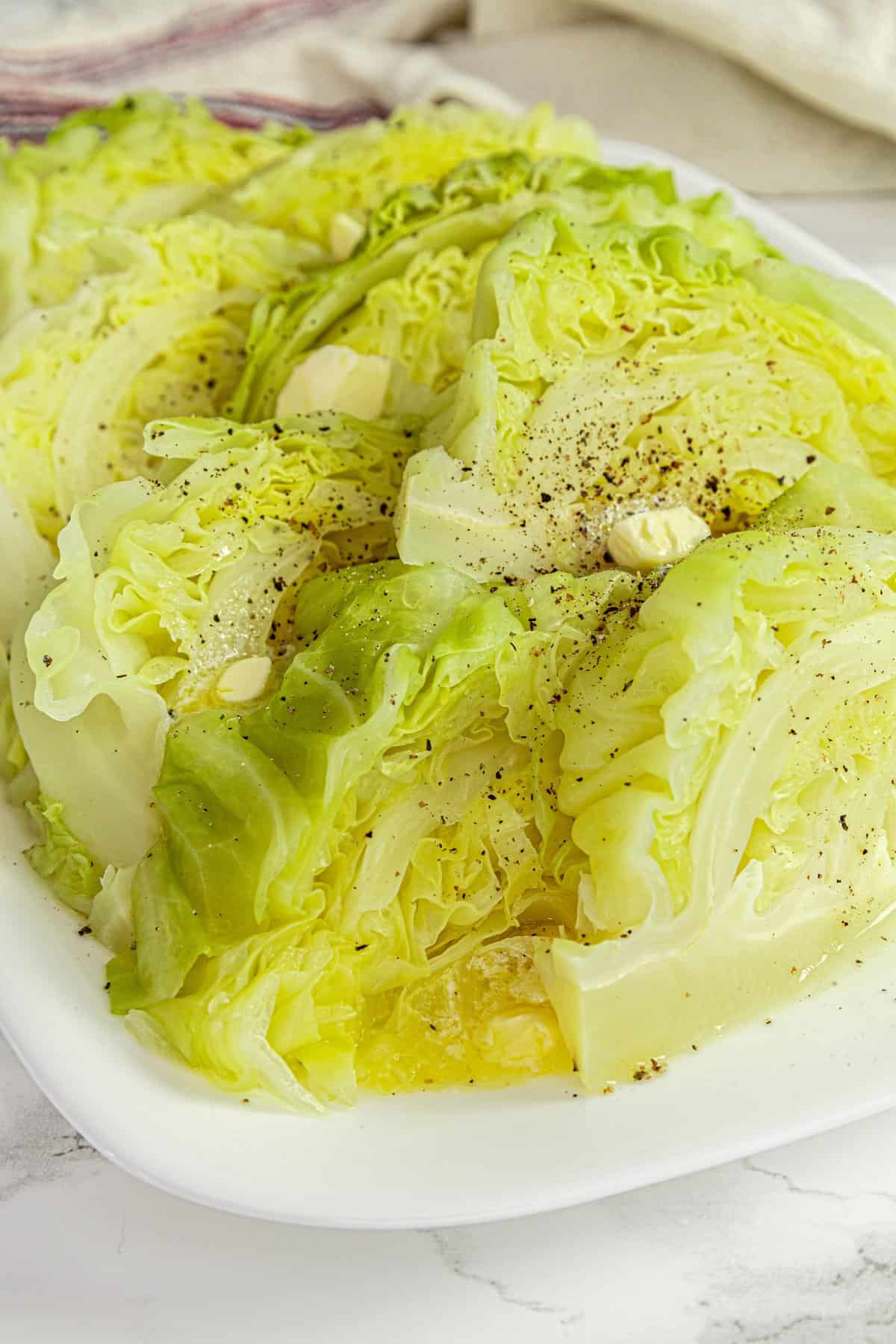
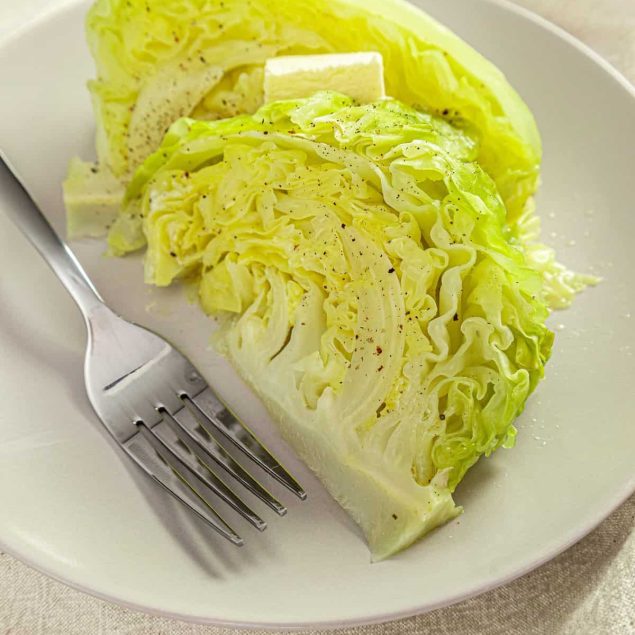
Boiled Cabbage just might be the ideal comfort food vegetable—delicious and buttery, and ready in minutes!
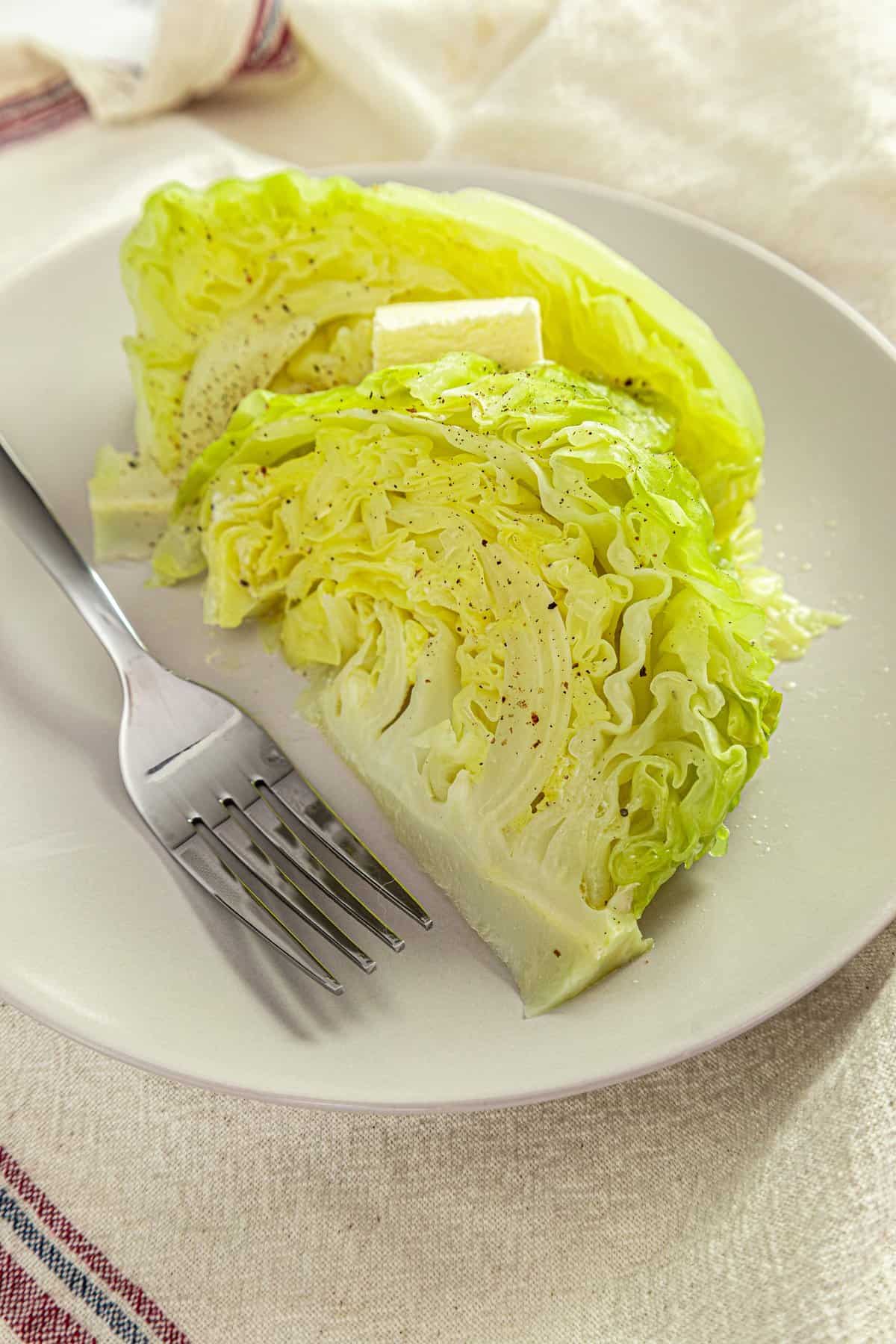
Boiled cabbage is one of my all-time favorite foods. It’s satisfying, tasty, and pairs well with so many different dishes. And the trick to keeping your kitchen smelling delightful and your cabbage tasting sweet, not sulfurous, is easy: Just don’t overcook it! Cabbage that’s cooked only until it’s tender is slightly sweet, has an earthy aroma, and holds together in attractive, brightly-colored wedges. Sure, it’s a dish with a humble background, but we bet you’ll find it wonderfully easy to prep and cook, and so versatile you could probably serve it along with just about any dish from any cuisine. I think of it as universal comfort food!
Wondering what the best kind of cabbage to boil is? You could try this with any medium head of green, red, Napa or Savoy cabbage, but green is the ideal choice. The wedges are more compact than leafier Napa cabbage and crinkly Savoy cabbage, and the flavor is sweeter when boiled than red cabbage—which will actually turn blue during cooking. Plus, green cabbage is generally the least expensive of all the heads out there—another reason to love it! Prepping and cooking the cabbage will take just 25 minutes, from start to finish—perfect for whipping up alongside your quickest main dishes or rounding out a more complex meal.
Is Boiled Cabbage Healthy?
Boiled cabbage is a very healthy dish. It’s low in calories, high in fiber, and packed with vitamins C and K in addition to other important nutrients. This recipe does call for butter, but you can easily make it dairy-free and vegan by replacing that with a drizzle of olive oil or with plant-based butter. Or you could omit the fat all together and add some lemon or cider vinegar instead.
How Do You Keep Cabbage Wedges From Falling Apart?
There are several methods to ensure the wedges stay together for attractive presentation and neat eating. The first is to avoid very large heads; choose a medium-size one, or even two small ones. When you cut the head, make sure you cut your wedges straight through the core, leaving a good amount of it attached to each—this will keep all the layers together. And finally, be gentle when placing the cabbage into the boiling water and when removing it. You can use a pot with an integrated strainer basket, like a pasta pot. Or use a large, slotted spoon, a spider, or skimmer to gently lift the cabbage. All of these methods will help to keep the wedges intact and looking great.
How Do I Store Leftovers?
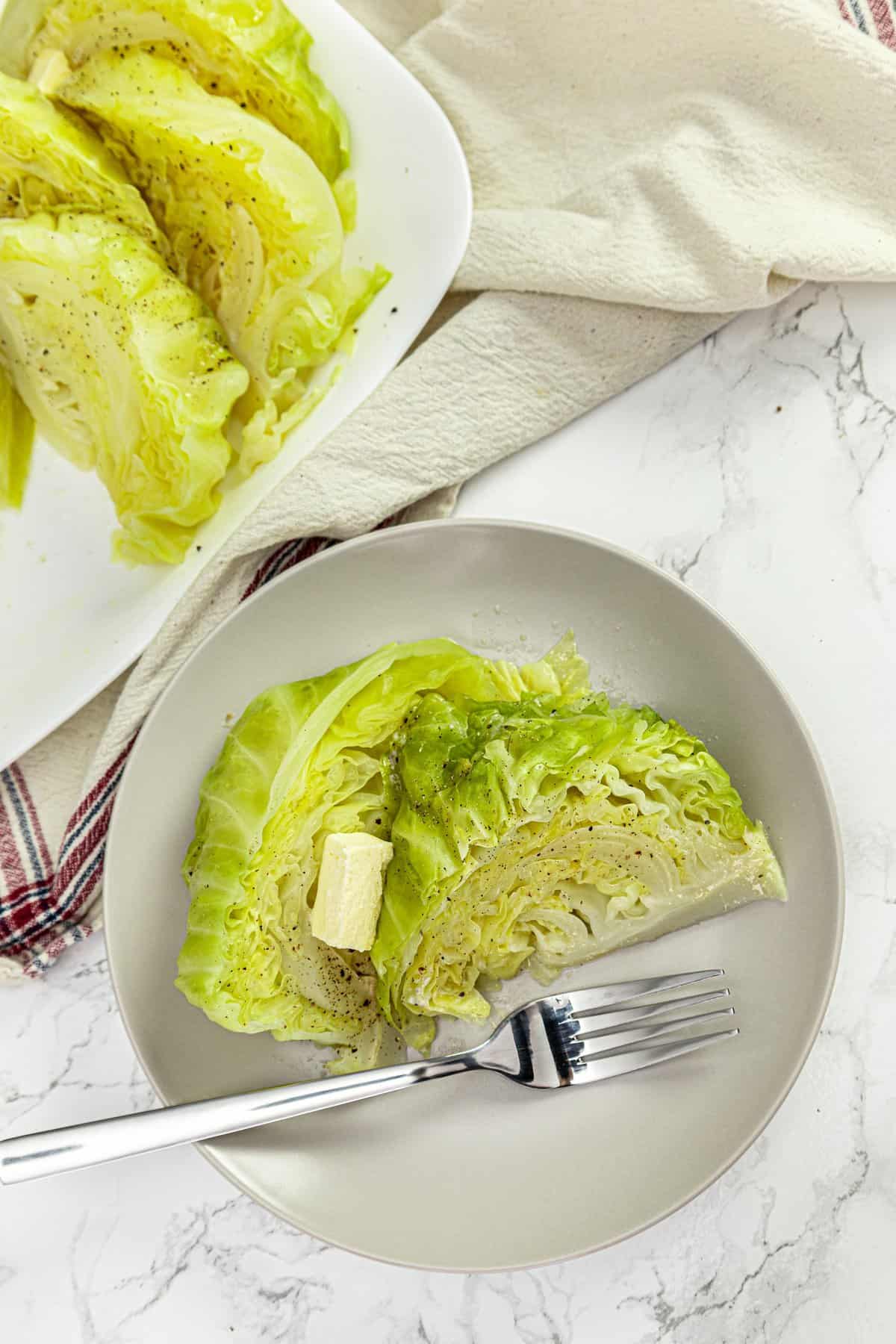
Refrigerate leftovers in an airtight container for 3 to 4 days. Reheat it in the microwave for 3 to 4 minutes, just until the desired temperature is reached. Again, you don’t want to overcook it. Wedges can also be reheated in a covered casserole dish in a preheated 350°F oven until hot. Freezing is not recommended.
Serving Suggestions
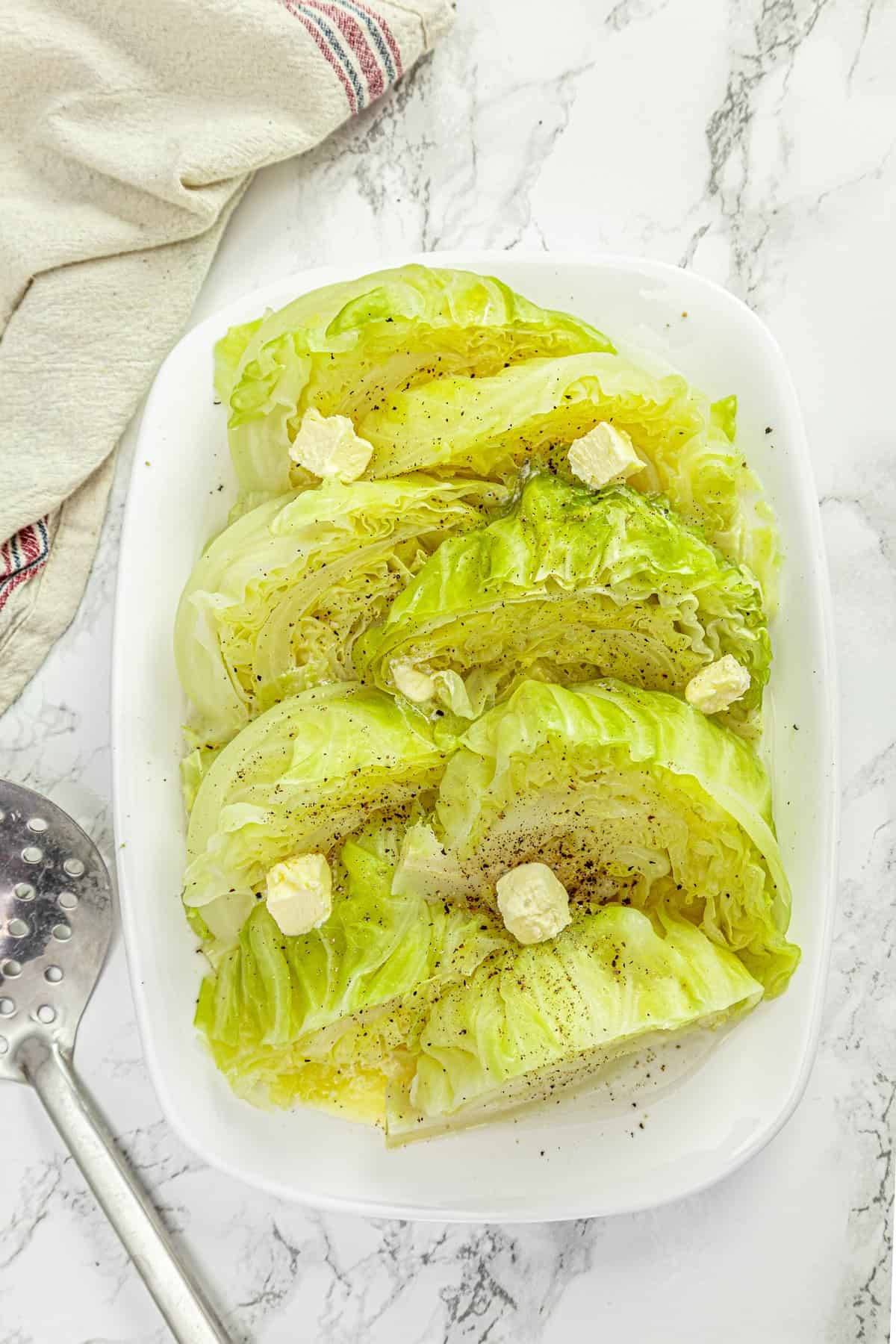
Boiled cabbage goes with just about any protein option. Try Crispy Baked Tofu or Cheesy Baked Chicken Tenders. For a pork option, there’s Oven-Baked Ribs, and for beef, there’s Sweet-And-Sour Paleo Meatballs, just to mention a few.
For more easy beginner-friendly dishes, try this Instant-Pot Corn On the Cob, these Baked Potatoes, and these Easy Air-Fryer BBQ Chicken Thighs.
Ingredients
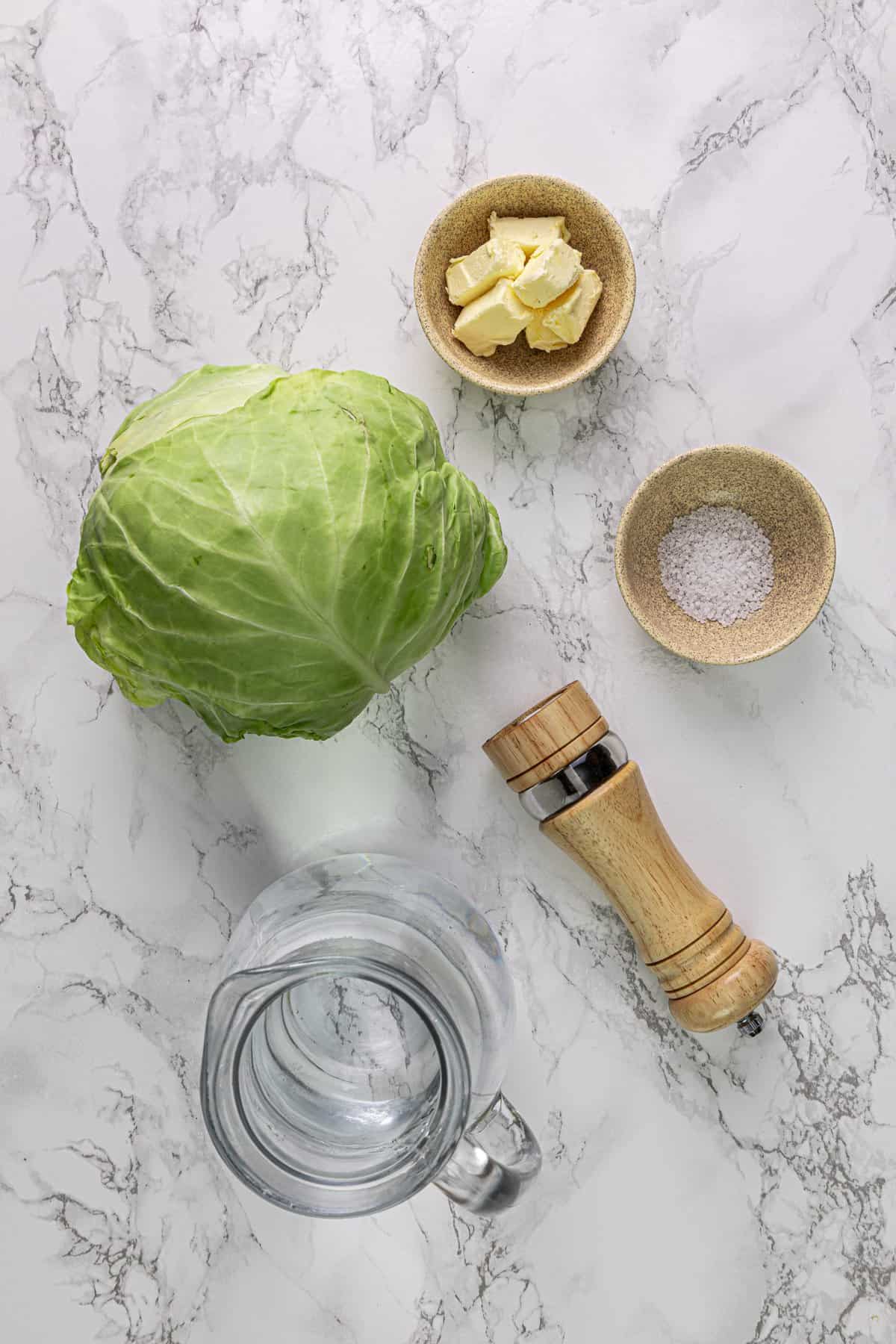
- 1 medium head green cabbage
- 4 cups water
- 1 teaspoon kosher salt
- 2 tablespoons unsalted butter
- Freshly ground black pepper to taste
Instructions
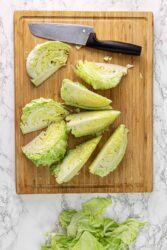
- Remove the outer leaves of the cabbage, rinse thoroughly, and cut into 8 wedges, keeping the core intact to hold the leaves together.
- In a large pot, bring 4 cups of water and 1 teaspoon of kosher salt to a boil.
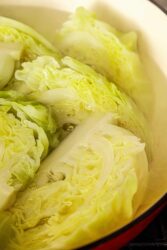
- Carefully place the cabbage wedges into the boiling water. Reduce heat to medium-low, cover, and simmer for 12 to 15 minutes, or until the cabbage is tender.
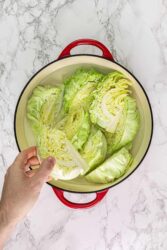
- Once the cabbage is tender, remove it with tongs or a slotted spoon and drain well.
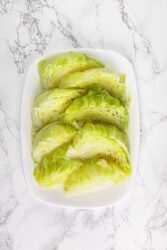
- Transfer the cabbage to a serving dish, dot with unsalted butter, and season with freshly ground black pepper to taste. Serve warm.
Nutrition Info:
Nutrition information are estimates only and may vary based on the specific brands, ingredients, and portion sizes you use. This data is provided for informational purposes only.


Leave a Comment