

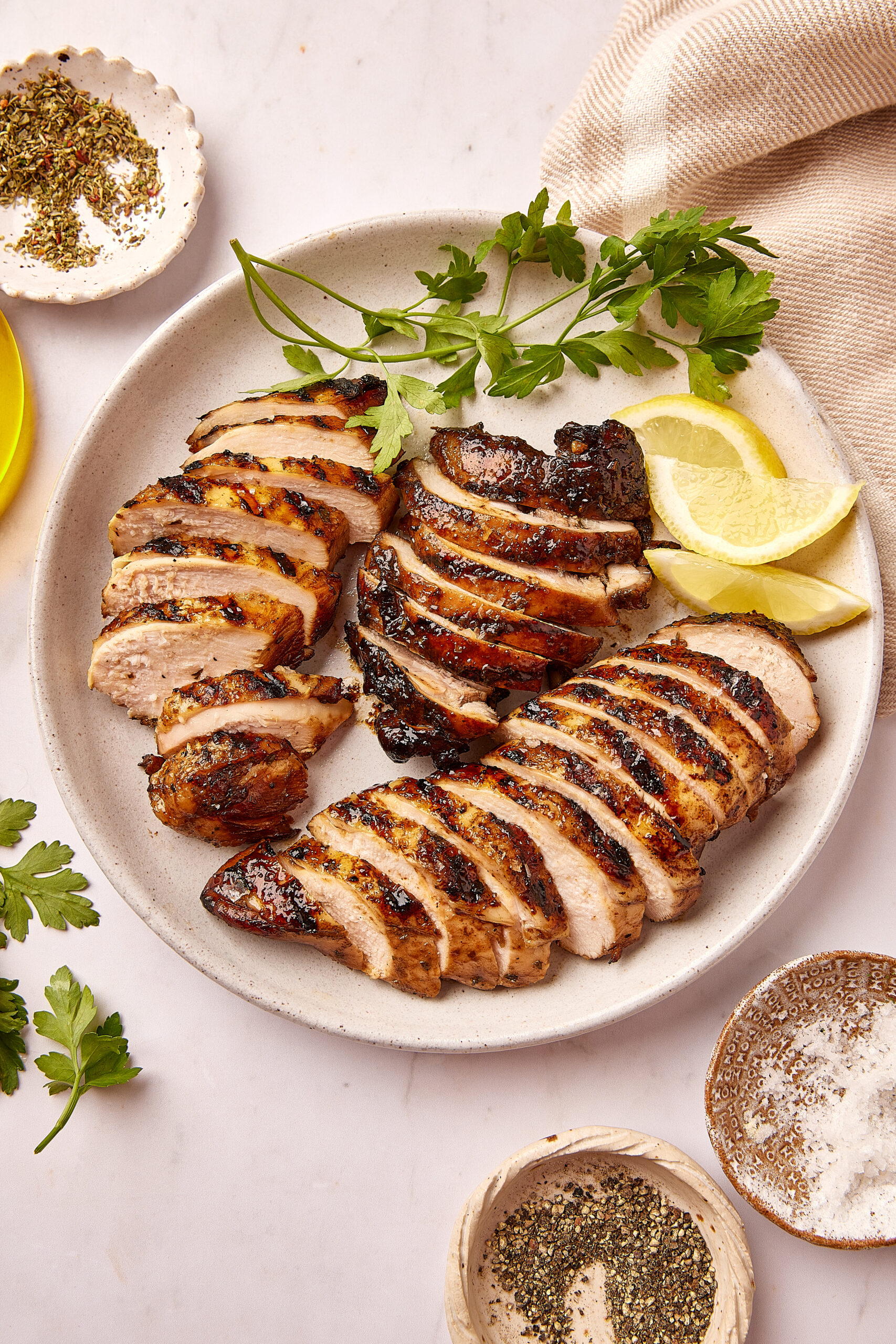
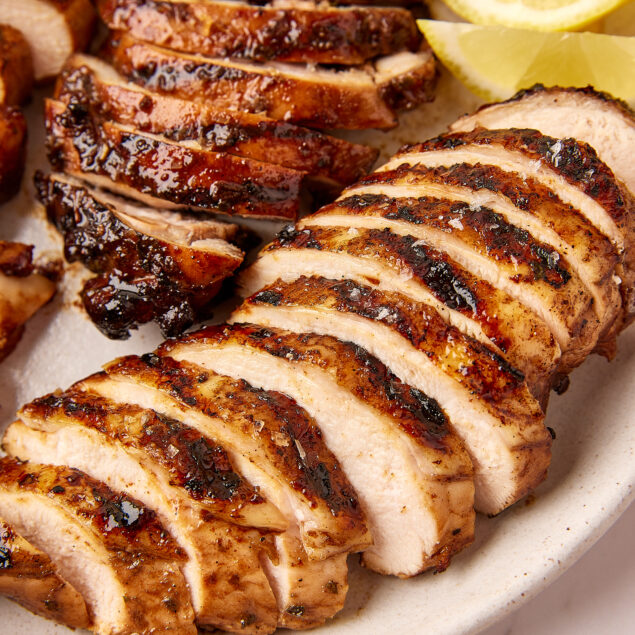
This is the only Balsamic Chicken Marinade you will ever need, as it infuses incredible flavor into your chicken dinner.
The best way to infuse tantalizing flavor into poultry or meat is by marinating it for a few hours. This balsamic chicken marinade is one of my favorites, allowing you to create a delectable meal with minimal preparation. It doesn’t matter if your chicken is whole, cut up on the bone, or boneless; this marinade will ensure you have juicy, flavorful poultry to enjoy at any meal.
The key to making a good marinade is to use quality ingredients. By spending a little extra for my balsamic vinegar and olive oil, I get the most flavor out of my food. That doesn’t mean you have to use the most expensive versions of these products, just not the cheapest. There is a significant difference in quality between balsamic vinegar that sells for well over $100 an ounce and one that costs a few dollars for a 16-ounce bottle.
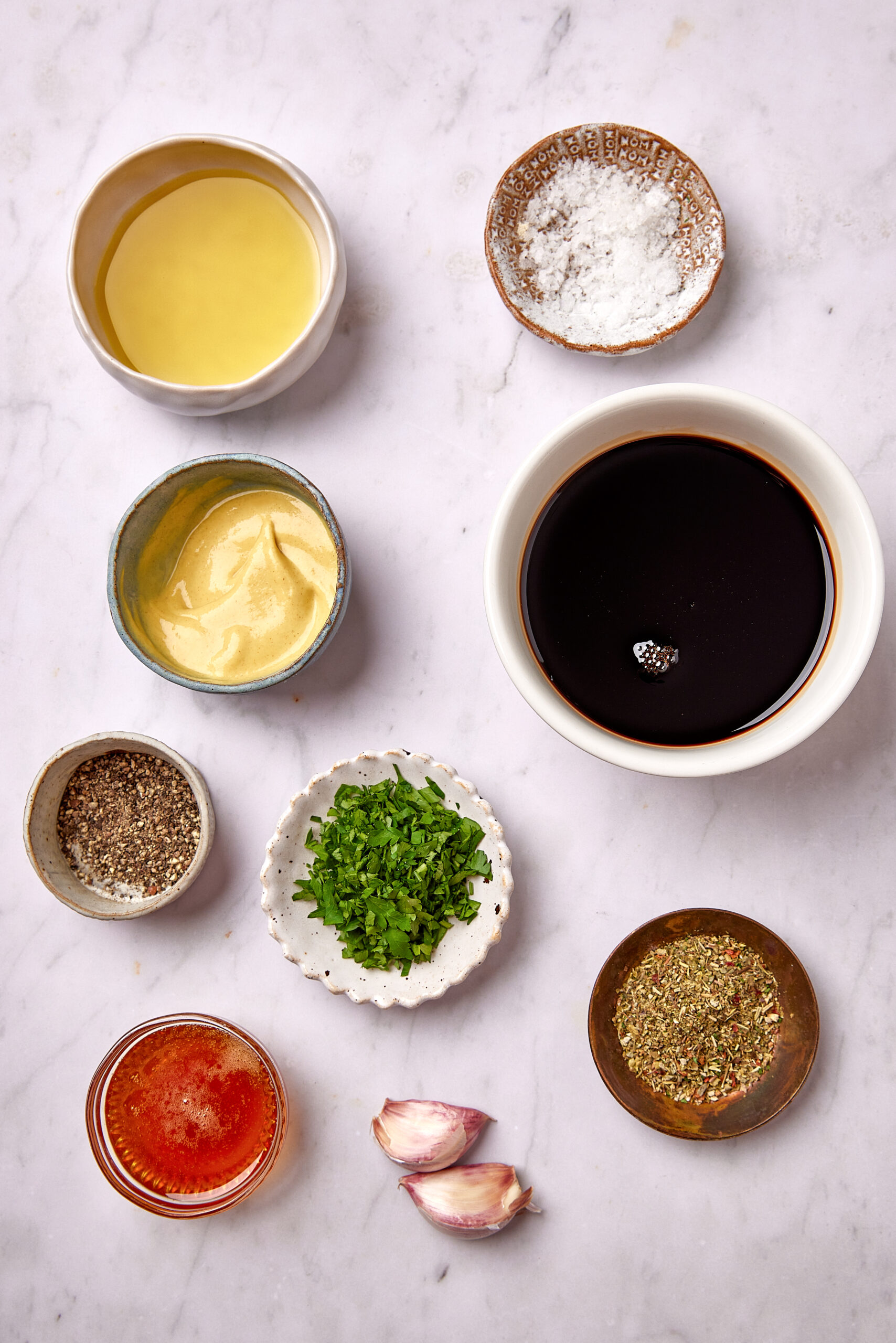
Chicken marinades are ideal for creating exceptional dishes with minimal effort. Once you have marinated the chicken in the balsamic mixture for a few hours, you can cook it however you prefer. From air frying to broiling, baking, grilling, or sautéing, your chicken will be bursting with flavor and will complement any accompanying side dishes perfectly.
Get to know the different types of balsamic vinegar
Not all balsamic vinegar is created equal, and many products labeled as balsamic are not that at all. Traditional balsamic vinegar, made exclusively from grape must, originates from the regions of Reggio Emilia and Modena, Italy. They are made from only Lambrusco or Trebbiano grapes, and the juice is aged for 12 to 18 months in wooden barrels. Traditional balsamic can cost around $200 per bottle, or more. These balsamics are not intended for use in cooking or salad dressings, but rather for drizzling on bread, cheese, or other foods.
Condiment-grade balsamic vinegar is aged for fewer than 12 years. Still, it is produced using the same techniques as traditional varieties, albeit from a blend of grape must and wine vinegar. You can tell condiment-grade balsamic by the labels “condiment balsamico,” “Balsamic Vinegar of Modena PGI (or IGP),” “salsa di mosto cotto,” or “salsa balsamica.” It can be made anywhere but must be packed in Modena to carry the I.G.P. (Indicazione Geografica Protetta) stamp.
Commercial-grade balsamic vinegar, often referred to as imitation balsamic, is typically mass-produced from wine vinegar and aged for a shorter period, suitable for use in marinades, dressings, and sauces. These products may contain additional thickeners and caramel coloring to emulate the flavor and texture of traditional balsamic. Only those products made in the Modena region may claim to be “Balsamic Vinegar of Modena.”
How do I store my leftovers?
You can store unused balsamic chicken marinade in an airtight container in the refrigerator for up to 4 days. Do not store marinade that has been used for chicken. Once it has come into contact with the raw meat, it should be discarded.
Serving suggestions
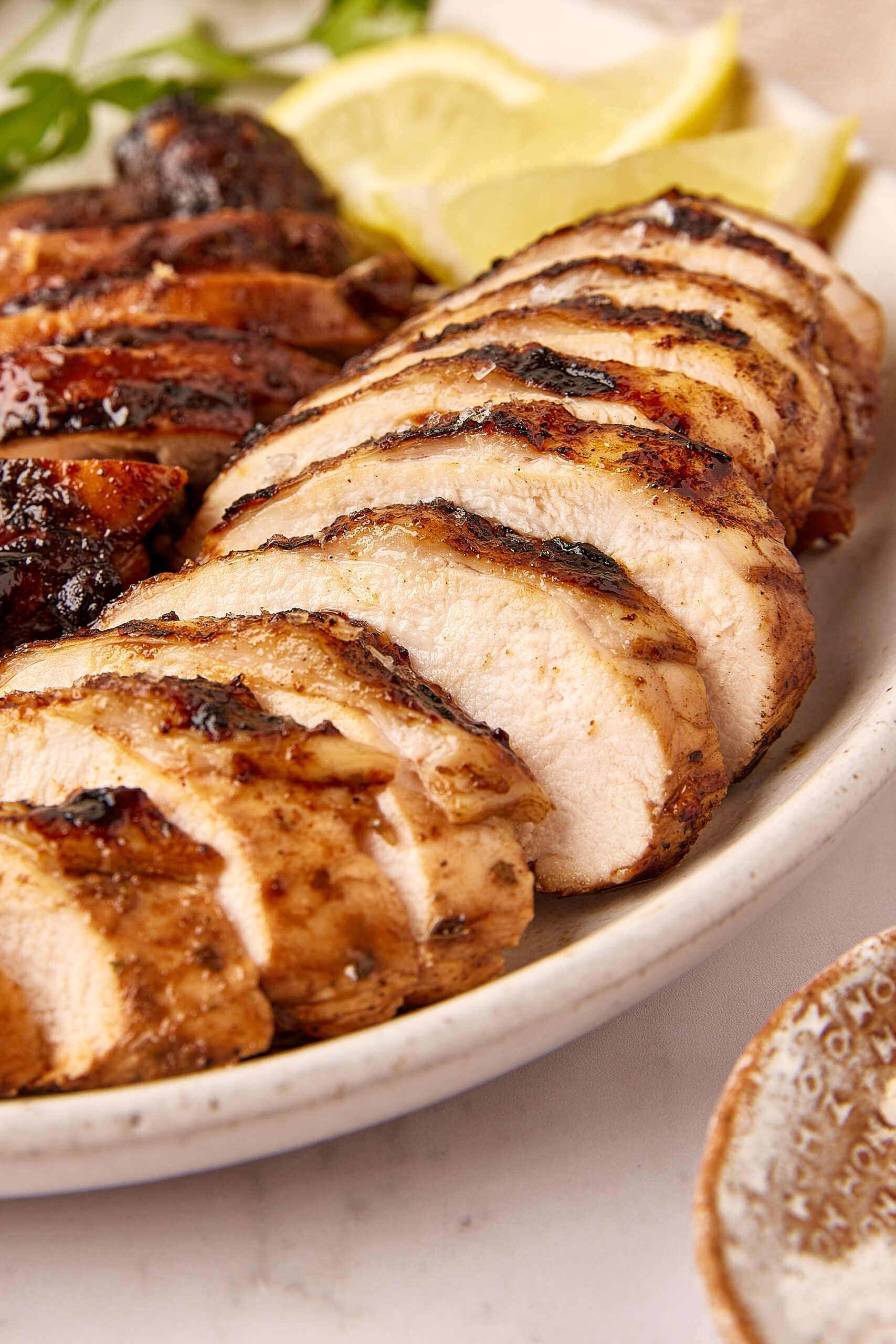
Any meal that features my balsamic chicken marinade is sure to be bursting with flavor. Some ideal accompaniments for your chicken dinner include Berry Salad, Quinoa With Roasted Vegetables, Asparagus Risotto, and Easy Sautéed Broccoli. Whip up this Chocolate Mousse Recipe for a tasty and light dessert.
Ingredients
- 1/2 cup balsamic vinegar
- 2 tablespoons olive oil
- 1 1/2 tablespoons honey
- 1 1/4 teaspoons Dijon mustard
- 2 garlic cloves minced
- 2 teaspoons Italian seasoning
- Salt to taste
- Pepper to taste
- 1 tablespoon fresh parsley chopped
Instructions
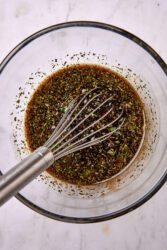
- In a bowl, whisk together the balsamic vinegar, olive oil, honey, Dijon mustard, minced garlic, Italian seasoning, salt, pepper, and fresh parsley.
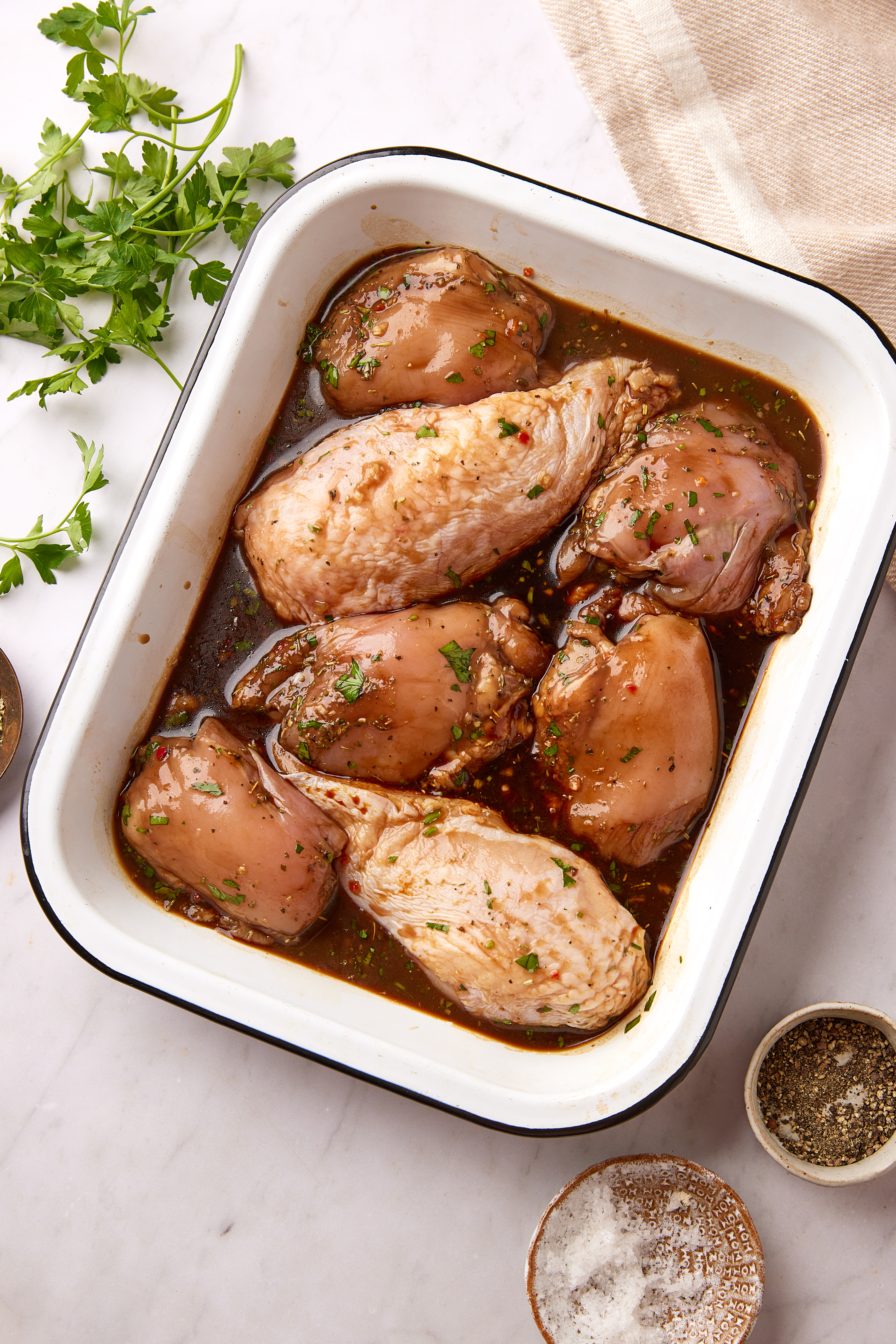
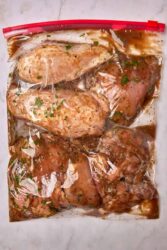
- Use marinade with 2 pounds of chicken, such as chicken breasts or thighs. Place the chicken in a zip-top bag and pour the marinade over them.
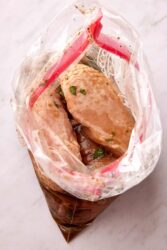
- Seal the bag and massage the marinade into the chicken. Refrigerate for 2-8 hours. Cook as desired.
Nutrition Info:
Nutrition information are estimates only and may vary based on the specific brands, ingredients, and portion sizes you use. This data is provided for informational purposes only.


Leave a Comment