

This modern take on traditional Thai Salad Dressing will transform any veggies you pour it over, with its salty, sweet, acidic, nutty, and deep umami flavor.
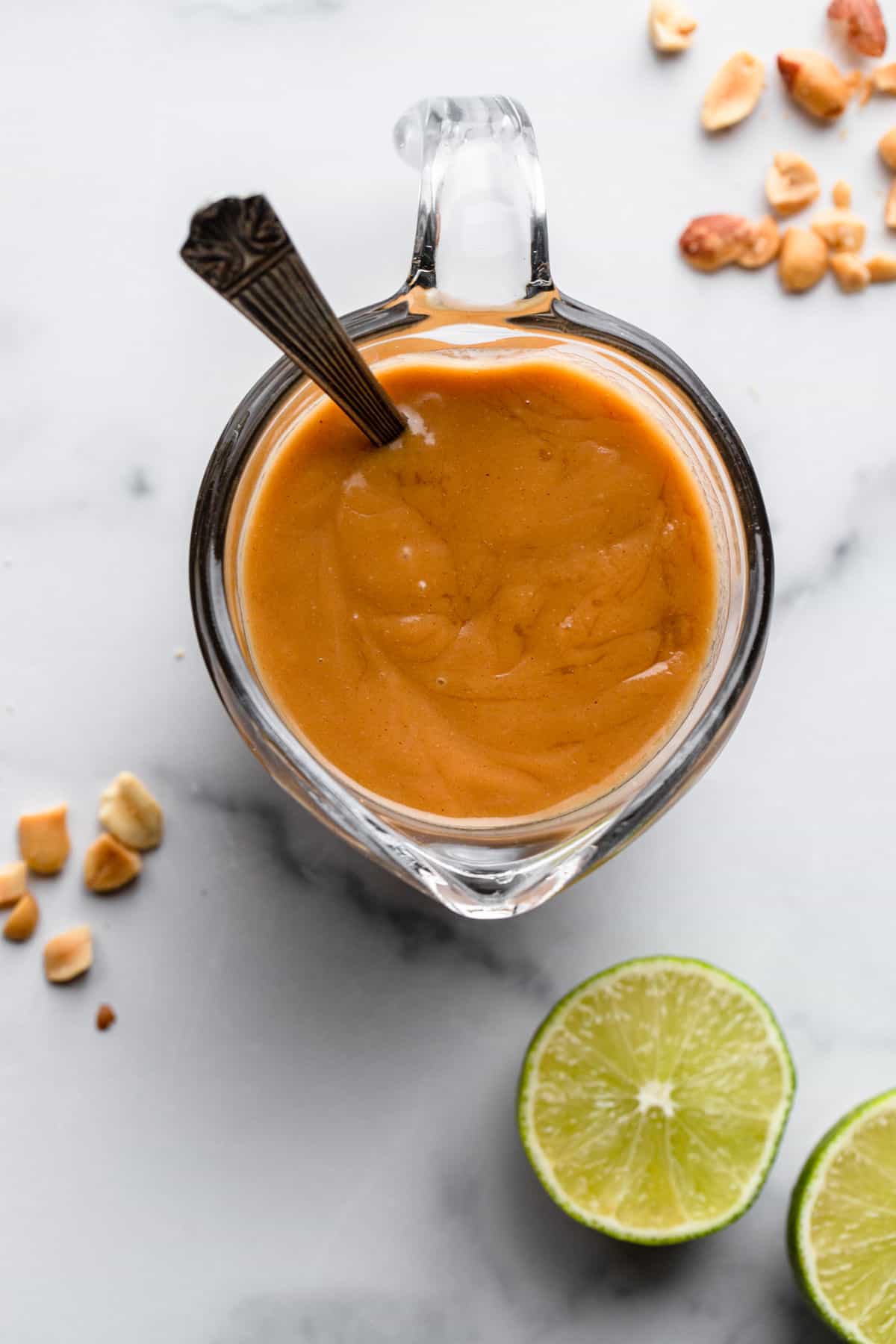
Sometimes I just need to make veggies feel that little bit more inviting; especially on those days where I can’t bear the thought of cooking! And that’s where this Thai-inspired salad dressing comes in. It’s perfect for slathering over and mixing with fresh, raw veggies, and it brightens up any meal with its nutty, sweet, and tangy profile.
In Thai cuisine, you’ll often see dressings similar to this served with crunchy vegetables like cucumbers, bell peppers, and cabbage. This combination is frequently seen in dishes like som tam (green papaya salad) or various yum salads, where fresh ingredients are mixed with a delightfully vibrant, tangy, and spicy yum dressing.
This modern take on a traditional Thai salad dressing complements the crispness of raw veggies, so be sure to serve it with your favorite salad ingredients sliced thinly for convenience.
Is this Thai Salad Dressing healthy?
This salad dressing leans towards healthy, with natural ingredients and minimal added sugars. Alongside this, peanut butter is a great source of plant-based protein, just make sure to get a high-quality brand that has no added ingredients.
Fresh lime juice is an excellent source of vitamin C and antioxidants, and opting for reduced-salt soy sauce is a healthier choice to manage the sodium content of the dish. Honey provides natural sweetness, but it should be used in moderation due to its sugar content. For a slightly lower glycemic option compared to honey, consider swapping it for agave.
What is in traditional Thai Salad Dressing?
Traditional Thai salad dressings, particularly those used in yum salads, are characterized by a few key ingredients that create a distinctive flavor profile. Yum, meaning “mix,” is a hearty dish consisting of a protein alongside either cooked or raw veggies, and tossed in a vibrant sauce.
Fish sauce is typically a fundamental ingredient, providing saltiness and umami, and fresh lime juice is crucial for acidity and brightness. Common optional ingredients include fresh garlic or ginger, palm sugar for sweetness, tamarind paste, cilantro root or stems, and fresh chilies. This recipe has been adjusted for home kitchens and grocery stores worldwide, so a few traditional Thai ingredients have been omitted to ensure it’s more accessible, while still capturing the authentic flavors as closely as possible.
How to Make Ahead and Store
This flavorful and delicious salad dressing likely won’t last long in your household because it’s just that good. But if you happen to have leftovers, this dressing will last up to 2 weeks in an airtight container in the refrigerator. Just remember to label it with the date you made it!
Serving Suggestions
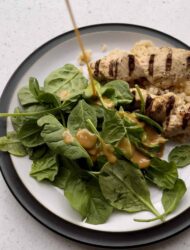
As mentioned above, my favorite way to serve this dressing is as a dipping sauce! Whip up some Veggie Spring Rolls, Shrimp Spring Rolls, Fried Spring Rolls, or even these Thai Lettuce Wraps, and use this dressing to dip and enjoy.
For main meals – aside from using this sauce to dress my favorite raw veggies – I also love to stir it through this Rice Noodle Chicken Stir-Fry or these Butternut Squash Noodles with a protein like shrimp or pork.
Ingredients
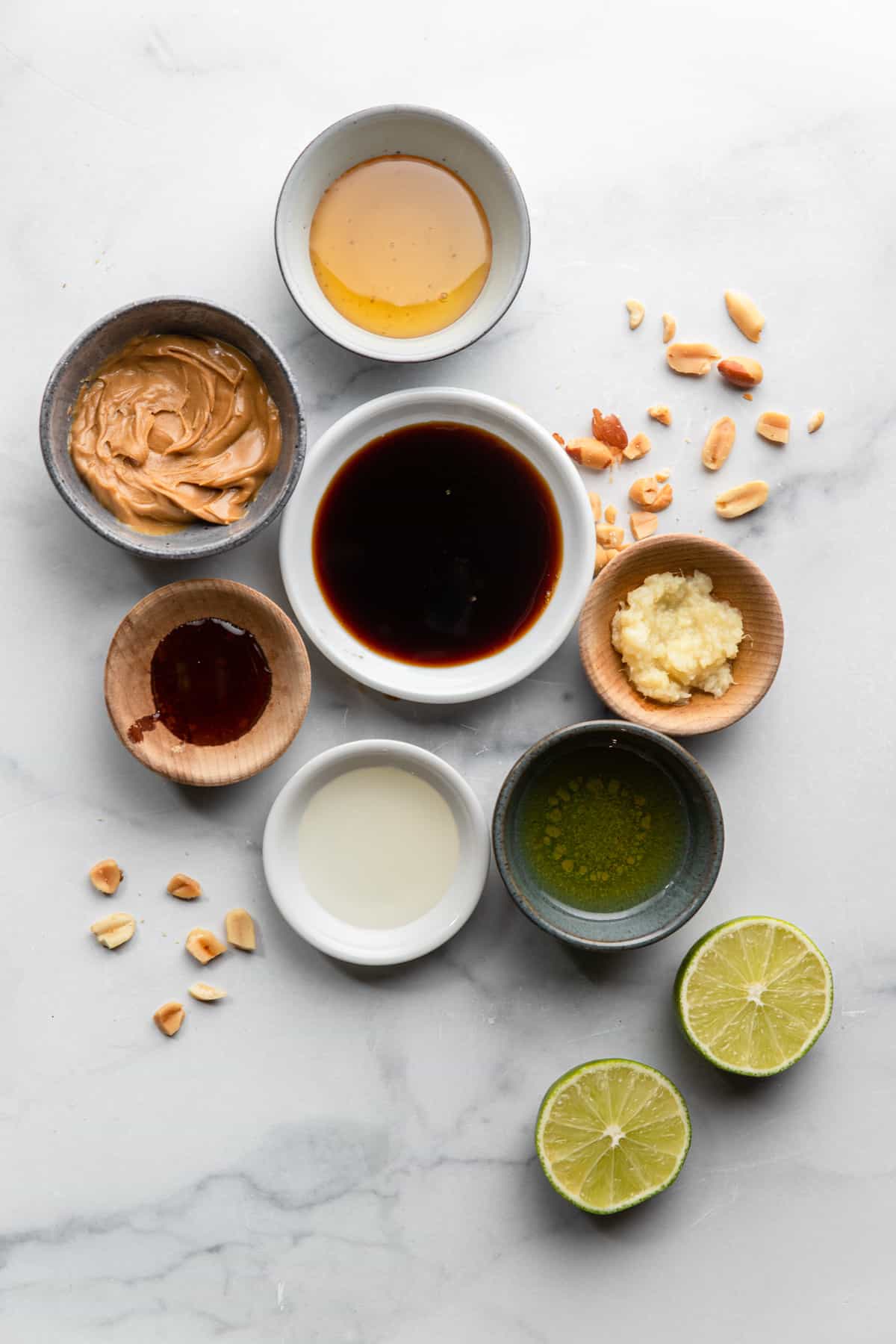
- 1/4 cup natural peanut butter
- 1/4 cup neutral-flavored oil like avocado oil
- 3 tablespoons freshly squeezed lime juice
- 2 tablespoons honey or agave
- 1 tablespoon reduced-sodium soy sauce
- 1 tablespoon white vinegar or rice vinegar
- 1 tablespoon fish sauce
- 1/2 teaspoon fresh ginger minced
Instructions
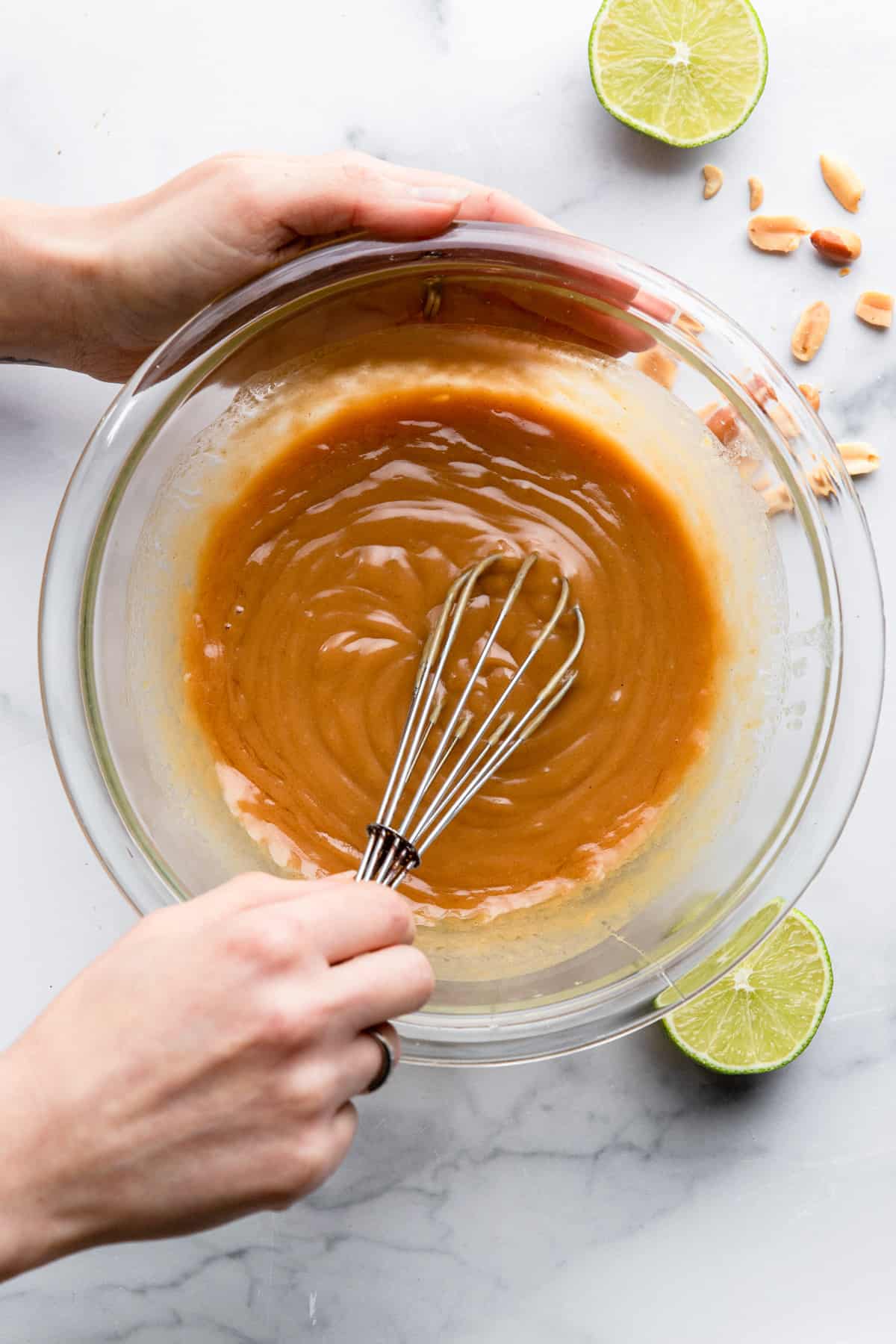
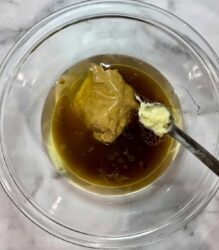
- Place all the ingredients in a medium bowl and whisk until smooth and combined.
- Pour on ALL the things!
Nutrition Info:
Nutrition information are estimates only and may vary based on the specific brands, ingredients, and portion sizes you use. This data is provided for informational purposes only.


Leave a Comment