

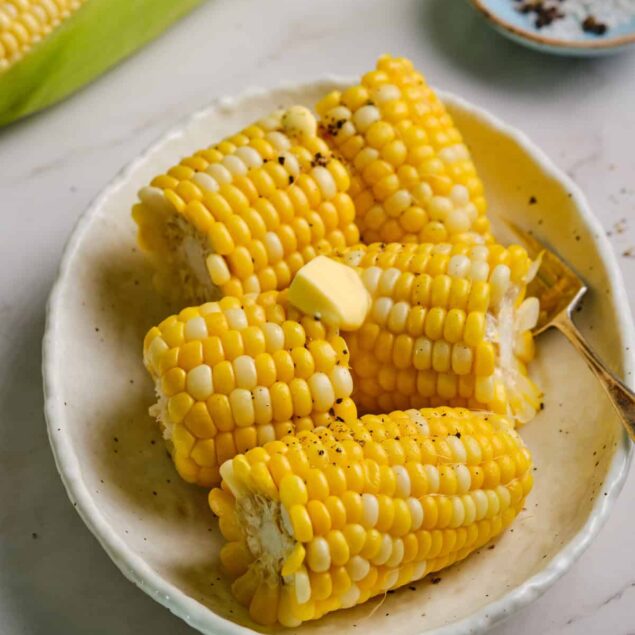
Get delicious and juicy corn on the cob every time with this recipe.
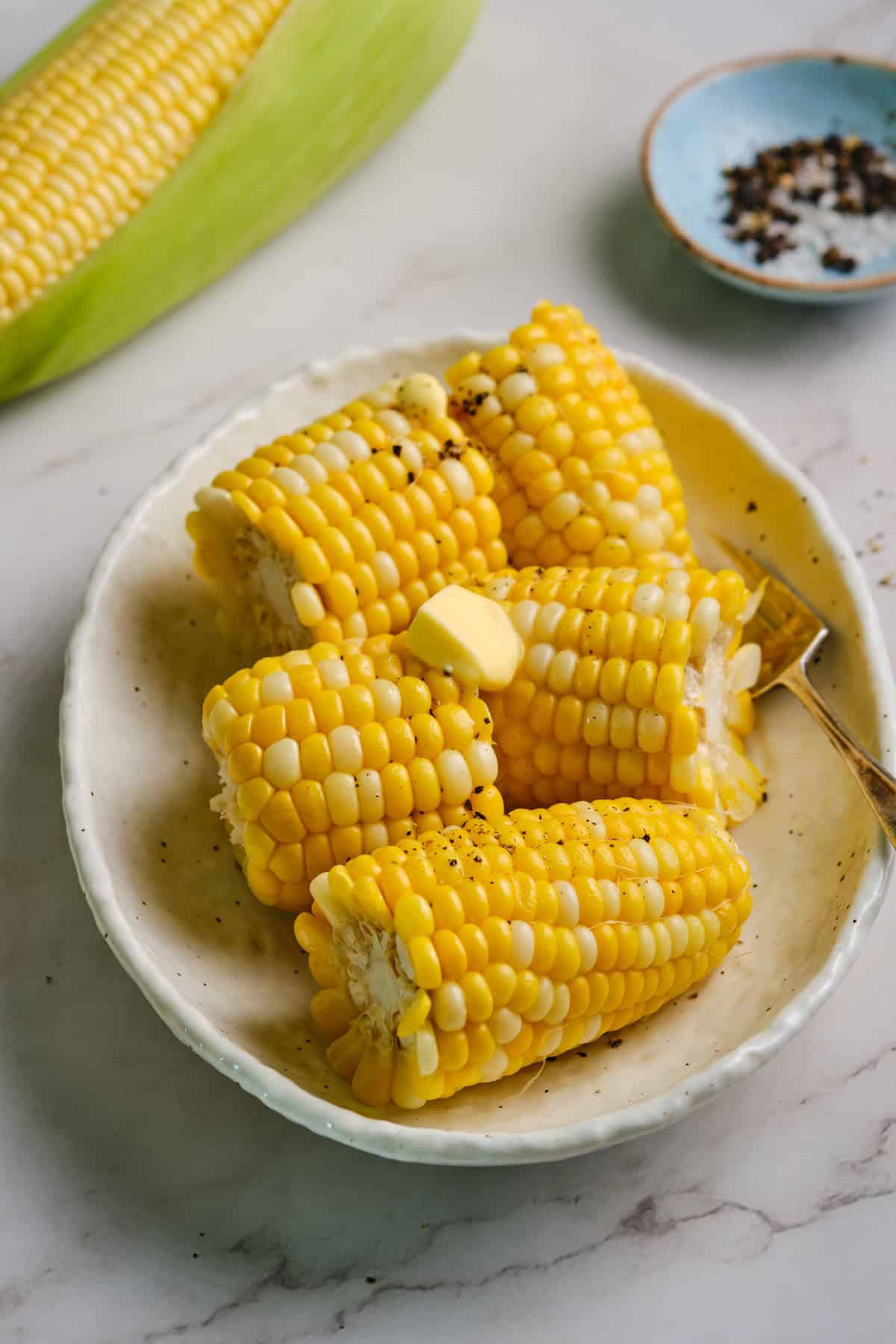
When corn is in season from May through September, I can’t resist picking some up every time I spot it at my local farmers’ market. Nothing compares to fresh corn, you see. I find the canned stuff is fine in a pinch, but if you really want to savor the sweet taste and succulent texture of corn, buying and cooking it fresh is the way to go.
The great thing about corn is its versatility. It can be served in myriad ways—whether as a snack or a side to barbecued meats—and it lends itself beautifully to countless cooking methods.
You’ve undoubtedly boiled it before, or maybe even grilled it, but one of my favorite preparations is steaming it. Steaming is straightforward, keeps the corn sweet and crunchy, and preserves all those nutrients that can be lost with other cooking methods.
Do I still love that smoky, charred flavor of grilled corn alongside my burgers and steaks? Absolutely. But there’s something uniquely satisfying about the pure, natural sweetness of steamed corn, seasoned with just a touch of butter and a sprinkle of salt. It’s a simple pleasure, and sometimes, that’s all you need.
Is Steamed Corn On The Cob Healthy?
Corn on the cob is a source of vitamins, minerals, antioxidants, and fiber. Plus, steaming is a great way to prepare corn without robbing it of some of its nutrients. Things like the degree of heat and the length of exposure to that heat impact a food’s nutritional value, which is why steaming is superior. Corn on the cob can be enjoyed on gluten-free diets. It is a grain, so it isn’t Paleo-friendly, and because it’s carb-heavy, it isn’t suitable for a keto or low-carb diet.
Is Corn a Vegetable? A Fruit? A Grain?
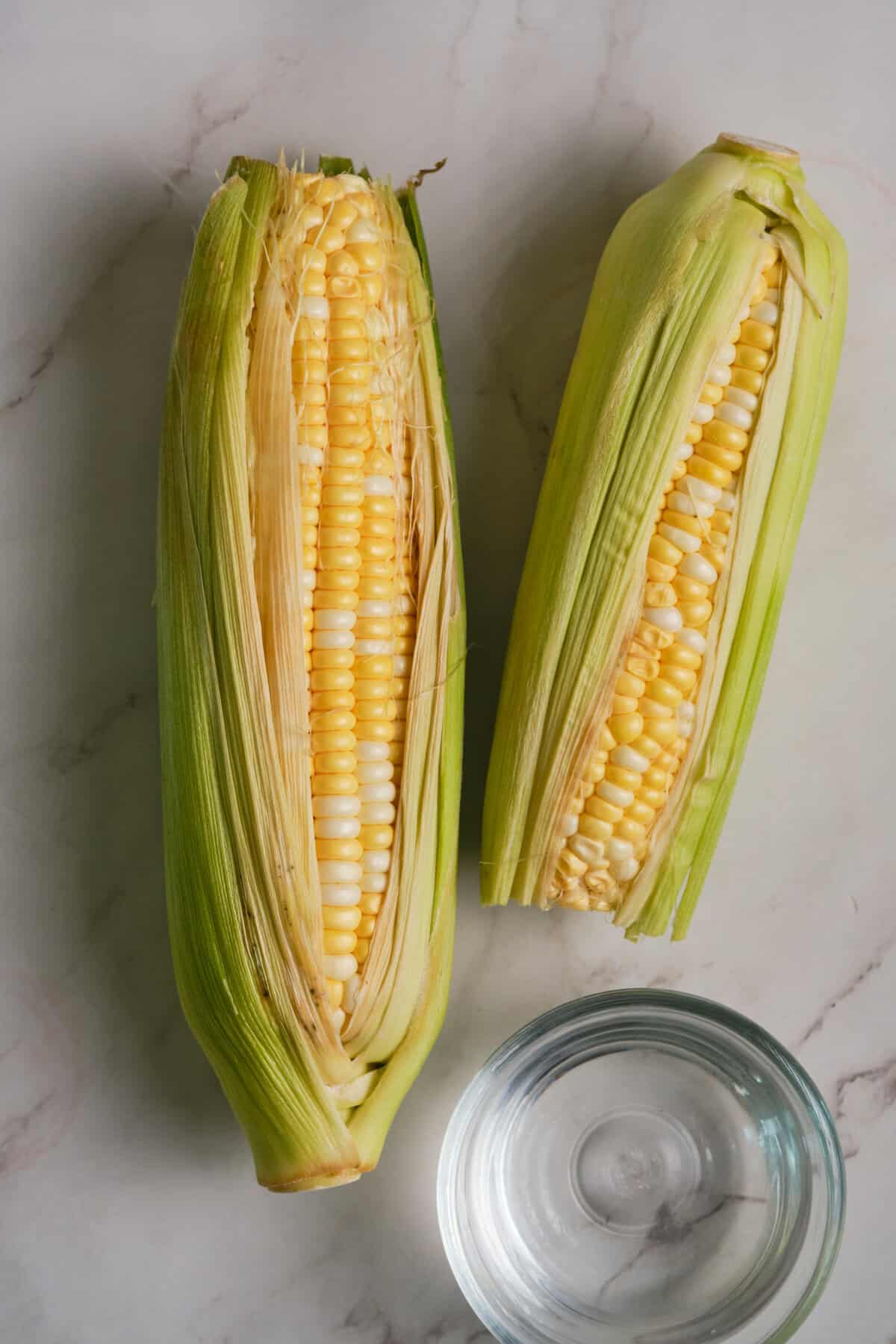
Yes, to all of them. First, it is technically considered a fruit, if by “fruit” you mean the edible bit of a flower’s ovary. Each kernel is a seed that grows from the ovaries inside the ear (yay, food science!). As for the vegetable vs. grain debate, it really depends on when the corn is harvested. Corn on the cob, for instance, is harvested early in the corn’s life while it is still young and juicy, and is considered a starchy vegetable. If you let that corn fully mature and dry out, it becomes a grain. At this point you can mill it to produce cornmeal.
How To Make Ahead And Store
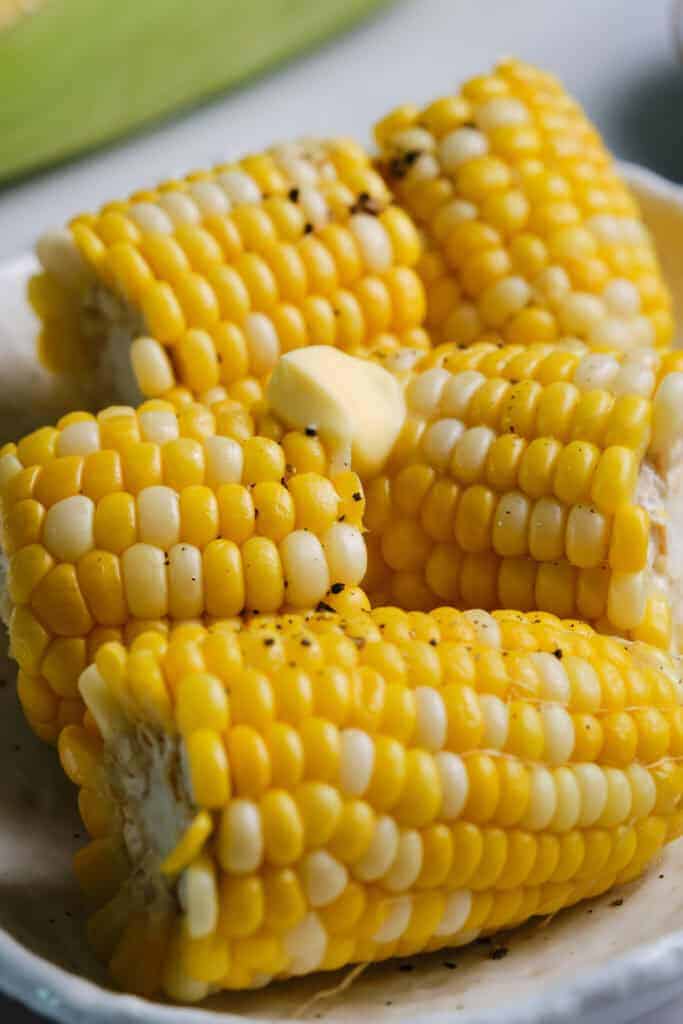
Corn on the cob is best eaten shortly after cooking, but leftovers can be wrapped in plastic and stored in the fridge for up to 3 days. The cobs or just the kernels (removed with a sharp knife) can be frozen for up to 3 months.
Serving Suggestions
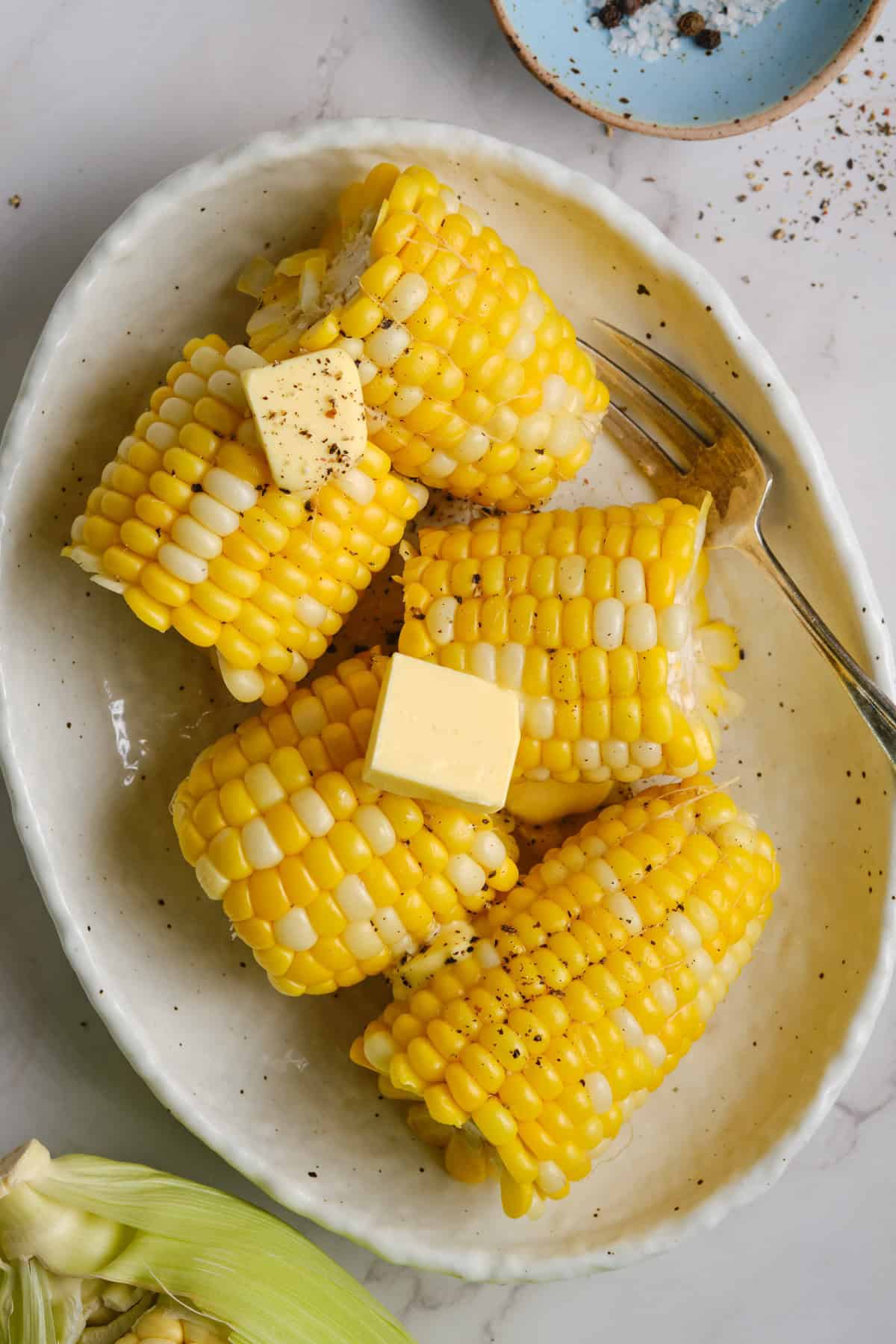
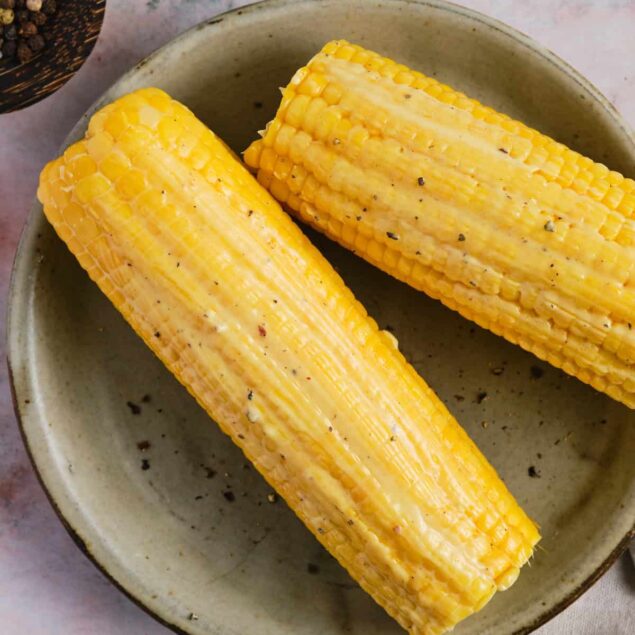
I love how you can add pretty much anything these days to popcorn? Well, you can do the same thing with corn on the cob. Butter, salt, and pepper are the standards, but if you’re even a bit more daring, you should try grated Parmesan (or some other hard cheese), dill, parsley, chives, cilantro, chili flakes, and/or mayonnaise. You can also use this steamed corn on the cob instead of grilled corn in this Elote Recipe. Serve steamed corn on the cob with almost any burger, including Salmon Burgers or Turkey Burgers In The Oven. For a deliciously different flavor profile, try it this Bang Bang Chicken. If you have leftover corn on the cob, cut the kernels off with a sharp knife and try these Mexican Street Corn Salad Esquites.
Ingredients
- 3 ears of corn
- Water
- Butter, salt, and pepper to serve, optional
Instructions
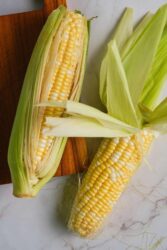
- Prepare your ingredients by husking the corn and removing any silk. If necessary, cut the corn to fit your steamer basket.
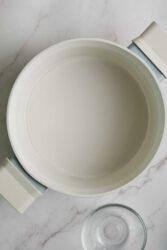
- Pour about 2 inches of water into a large pot, ensuring the water level is below the steamer basket. Bring the water to a rolling boil over high heat.
- Place the corn into the steamer basket using tongs, then cover the pot with a lid.
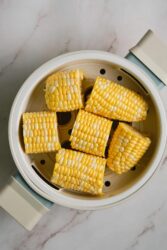
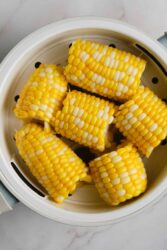
- Steam the corn for 4 minutes for a crisp texture or longer for softer kernels.
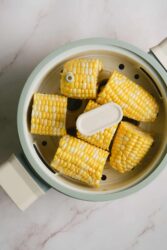
- Once the corn is steamed to your liking, turn off the heat and remove the corn with tongs. Serve with optional butter, salt, and pepper.
Nutrition Info:
Nutrition information are estimates only and may vary based on the specific brands, ingredients, and portion sizes you use. This data is provided for informational purposes only.


Great way to prepare COC. THANKS FOR SHARING.
You’re welcome, Bill. Thanks for the review!