

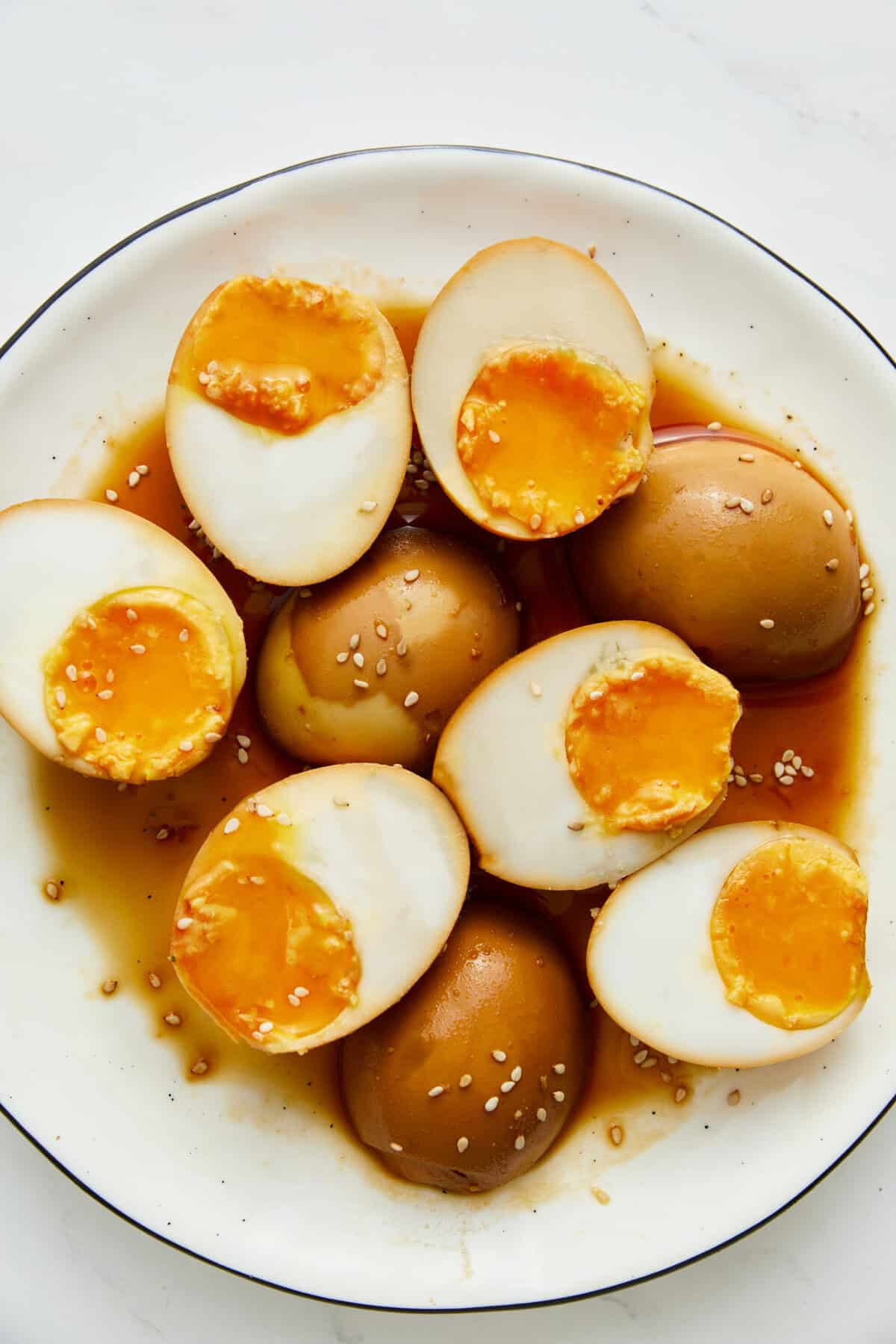
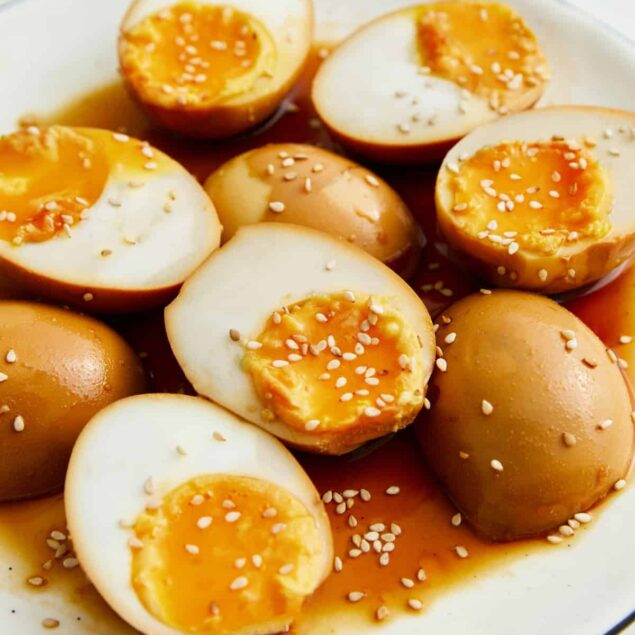
These sesame seed-topped Soy Sauce Eggs are perfect for breakfast, lunch, or dinner. Add them to ramen or eat them with rice.
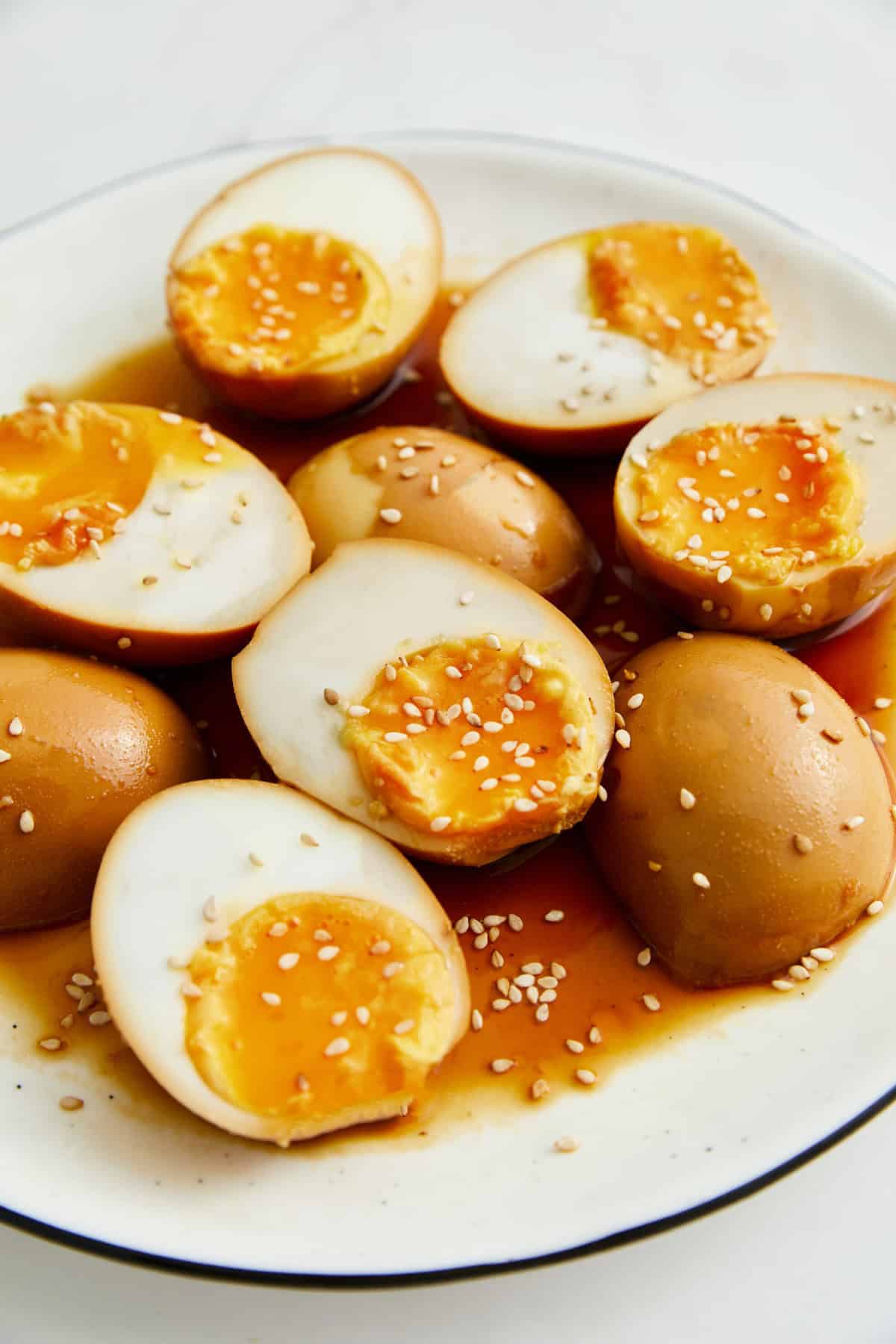
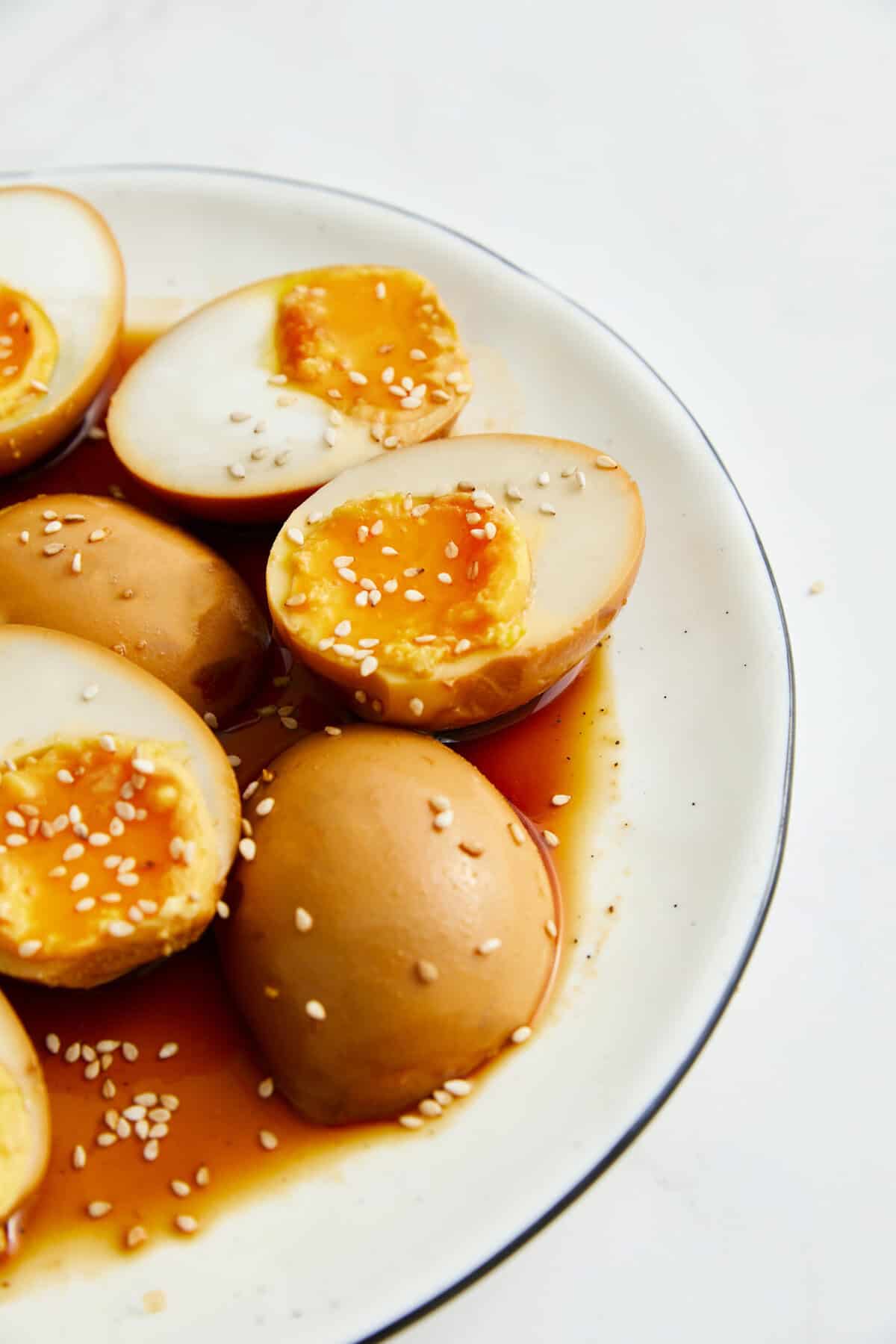
If you love eggs and are looking to expand your recipe arsenal, look no further. These soy sauce eggs require just a bit of prep, a minimum of a few hours’ marinating time, and presto, you have a delicious umami egg dish that will impress your guests. Soy sauce eggs are common in many Asian dishes, such as Japanese ramen, and you can use them as toppings for rice or noodles or just eat them as is, making them incredibly versatile. They traditionally have a jammy yolk. Jammy eggs are soft-boiled so that the yolk is cooked slightly, yielding a sticky and soft texture. This cooking technique also means that the yolks turn a vibrant orange-yellow color.
While the Western mind is used to seeing deviled eggs at a party, it’s rare to see soy sauce eggs, so bring yours to the next brunch to really stand out from the crowd. It’s a great way to use up extra eggs and feed plenty of people at the same time. Plus, it’s even less work than deviled eggs—just boil, peel, and marinate the eggs with sauce! These soy sauce eggs are marinated in a combination of (yes, you guessed it) soy sauce in addition to rice vinegar, garlic, ginger, and sugar for a unique savory-sweet flavor.
Are Soy Sauce Eggs Healthy?
While this is a simple, high-protein snack, soy sauce is usually high in sodium, so it’s a good idea to keep an eye out for low-sodium soy sauce. It’s easy to make this recipe gluten-free by using tamari or coconut aminos instead of soy sauce. These options will also have a little less sodium. The fresh ginger in this recipe contains vitamin C, potassium, magnesium, and manganese. Fresh garlic also contributes vitamin B6 and selenium.
A Cross-Cultural Egg Hunt…
So… what are the specific ways in which soy sauce eggs are served, nation to nation?
As mentioned before, Japanese ramen is often served with soy sauce eggs called shoyu tamago or ajitsuke tamago. In China, they’re called lu dan, and they’re simmered with Chinese five spice powder as well as soy sauce during the boiling process. In the Korean version, gyeran jangjorim, they’re usually braised with dried anchovies and sesame oil.
How Do I Store Leftovers?
Leftovers can be stored in an airtight container in the fridge for up to 2 days.
Serving Suggestions
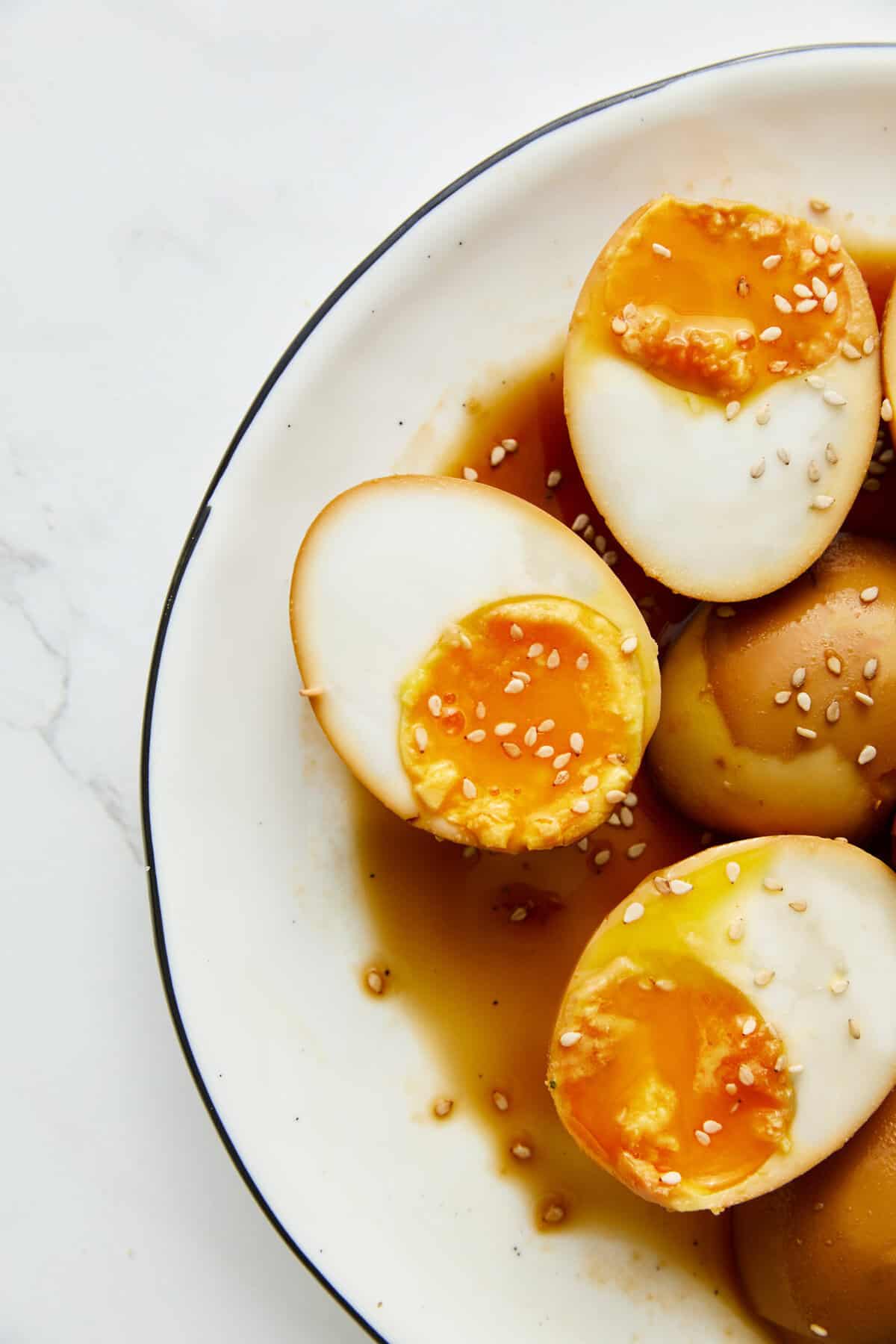
I love making Beef Fried Rice, Sesame Noodles, or Mongolian Beef Noodles to accompany these jammy eggs. But other than noodles and rice, what can we put these beautiful eggs on?
I recommend trying Asian Healthy Broccoli Salad for a burst of vibrant greens and creamy peanut sauce. It’s a mouthwatering combo that you’ll want to make again and again!
Similarly, consider cooking an easy Bok Choy recipe. This nutritious Chinese cabbage will create a lovely balance to these hearty eggs. Remember to experiment until you’ve found your favorite, and enjoy!
Ingredients
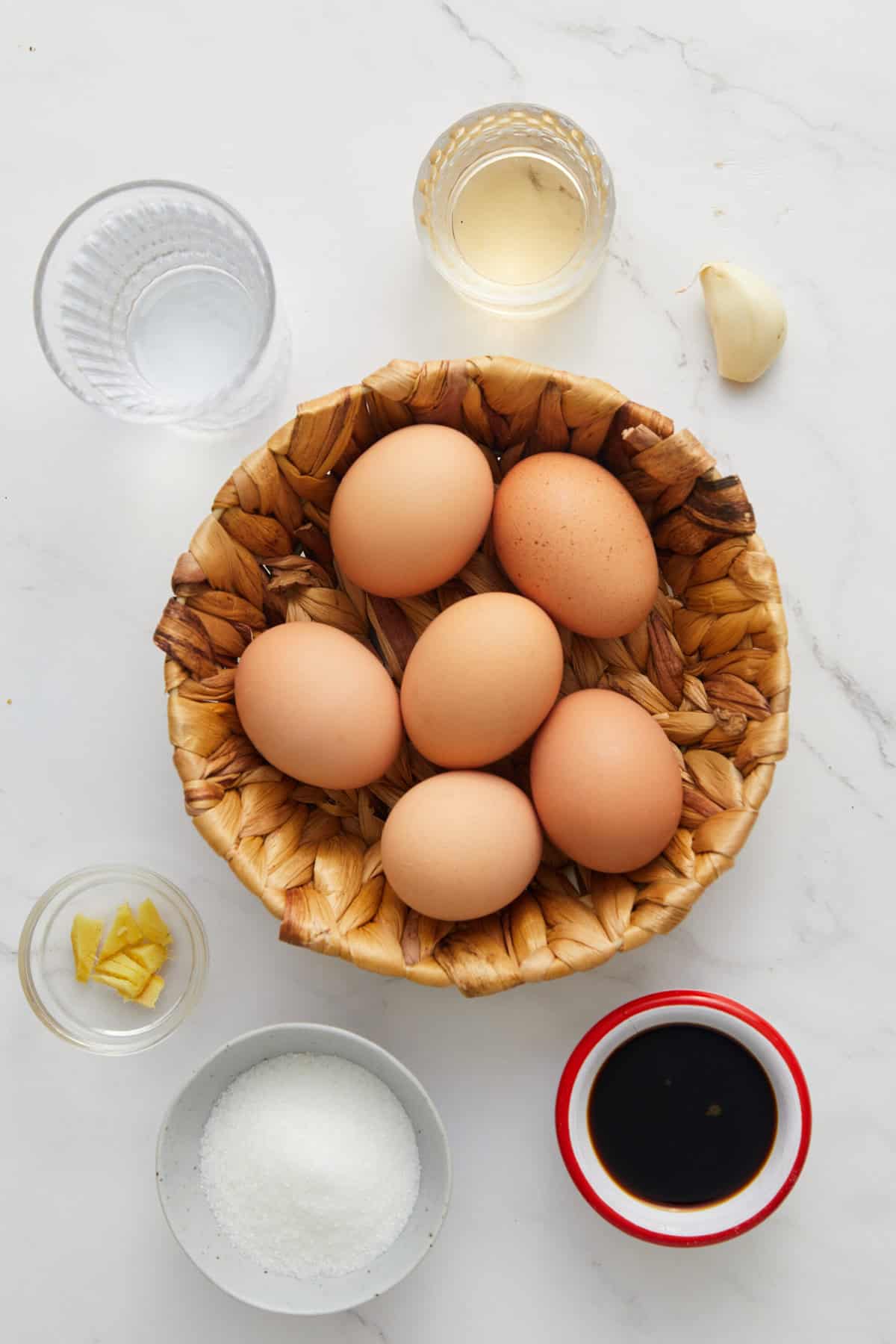
- 3/4 cup soy sauce
- 1/4 cup water
- 2 tablespoons rice vinegar
- 1 tablespoon granulated sugar
- 1 clove garlic peeled and smashed
- 1/2 inch piece of ginger peeled and smashed
- 6 large eggs
- Sesame seeds as garnish, if desired
Instructions
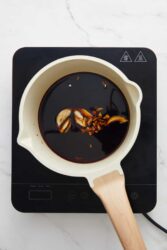
- In a saucepan, combine soy sauce, water, rice vinegar, sugar, garlic, and ginger. Bring to a simmer over medium heat, stirring until sugar dissolves. Remove from heat and let cool.
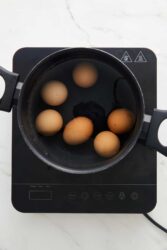
- Place eggs in a pot and cover with cold water. Bring to a boil, then lower heat to a simmer and cook for 7 minutes for a jammy yolk. Immediately transfer eggs to an ice bath to cool.
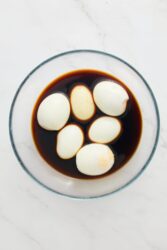
- Once cooled, peel eggs and place them in the soy sauce mixture. Ensure eggs are fully submerged, cover, and marinate in the refrigerator for at least 4 hours, or up to 12 hours for deeper flavor. Garnish with sesame seeds if desired.
Nutrition Info:
Nutrition information are estimates only and may vary based on the specific brands, ingredients, and portion sizes you use. This data is provided for informational purposes only.



Leave a Comment