

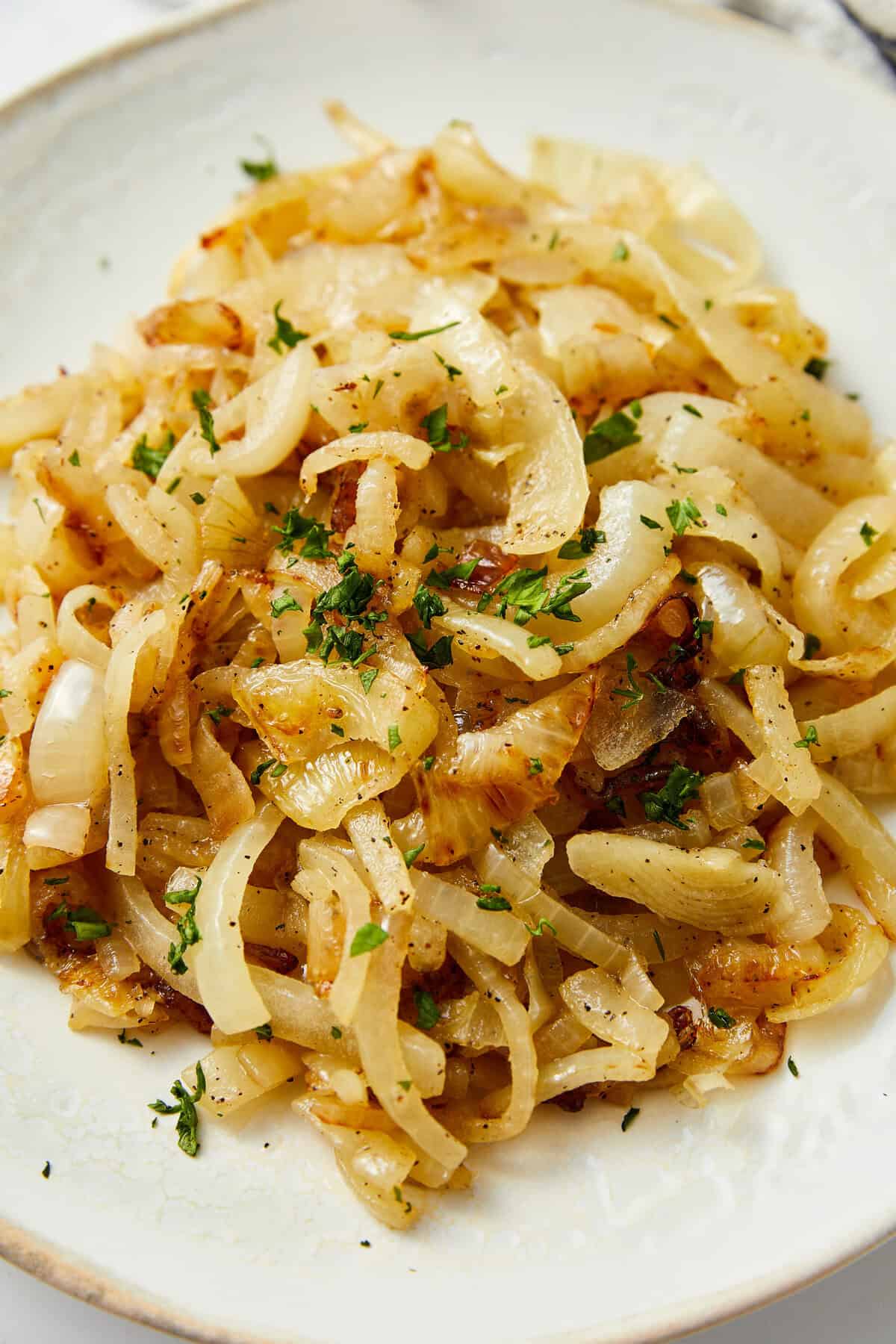
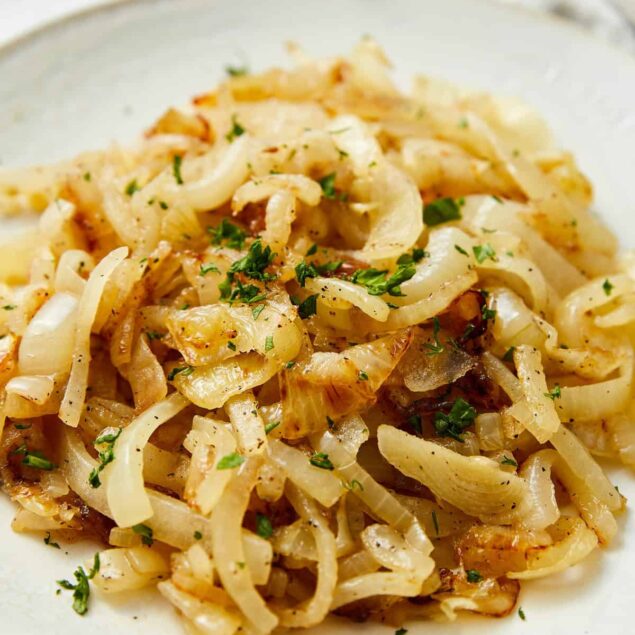
Sautéed Onions caramelize to perfection, offering a naturally sweet and savory flavor—try them on pasta and burgers!

I’m well aware that I’m in the minority for my love of raw onions. Personally, I enjoy their inherent sharpness, especially in wraps and deli sandwiches. My kids? Well, they hate them—unless they’re sautéed.
Add the word “sautéed” in front of practically any recipe, and suddenly, your meal sounds fancier, including that tear-inducing allium genus you buy in bulk from the grocery store, which sits in your pantry for weeks on end. All it takes is 20 minutes to turn them into one of my favorite add-ons for burgers, pasta, pizzas, and sandwiches. I’ve even put them into my omelets when I’m out of shallots.
So what makes them so delicious? One word—caramelization. After a few stirs in olive oil, the onions’ natural sharpness mellows out to a sweet and savory balance. Now, I’m not saying sautéed onions aren’t exactly groundbreaking. This recipe is as simple as it gets. Still, there’s something undeniably satisfying about taking a simple, humble onion and turning it into something glorious.
Are Sautéed Onions Healthy?
Onions themselves offer antioxidants, some fiber, and a decent dose of vitamin C. The recipe is also vegan and gluten-free. You won’t find any dairy here either.
Some sautéed onion recipes call for butter and for good reason. Sauté anything in butter, and you’re in for a treat. Butter caramelizes onions in a way no oil possibly can. However, butter also adds more fat, especially saturated fat. Using a high-quality olive oil still adds a nice flavor and is a healthier pick overall.

Patience Is A Virtue
I’m not the most patient cook in the world, although I’m getting better with age. I find it amusing that I’ve mastered a wide range of more complex recipes, from the likes of Julia Child and Ferran Adrià. Yet it was the sauté that tripped me up the most—and it didn’t matter what it was. Whether I was sautéing mushrooms or spinach, somehow I’d overcook them.
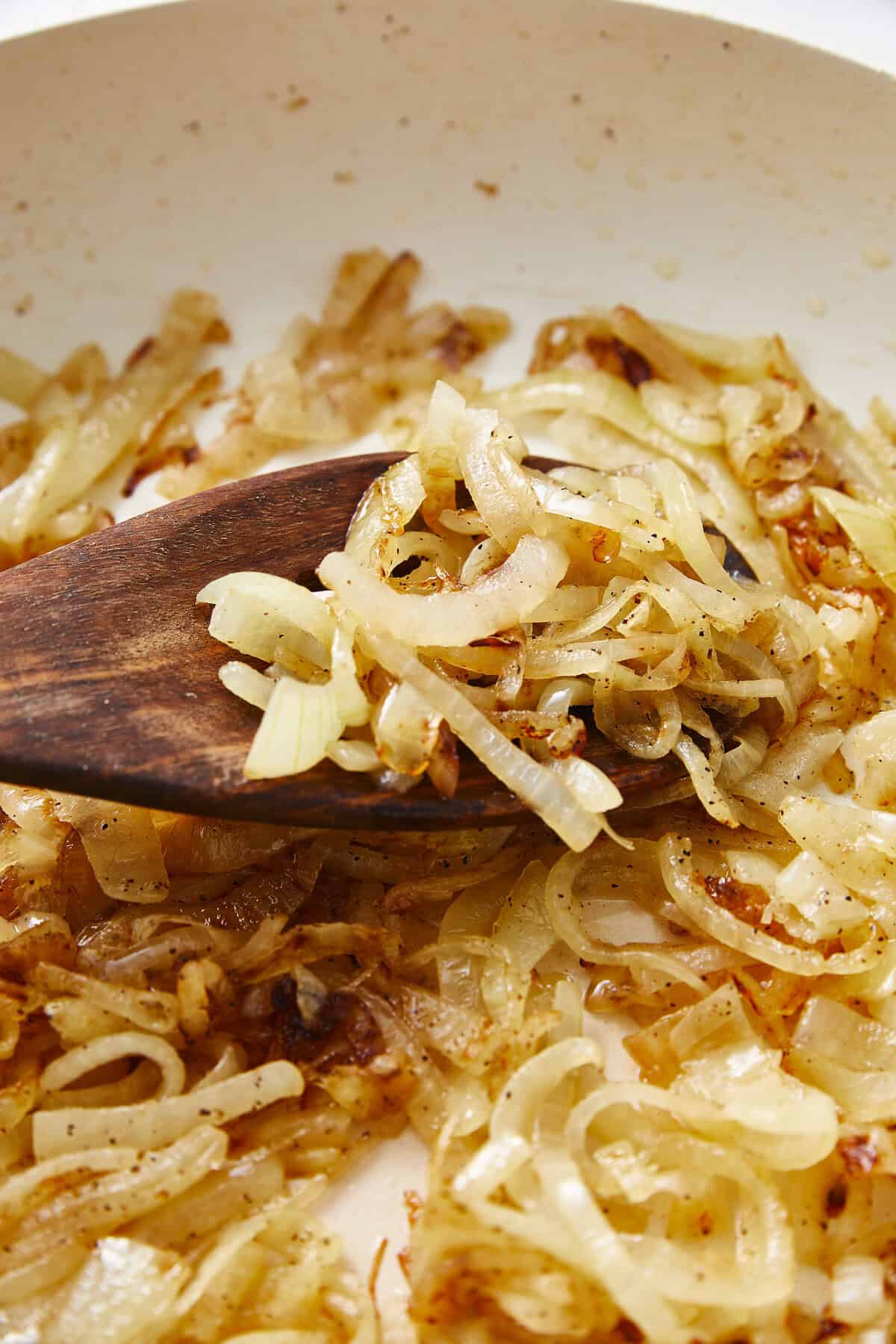
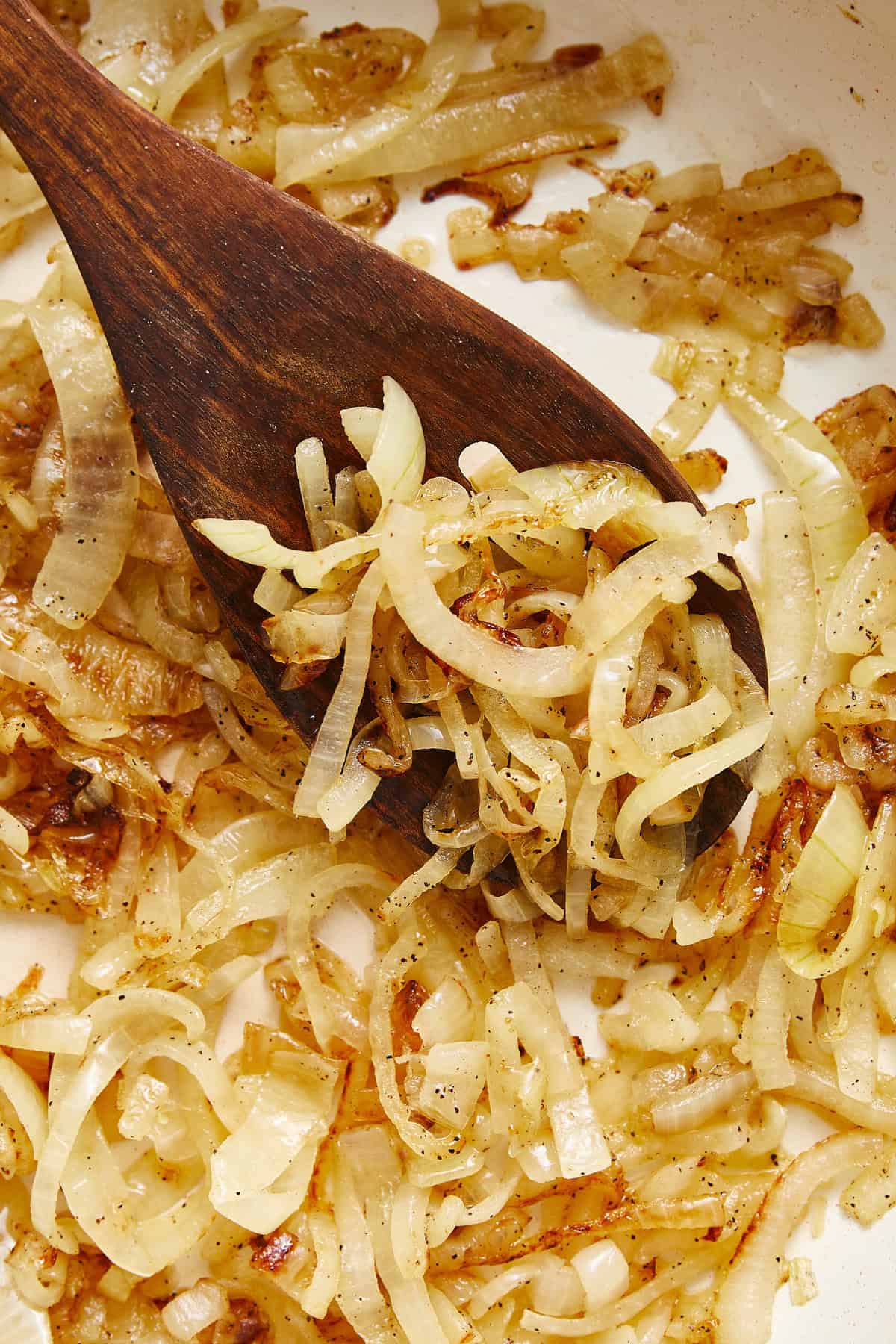
My first rookie mistake was cranking the heat. Even inching to medium-high runs you the risk of burning the onions. Medium is best. Though, depending on your pan (and stove), you may need to dial it to medium-low. Also, don’t forget to stir! You’d be surprised how quickly onions burn—and stick—when you’re not paying attention. If my onions start sticking, I add a splash of water and maybe some more olive oil.
How Do I Store Leftovers?
To store my leftover sautéed onions, first bring them to room temperature. Then, place the onions in an airtight container or a food-safe plastic storage bag. Refrigerate for up to 5 days. These onions freeze well, too. Store them in a freezer-safe bag, and they should be good for up to 3 months.
Serving Suggestions
I find sautéed onions are simply perfect for hamburgers. My grill broke recently, so this Baked Hamburgers recipe has been a go-to for me. And for my vegetarian friends, you can’t go wrong with this recipe for Easy Homemade Sweet Potato Veggie Burgers—the onions complement the star ingredient.
For a more “formal” menu, pair the sautéed onions with Homemade Pasta and a Garlic Butter Sauce or a simple garlic-and-olive-oil sauce. It’s also delicious on Vegan Pizza or Zucchini Pizza Boats. There’s really no wrong way to enjoy sautéed onions!
Ingredients
- 3 medium yellow onions
- 2 tablespoons olive oil
- 1/2 teaspoon kosher salt
- 1/4 teaspoon black pepper
Instructions
- Peel and thinly slice the onions.
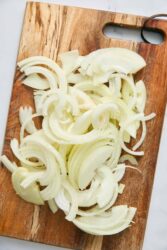
- Heat olive oil in a large skillet over medium heat until shimmering.
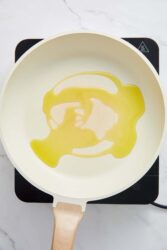
- Add the onions to the skillet, sprinkle with salt and pepper, and cook, stirring occasionally, until onions are golden and soft, about 15 minutes.

Nutrition Info:
Nutrition information are estimates only and may vary based on the specific brands, ingredients, and portion sizes you use. This data is provided for informational purposes only.




Leave a Comment