

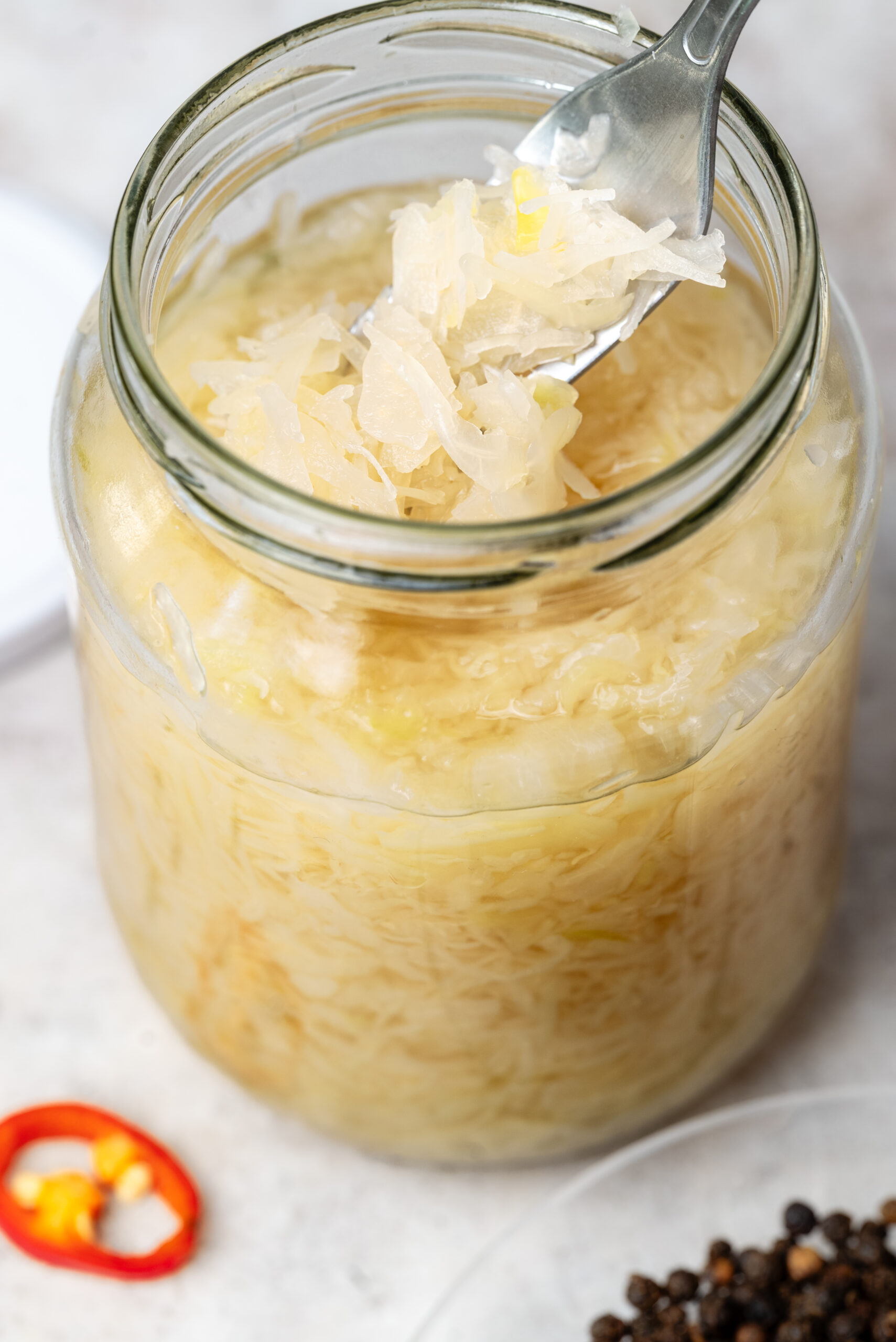
This Sauerkraut Recipe is not only easy to make and healthy to eat, but also a fun activity for children who like to help in the kitchen.
If you have kids at home who love to help in the kitchen, I’ve got a perfect recipe for you. However, before you get started making this healthy and delicious sauerkraut recipe, one word of caution: Use a large bowl to avoid a mess on your kitchen counter or table.
You see, the fun in making sauerkraut is that after you shred and salt your cabbage, you get to massage it with your hands for about 10 minutes. That is where the fun comes in for your little helpers. We all know that kids love to get messy, making mud pies, playing with Play-Doh, and such. Trying to get them to eat sauerkraut may not be easy, but if they have a hand (literally) in making it, they might be more inclined to try the efforts of their work. Besides, think how much fun they will have playing with all that cabbage.
Here’s the thing about making sauerkraut—there’s no right or wrong way to “massage” the cabbage. If their little hands are not strong enough to get the cabbage to release its juices, you can always take over and finish the task. Meanwhile, you can move on to other tasks in the kitchen while they are having “fun.”
Another benefit of letting kids make sauerkraut compared to, say, mixing ground beef, is that there is nothing dangerous about licking their fingers. There is no raw meat, eggs, or other ingredients that should not be consumed uncooked. So go ahead and call in the troops for a fun (and healthy, but you don’t have to tell them that) kitchen activity.
My important sauerkraut preparation tips
The most crucial aspect of making this sauerkraut recipe is ensuring that the cabbage is completely submerged in the brine. Follow the instructions in step 3 to add a saltwater solution if more liquid is needed at the start or during the fermentation process. You can also save one of the outer cabbage leaves to place on top of the shredded cabbage and use that to help push the cabbage down into the brine. A small, heavy, clean object, approximately the same size as the jar opening, can be placed on top of the whole cabbage leaf to help submerge the cabbage.
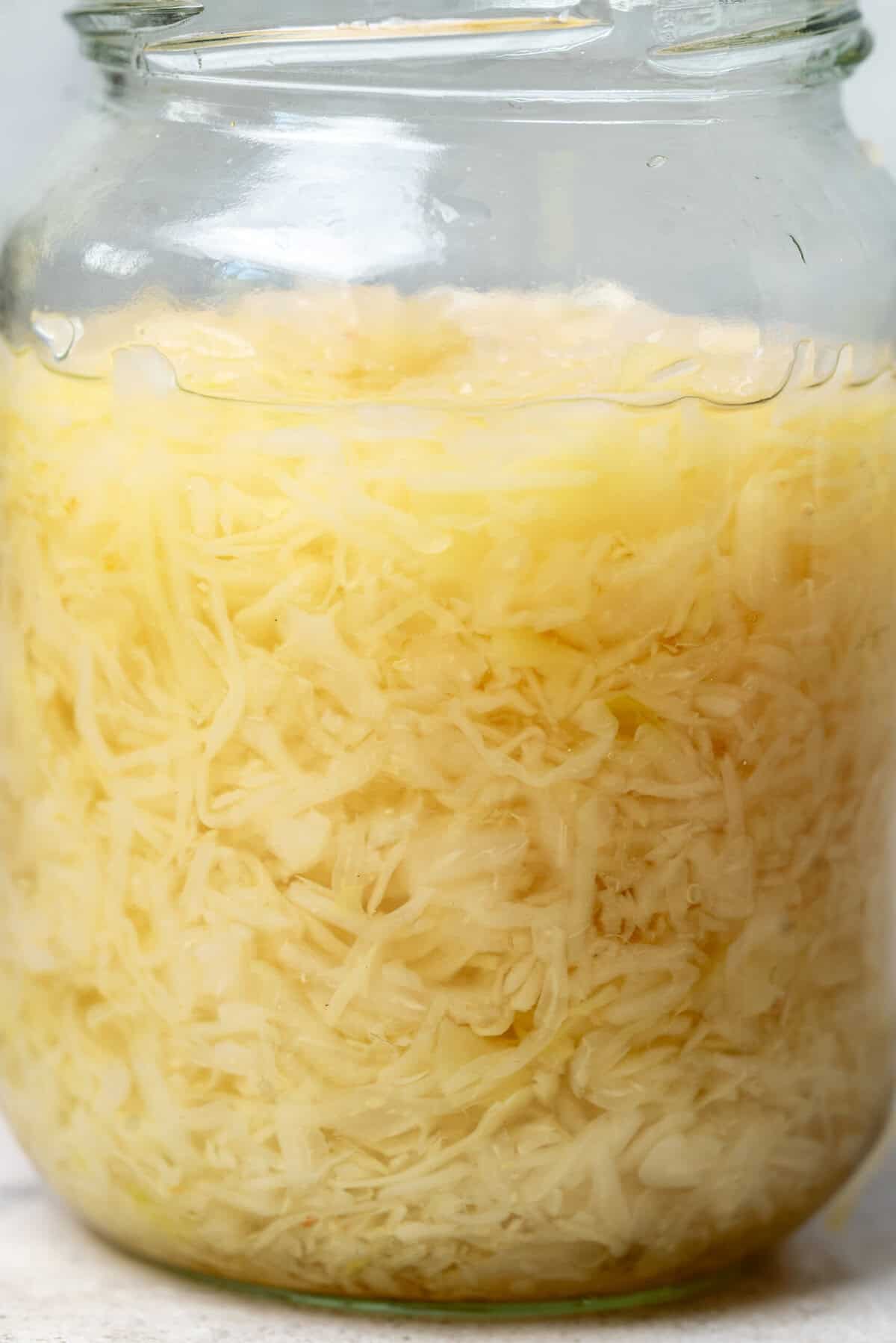
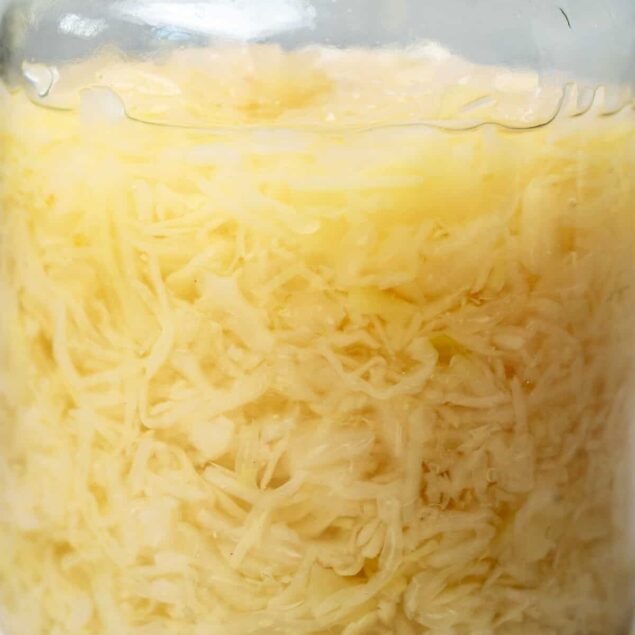
I check my cabbage jars daily to ensure the cabbage is fully submerged, preventing mold growth, and to release any pressure in the jar (this is especially important if you’re not using airlock lids). The longer you ferment the cabbage in a dry, dark location, the tangier it will become. Although one week is the minimum (start tasting after 4-5 days), I highly recommend letting it ferment for at least double that amount of time, which is what I do before storing it in the refrigerator. Fizzing is normal as it shows proper microbial activity. The cabbage color will slowly change from green to pale yellow.
How do I store leftovers?
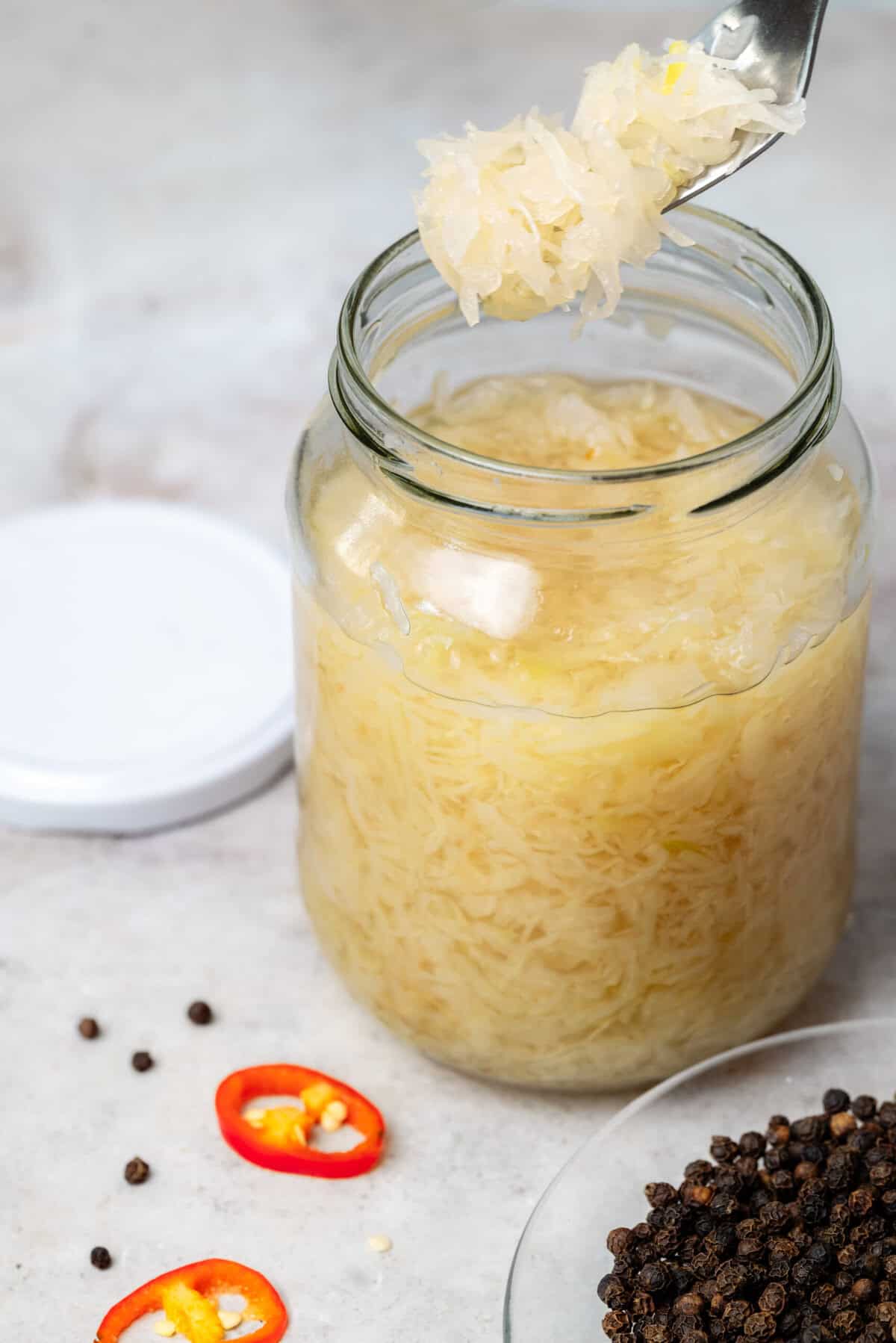
Once your cabbage reaches the desired tanginess, store the jar(s) in the refrigerator, where the sauerkraut will last for 3-4 months. Although it will keep fermenting, the process will slow considerably in the cool fridge. Feel free to rinse sauerkraut before eating if it is too salty for your liking.
Serving suggestions
I don’t know about you, but the first thought that comes to mind when I think of sauerkraut is hot dogs. I used to get them with chili and sauerkraut from a fast-food hot dog chain when I was growing up in California. This Hot Dog Chili is great to enjoy with this sauerkraut recipe. Or, you could enjoy your kraut with these Air-Fryer Brats, in these Reuben Egg Rolls, or as a healthy side dish to Pork Chops And Gravy.
Ingredients
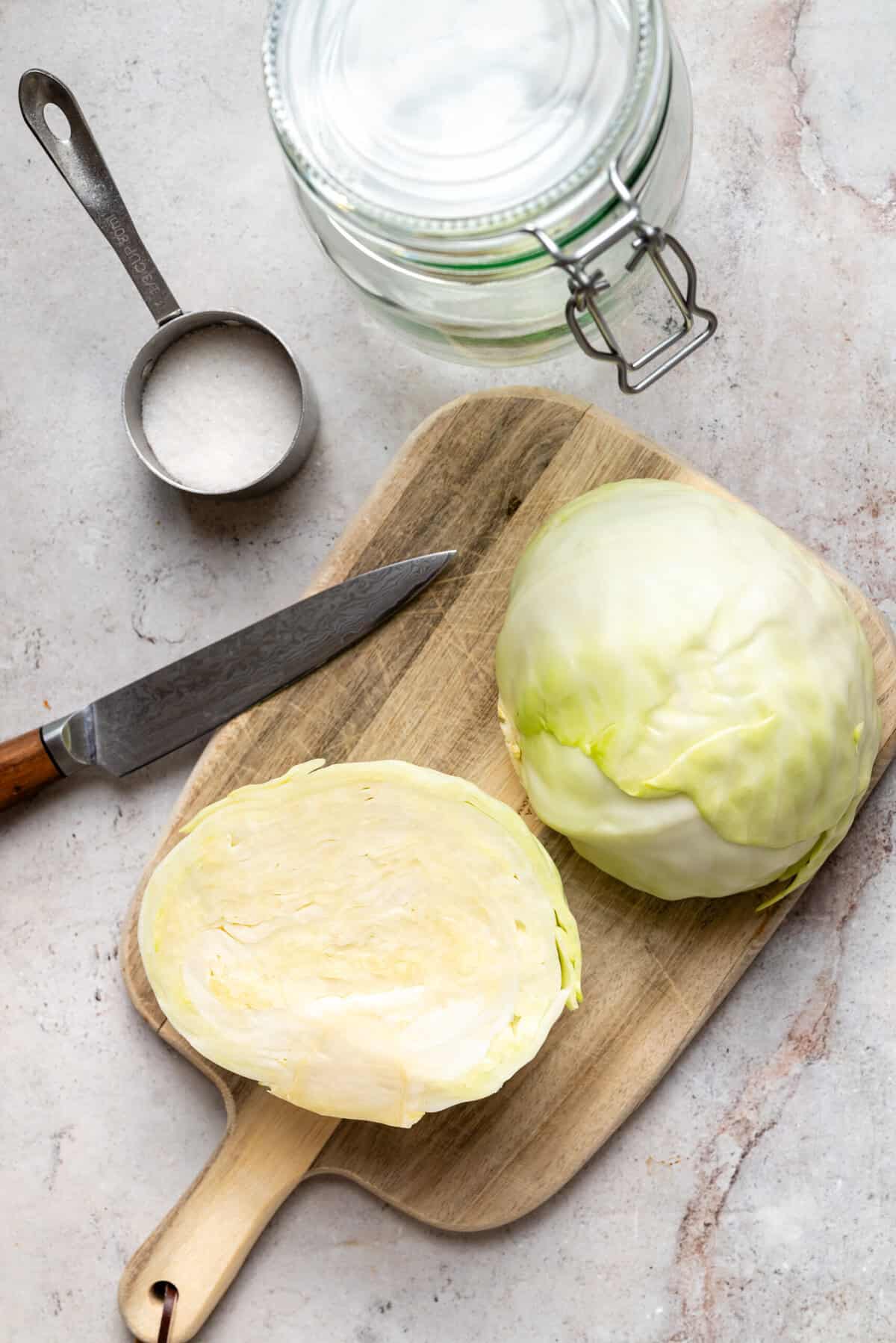
- 1 small head green cabbage, about 3 pounds
- 2 1/2 tablespoons kosher salt
Instructions
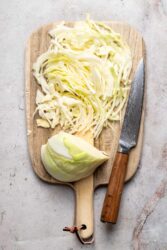
- Remove any damaged outer leaves from the cabbage, cut out the core, and shred the cabbage very thinly using a knife or mandoline.
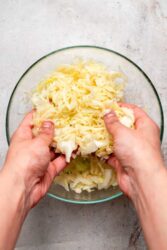
- Place the shredded cabbage in a large bowl. Sprinkle with kosher salt and massage with your hands until the cabbage starts to release its juices, about 10 minutes.
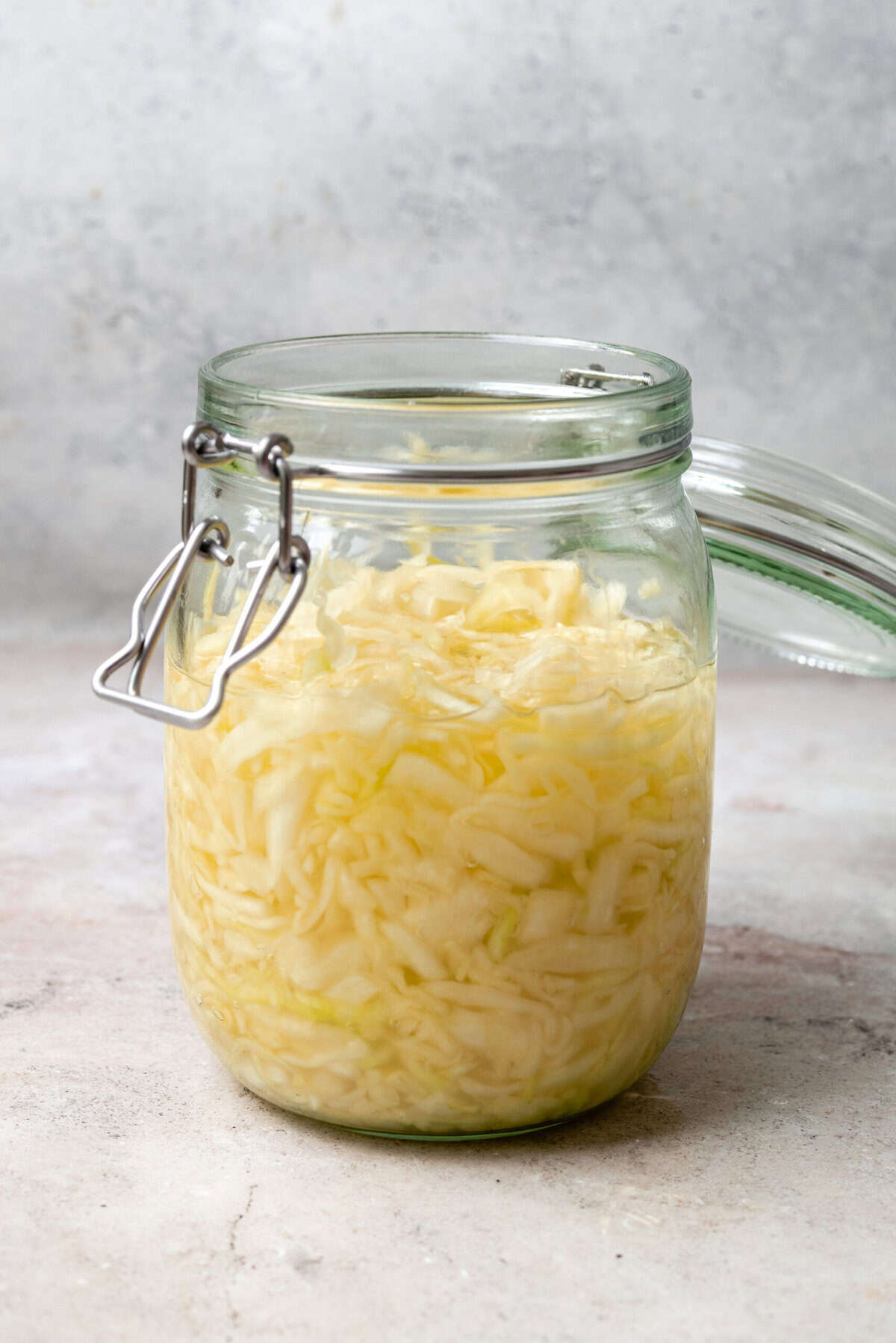
- Transfer cabbage and juices to a clean mason jar (or jars, depending on the size of your cabbage). Press the cabbage down firmly so that it is fully submerged in its natural brine. If the cabbage is not completely covered, mix 1 teaspoon of salt in 1 cup of water (a 2% salt solution) and add this to the jar.
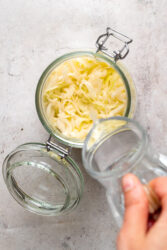
- Cover the jar loosely and place it in a dark spot at 65°F-70°F. Check daily to ensure the cabbage stays under the brine by pressing it down if needed.
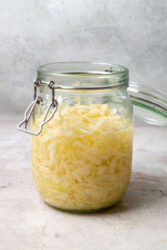
- Ferment for about 1-2 weeks until it reaches the desired tanginess. Once ready, seal the jar tightly and store in the refrigerator.
Nutrition Info:
Nutrition information are estimates only and may vary based on the specific brands, ingredients, and portion sizes you use. This data is provided for informational purposes only.



Leave a Comment