

This Salmorejo Recipe is a classic cold soup from Spain. Showcasing the incredible flavor of ripe tomatoes, it’s the perfect summer soup!

This is not a drill! If you’re reading this during summer, or if your boiler is calling you to heat your home to summer temperatures, this is the cold soup for you!
This salmorejo recipe is packed with simple yet full-bodied flavor that is just so darn satisfying. It was yet another food I tried during my recent trip to Spain, and I didn’t think it would end up being a favorite for my husband and I, but here we are.
Once it’s all puréed up, you just let it sit in the refrigerator overnight to really develop that incredible deep flavor. The end result is a little sweet from the tomato, a little tangy from the vinegar, and SUPER smooth thanks to a generous splash of olive oil.
Is Salmorejo Healthy?
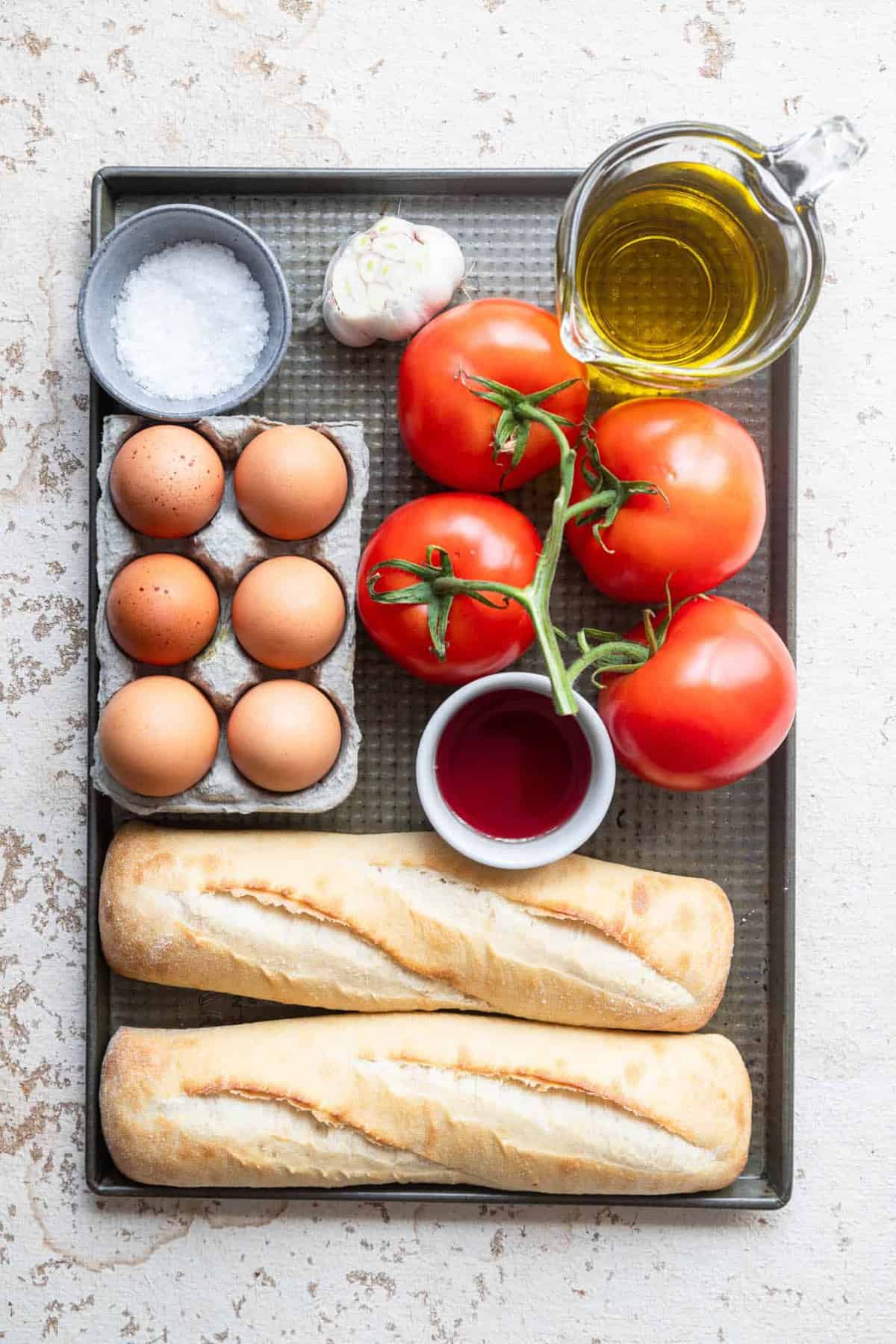
Let’s break down this salmorejo recipe! The main players are tomatoes, bread, olive oil, garlic, vinegar, eggs, and a bit of ham or prosciutto for garnish.
First up, the tomatoes: they’re packed with vitamins (especially vitamin C) and antioxidants like lycopene, and they’re also a great low-calorie base for the soup. Then there’s the baguette, which thickens the soup and gives it that creamy texture. Bread isn’t inherently unhealthy, but this dish uses a whole baguette, which makes the recipe higher in carbs. Extra virgin olive oil is loaded with healthy fats, but it’s used pretty generously here, which adds a lot of calories.
To make this recipe healthier, try experimenting with less oil and see how it goes. You can also swap to a denser bread like sourdough, as it will have a lower glycemic index—meaning it won’t spike your blood sugar as much—and you may also not need to use as much.
Where did Salmorejo come from?
Salmorejo is a traditional cold soup that originates from Córdoba, a city in the Andalusia region of southern Spain. This dish is known for its thick, creamy texture and rich flavor, mostly derived from its key ingredient: ripe tomatoes.
The history of salmorejo can be traced back to Roman times, evolving from simpler dishes that included bread, garlic, and olive oil, with the significant addition of tomatoes happening after their introduction to Spain in the 16th century.
Salmorejo traditionally includes stale bread, garlic, olive oil, and salt, with many recipes also garnishing the soup with diced Serrano ham and hard-boiled eggs.
How to make ahead and store
This salmorejo recipe is one of those dishes that is best made a day ahead, so super prepared home cooks can have an extra glass of wine with friends instead of having to cook. It should stay fresh in an airtight container in the refrigerator for 3 to 4 days, and it’s best consumed the day after making it. While it is possible to freeze salmorejo, it’s not recommended because the freezing process can alter the flavor and make it more watery upon thawing.
Serving Suggestions
Once it’s thick, cold and ready to eat, simply serve it with some chopped ham and a hard-boiled egg and SLURP UP.
To make a full Spanish-inspired spread for your guests, I recommend serving this soup with some of my favorites: Tortilla De Patatas (Spanish omelet), Air-Fryer Shishito Peppers (also called Pimientos de Padrón), and Garlic Shrimp (known as Gambas al Ajillo). To use up any extra tomatoes, you can also make Pan Con Tomate (bread with tomato)!


Ingredients
- 8 medium ripe tomatoes
- 1 medium baguette
- 1/4 cup extra virgin olive oil
- 1 clove garlic
- Splash red wine vinegar extra to taste
- Pinch of salt
- 2 hard-boiled eggs
- Sliced serrano ham or prosciutto
Instructions
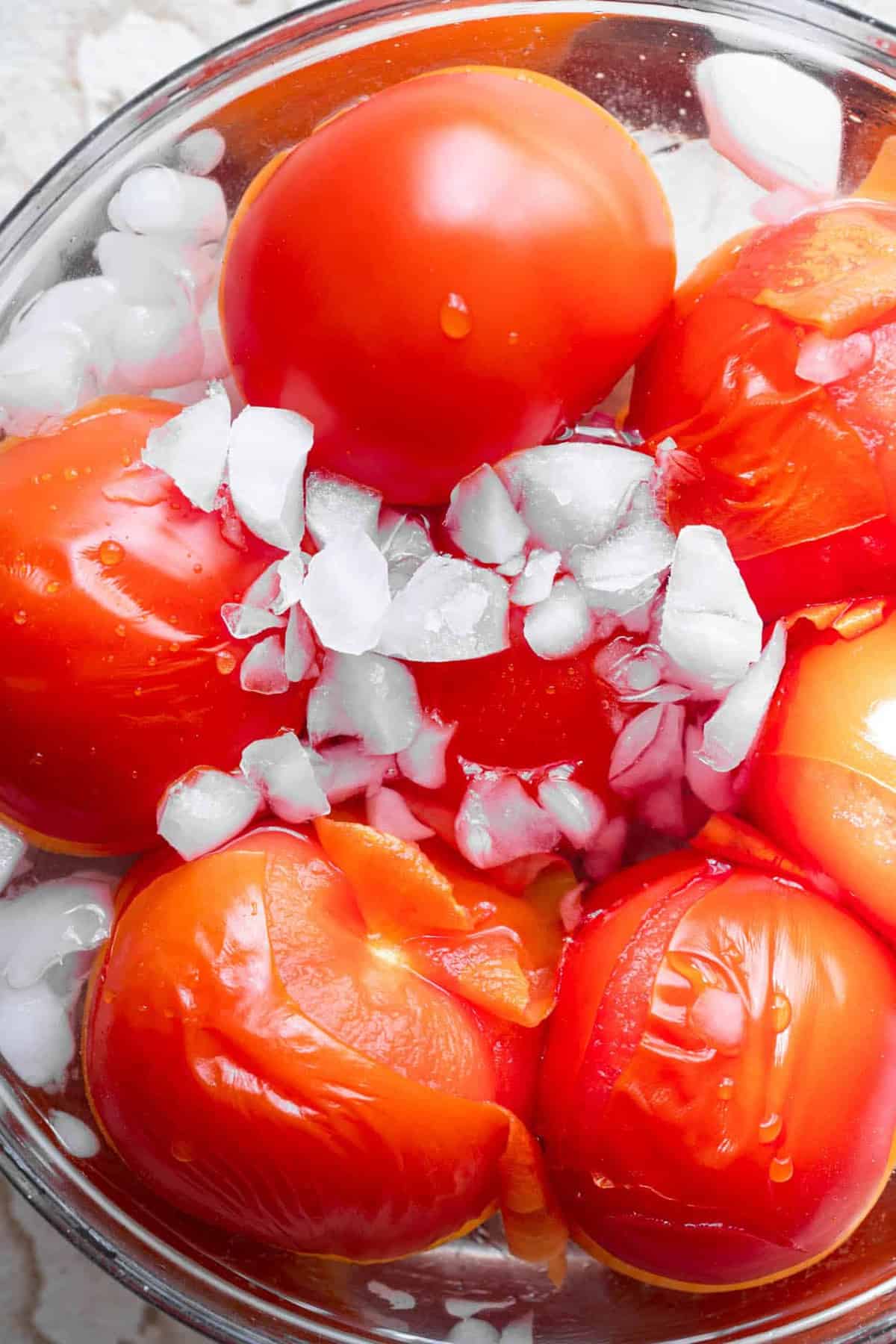
- Bring a large pot of salted water to a boil on the stove. Prepare a large bowl of water and lots of ice, and set it beside the stove. Cut a cross shape into the bottom of each tomato. When the water is boiling, add the tomatoes for 60 seconds, then immediately transfer them to the ice bath. Once cooled, the skin will peel right off the tomatoes.

- Cut out and discard the cores of the tomatoes and add the flesh to your blender. Blend at high speed for about 30 seconds, or until the tomatoes are broken down.
- Remove some of the inside of the baguette and add to the blended tomatoes. The baguette should give you about 2 to 3 cups of bread, and you can experiment with how much you add, as this is how you change the soup's creaminess. I used about 2 cups of the bread. Let the bread soak in the tomato juice for about 5 minutes.
- Add the splash of vinegar, salt, and garlic, and blend until the soup is smooth and silky.
- If your blender has it, open the small hole at the top. Continue running the blender on a moderate speed, and slowly add the olive oil. If your blender doesn't have the hole, pause the blender, carefully add a small amount of oil, run the blender to incorporate the oil, and repeat with the rest of the oil.
- Add 1 hard-boiled egg and blend until incorporated. Taste and adjust levels of salt, vinegar, garlic, and bread if needed. Transfer soup to an airtight container and chill for at least 2 hours, but best overnight.
- Serve in small bowls with a diced hard-boiled egg and sliced ham.

Nutrition Info:
Nutrition information are estimates only and may vary based on the specific brands, ingredients, and portion sizes you use. This data is provided for informational purposes only.



Leave a Comment