

This simple recipe brings a ton of flavor to a vegetable side dish in only 3 ingredients.
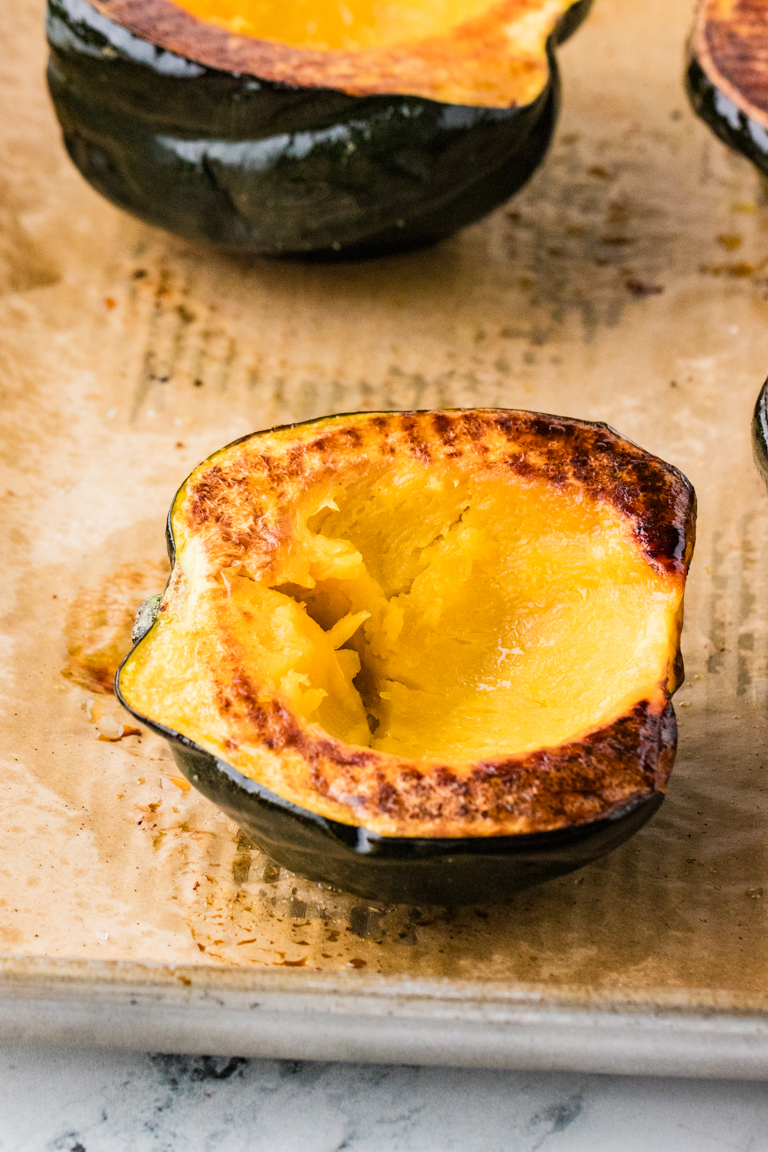
Roasted acorn squash is in its peak season in early fall and winter, which is why you may see plenty of recipes popping up around the holiday season. Luckily, it’s readily available year-round in most grocery stores, so you can enjoy it whenever you’re craving an easy vegetable side dish. At a time when I’m eating a lot of sweet potatoes and butternut squash, I find that roasted acorn squash is a great alternative to add to the rotation.
Roasting acorn squash caramelizes the edges and creates a tender, almost buttery flesh. The end result has a naturally sweet and nutty flavor, which is why you’ll see that this recipe only has three ingredients! But to me, that’s just the starting ground. Since roasted acorn squash is so commonly eaten in the fall, I like to add autumnal spices like cinnamon, nutmeg and ginger. If you crave a more savory flavor, try adding oregano and rosemary.
Is Roasted Acorn Squash Healthy?
Roasted acorn squash is not only rich in flavor, it’s a low-calorie side dish that’s rich in nutrients, as well. This starchy veggie provides vitamins A and C. It’s also packed with potassium and fiber. Roasting the vegetable will also help retain these nutrients. Since many variations of the recipe call for additions like maple syrup, brown sugar, and butter, you’ll want to keep an eye on the calorie count.
Elevate Flavor With Different Olive Oils
While this recipe calls for plain olive oil, I think one of the exciting ways to customize this dish is to use different olive oil flavors. Your choice of olive oil will influence the flavor profile of your roasted acorn squash. Extra-virgin olive oil, known for its pronounced fruity and peppery notes, adds a robust depth, which helps to enrich the squash’s natural sweetness. If you prefer a more subtle taste, try a light or refined olive oil to avoid overpowering the squash’s delicate flavors.
My favorite types of olive oils tend to be infused with herbs and spices. Try drizzling your acorn squash with rosemary-infused olive oil to bring in the savory notes from the herb into the dish. Basil-infused olive oil is another great option that will complement the acorn squash. These are all delicious ways to add unique flavors to a simple dish.

How Do I Store Leftovers?
Roasted acorn squash will last in the fridge for up to 4 days. I recommend wrapping each piece in plastic wrap or storing them all in an airtight container. Once you’re ready to enjoy them, heat them up in the oven to ensure that they don’t get mushy.

Serving Suggestions
Roasted acorn squash works well with a wide range of dishes, but my personal favorite way is as a side dish to a hearty dinner. The squash tastes delicious with Stuffed Pork Chops and Slow-Cooker Beef Brisket. It’s an ideal side dish for holiday gatherings as well. Instead of traditional potato sides, why not try roasted acorn squash next to a spread of Roasted Brussels Sprouts or Green Bean Casserole With Frozen Green Beans?
That’s not to say that roasted acorn squash is only an option for dinner. I love to enjoy roasted acorn squash with a Thanksgiving Salad, since the earthy, seasonal flavors taste delicious together.

Ingredients
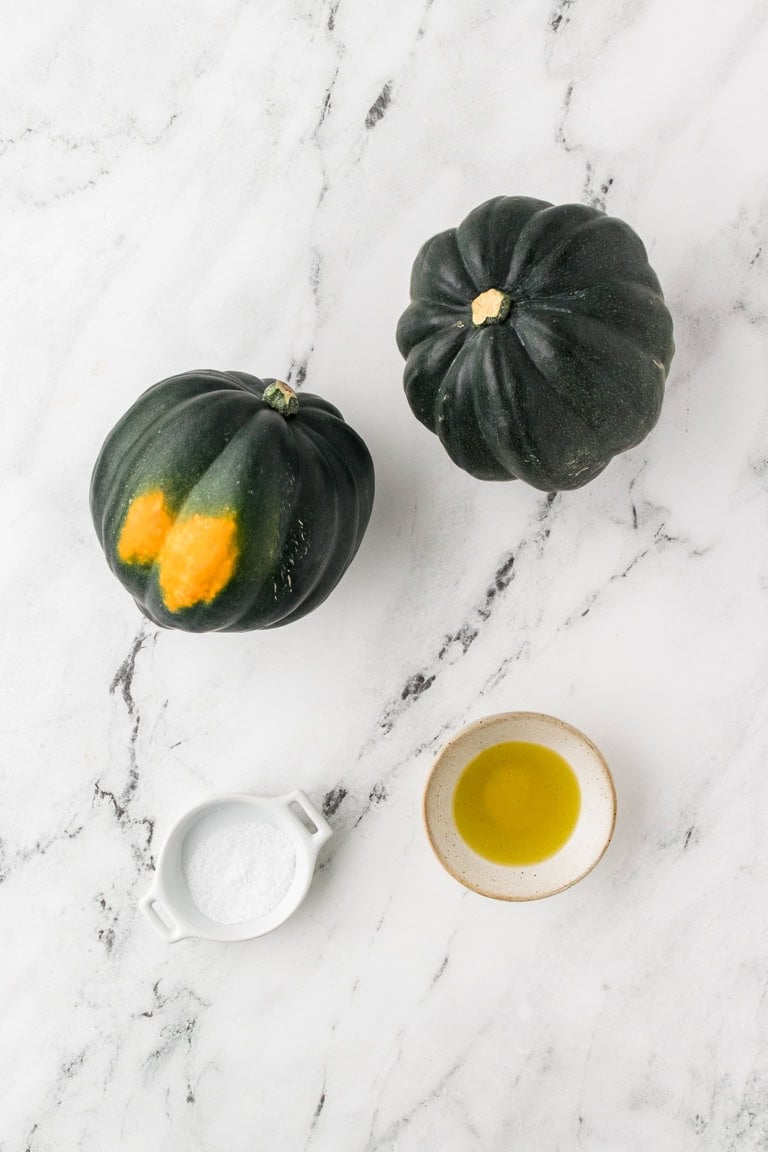
- 2 medium acorn squash
- 1 tablespoon olive oil
- 1/4 teaspoon sea salt
Instructions
- Preheat your oven to 400°F and line a baking sheet with parchment paper.
- Cut the acorn squash in half from top to bottom and scoop out the seeds and stringy insides with a spoon.

- Drizzle olive oil over the cut sides of the squash halves and sprinkle with sea salt. Rub the oil and salt into the squash, then place them cut side down on the prepared baking sheet.
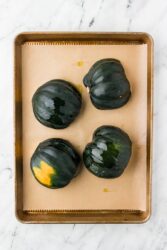
- Roast in the preheated oven until the squash is tender and easily pierced with a fork, about 30–45 minutes.
Nutrition Info:
Nutrition information are estimates only and may vary based on the specific brands, ingredients, and portion sizes you use. This data is provided for informational purposes only.



Leave a Comment