

Elegant and delicious, these stress-free Oven-Poached Eggs are great for feeding a crowd.
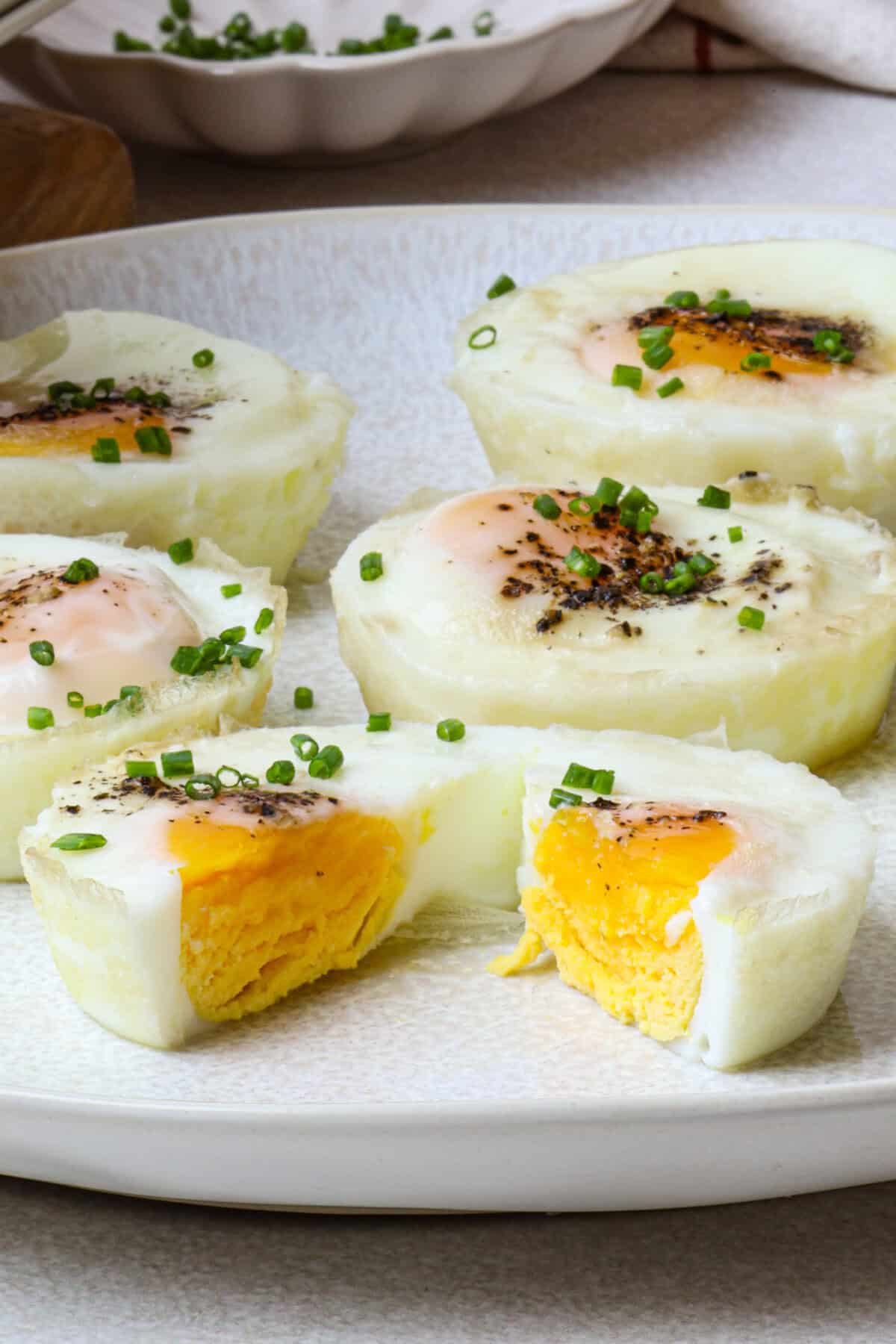
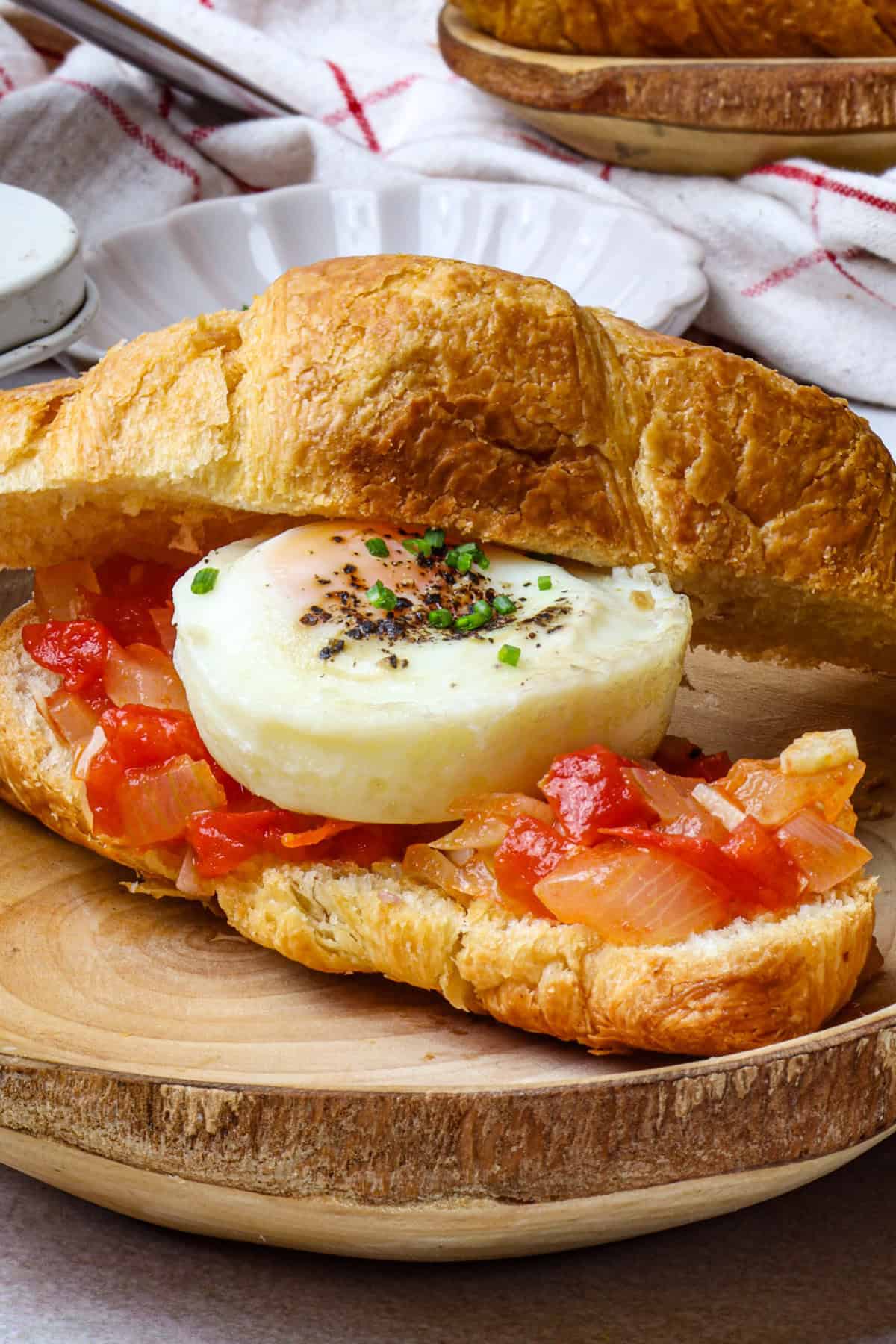
Versatile, delicious, and oh-so-easy to prepare, there are practically no downsides to these oven-poached eggs. Serve them straight up on hot buttered toast, or use them as a base for anything from eggs Benedicts to shakshuka to up your breakfast game big time.
Get a little nervous on the subject of poaching eggs? You’re not alone, and this one’s for you. Poaching gets a bad rap among those who identify more as novices in the kitchen. But with this recipe, it’s really foolproof. There’s no simmering, swirling water to contend with, nor fiddling with cracking the egg just right over the pot. Really, the oven and a muffin tin do the majority of the work for you.
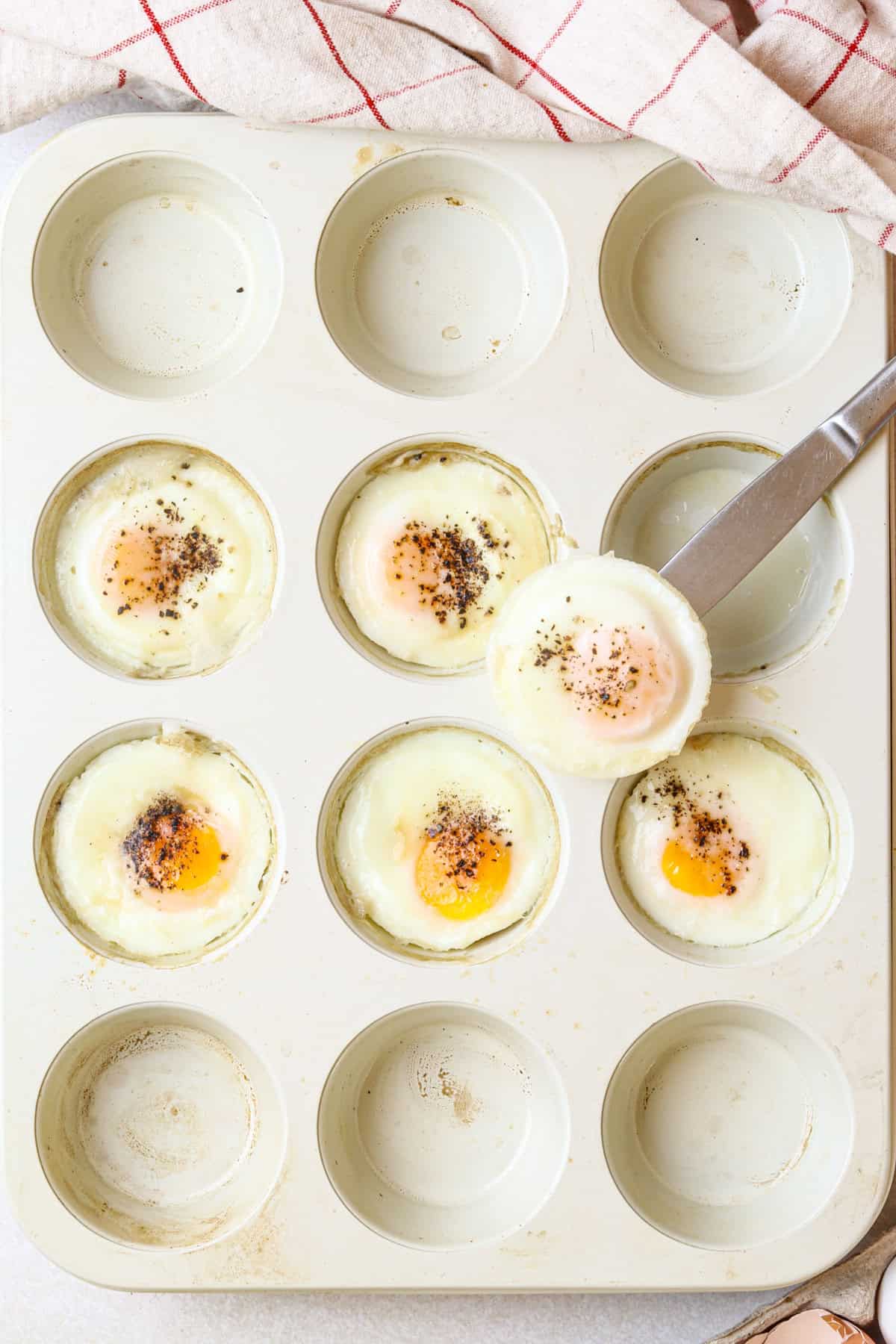
I love that this recipe can produce as many eggs as you have muffin tins, which is great when you have a crowd over for brunch. I’ve made these many times, and they yield consistent results with soft-set whites and rich, jammy yolks. If you’ve ever tried to poach eggs for your spouse, kids, in-laws, and relatives all at once, you’ll really appreciate the convenience of this method. You’re welcome.
Are Oven-Poached Eggs Healthy?
Eggs are a great source of protein, plus vitamins and minerals like vitamin A, B vitamins, selenium, and choline. This recipe uses no butter or oil, making them even healthier than scrambled or fried and more interesting than your average, run-of-the-mill hard-boiled eggs. So, yes, this recipe is healthy!
Which Eggs Should I Buy?
The truth is that a lot of premium egg brands are more about marketing than any appreciable difference in the eggs themselves. There are differences between types of eggs, but from a nutritional standpoint, the differences are relatively minor.
Pasture-raised chickens that get to peck at insects and bugs will generally produce eggs with yellower yolks and have slightly more nutrients, but the main difference comes down to how the chickens are treated. Pastured chickens have a life as close to wild as possible, so if eating eggs from happy chickens is important to you, then pasture eggs are the way to go. In this context, avoid eggs labeled as “free-range,” which is more of a marketing gimmick than a real-life quality difference for the chickens. The only downside is that these eggs are a bit more expensive.
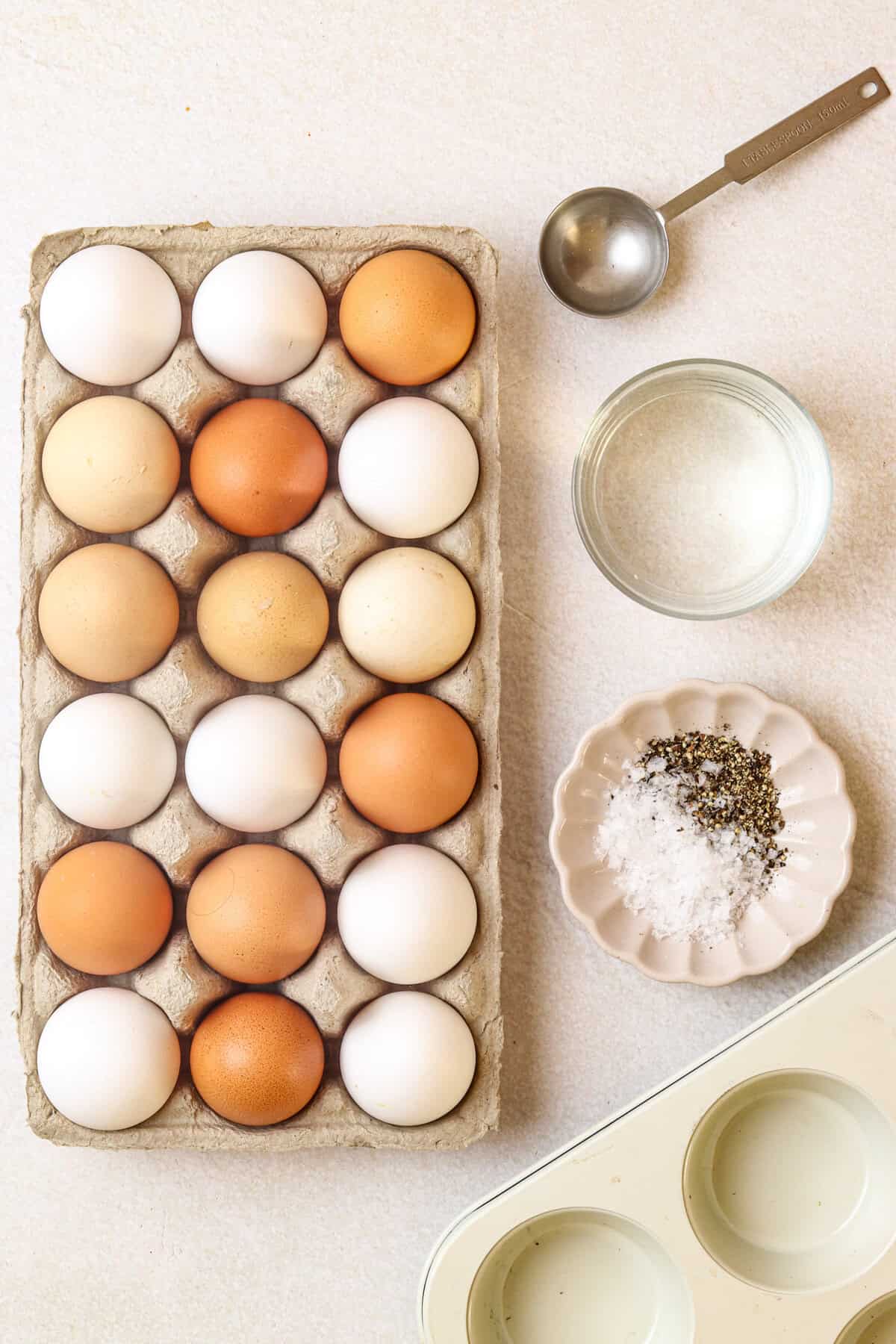
I often get asked about brown vs. white eggs here at FFF, and the simple answer is that there’s no difference between them. The shell color is simply dependent on the breed of chicken and has nothing to do with what they’re fed or how they’re treated.
Opting for organic eggs is a personal choice. Organic eggs don’t always come from chickens treated differently from regular hens, no matter what the box says, but the increase in feed quality tends to make the eggs richer in vitamins A and E and produces a nice bright yellow/orange yolk.
How Do I Store Leftovers?
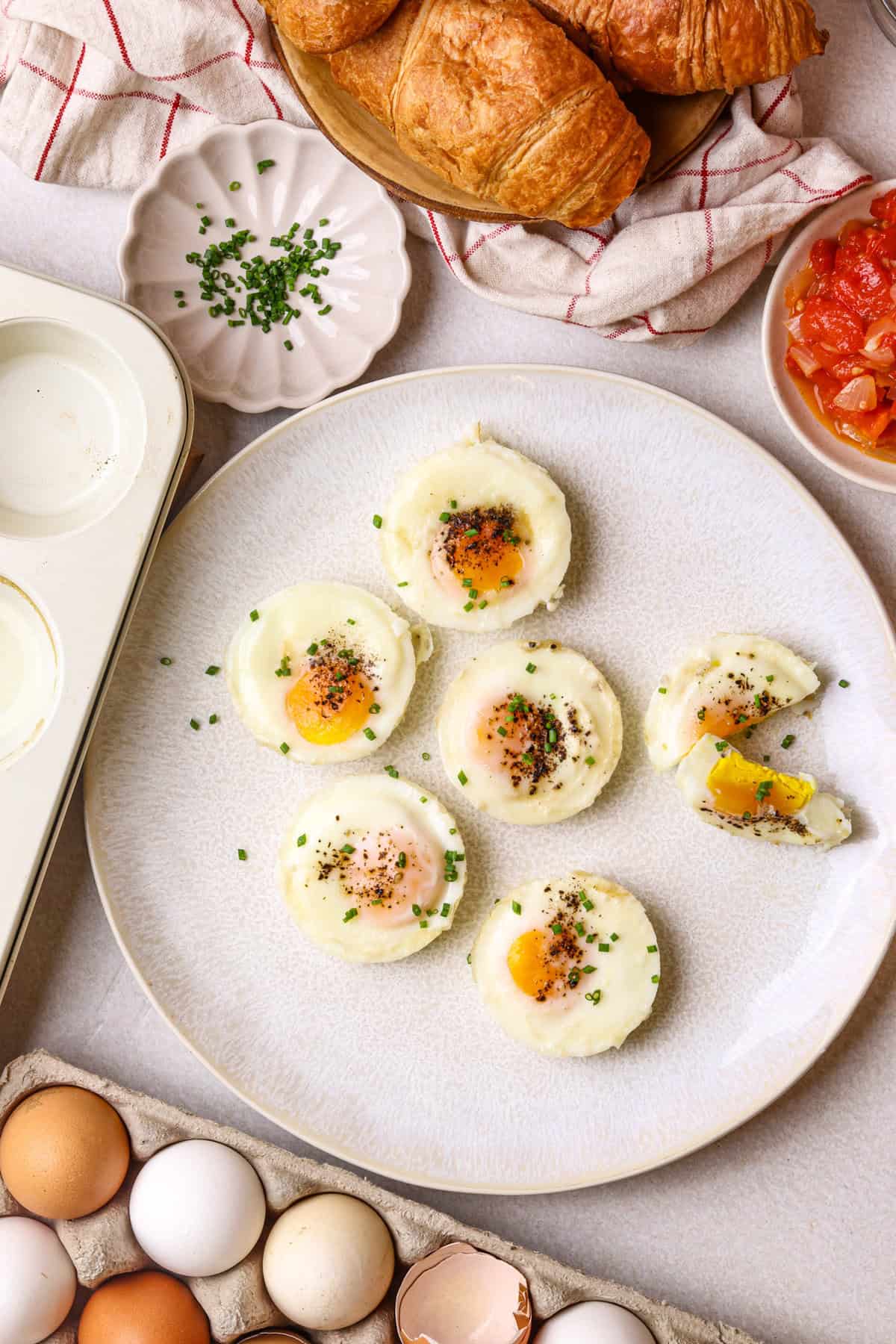
These eggs will keep in the fridge for up to 3 days and should be reheated by dropping them in simmering hot water for 30-40 seconds. Microwaving them might lead to unexpected explosions and will yield a hard yolk, so it isn’t recommended. These eggs don’t freeze well.
Serving Suggestions
Depending on how fancy you’d like to be, some of the variations we discussed above would work great with a mimosa (champagne or prosecco with orange juice), a simple arugula salad, or some cut-up fruits. If you’d like something a bit more hearty, then try some Breakfast Potatoes or home fries, and pair them with some breakfast sausages or Bacon Cooked From A Cold Oven. They’re also great alongside some Crispy Asparagus or Roasted Brussels Sprouts!
Ingredients
- 6 eggs
- 6 tablespoons water
- Salt and pepper to taste
Instructions
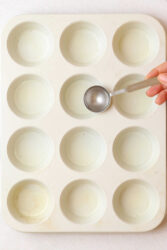
- Preheat the oven to 350 degrees Fahrenheit. Add 1 tablespoon of water into each muffin hole.
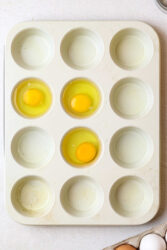
- Crack the eggs into the water in the muffin tin holes, making sure not to break the yolks.
- Sprinkle some salt and pepper over the eggs. Place them into the oven to poach for 12-15 minutes, or until the whites are cooked.
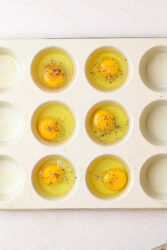
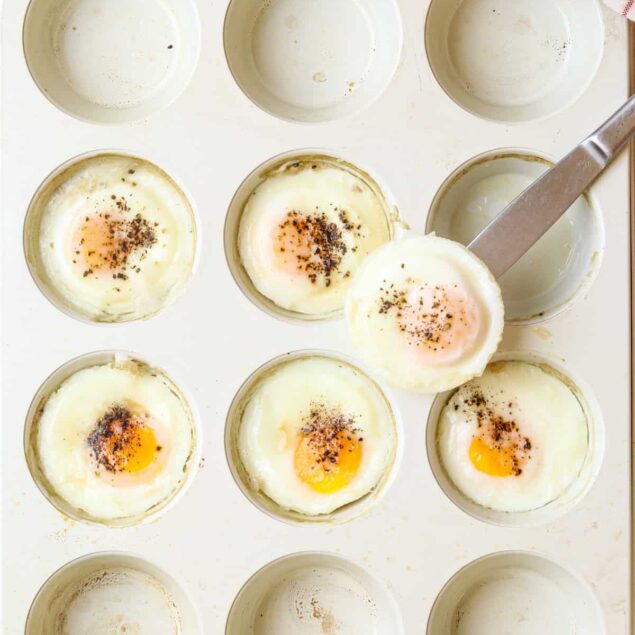
- Use a knife to run around the edges of the eggs and gently lift them out of the muffin tin holes.

Nutrition Info:
Nutrition information are estimates only and may vary based on the specific brands, ingredients, and portion sizes you use. This data is provided for informational purposes only.



Leave a Comment