

Try this easy way to save leftover garlic. It’s bursting with sweet and tangy flavor!
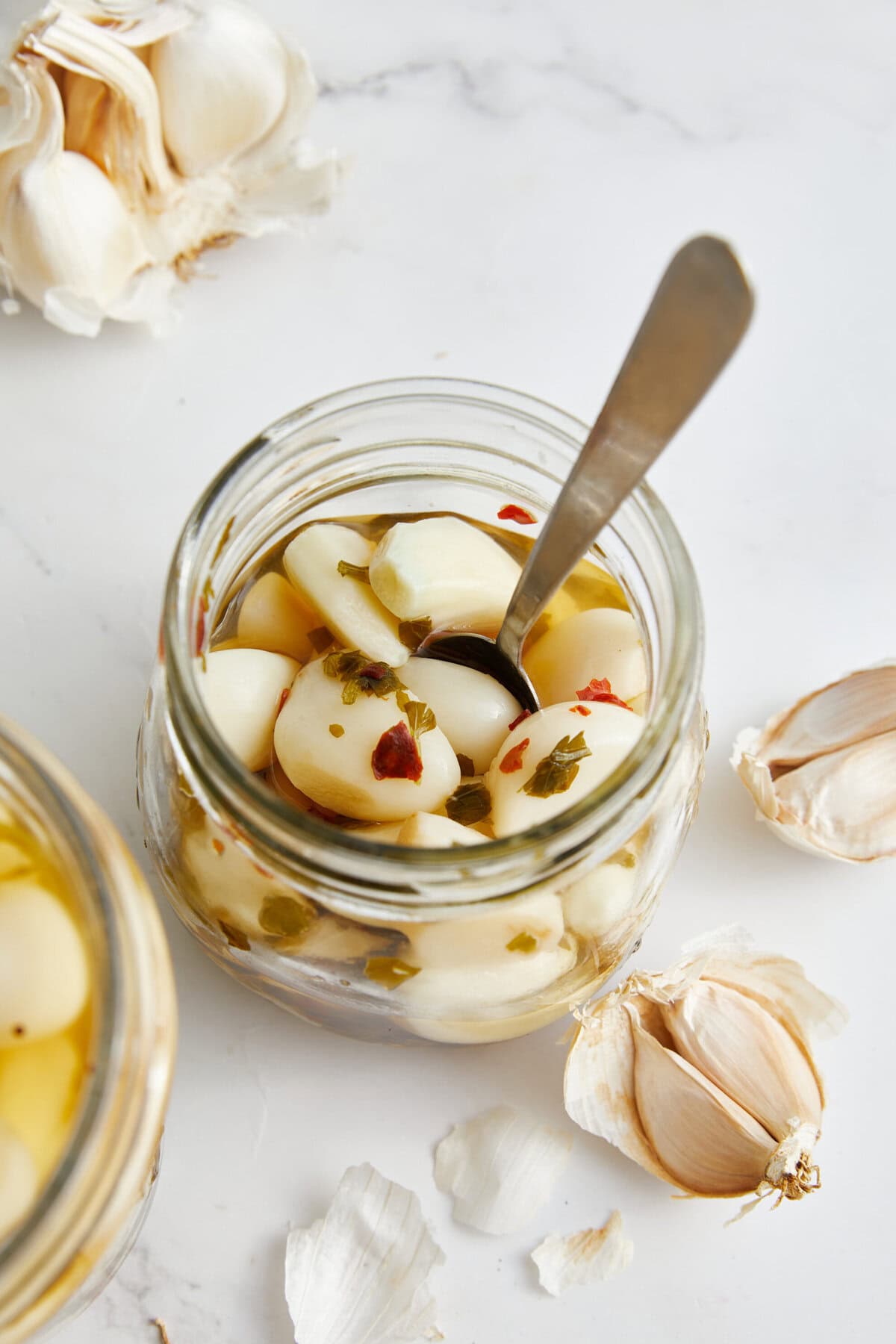
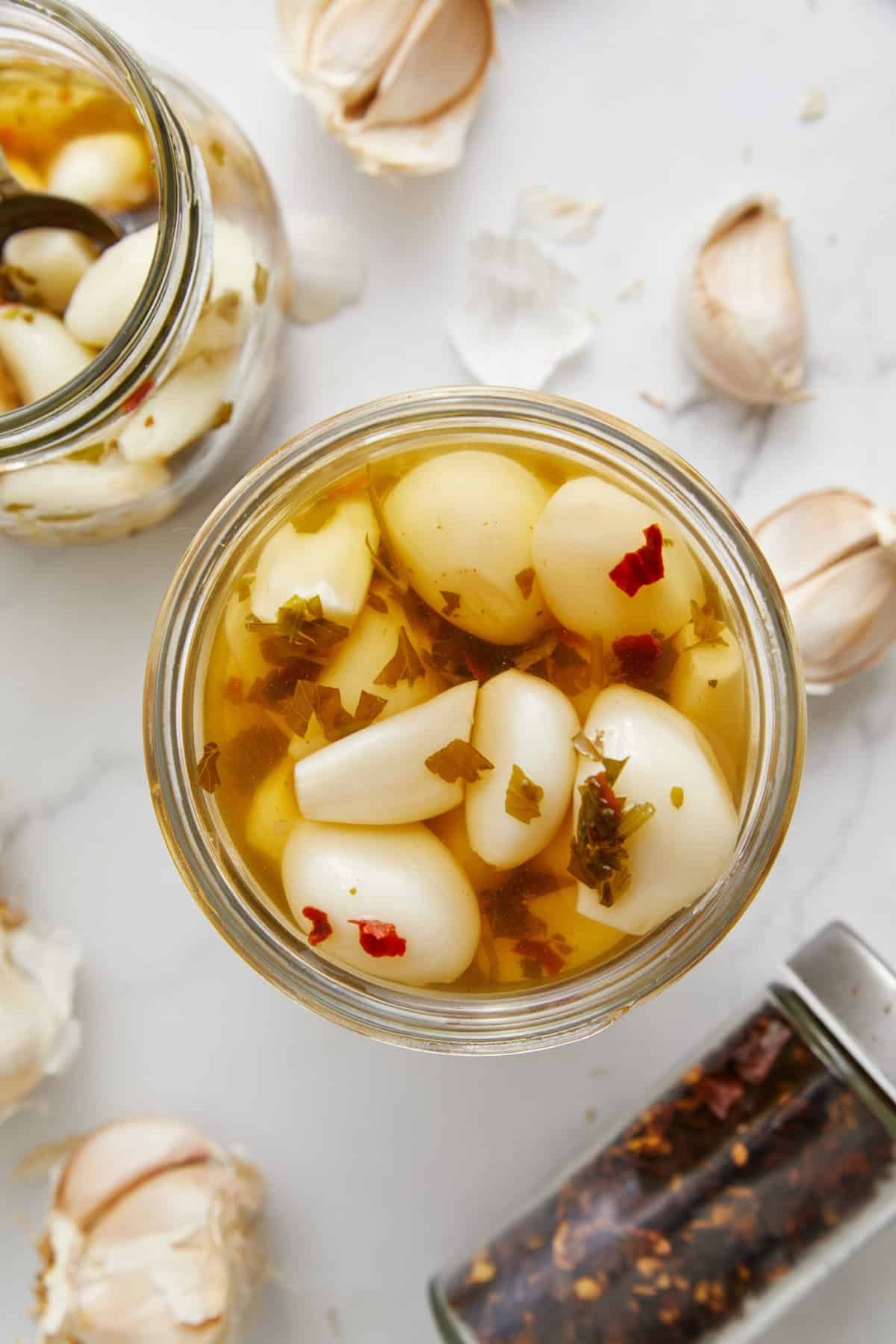
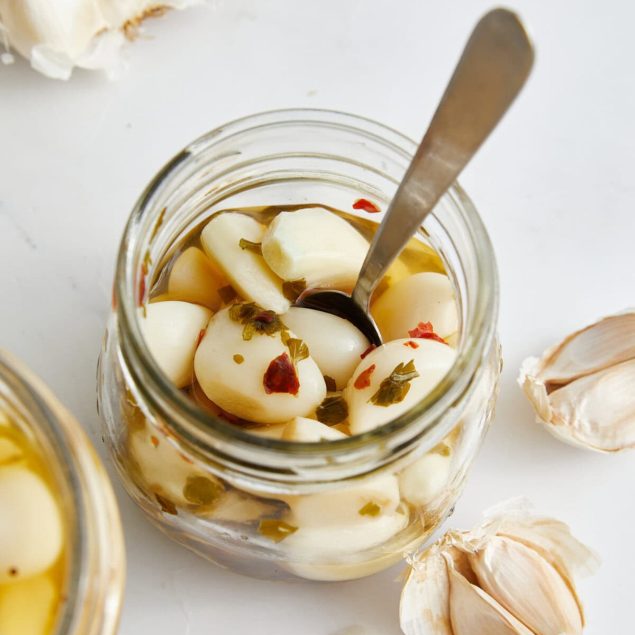
There’s no garlic clove sadder than one that’s turned all brown and shriveled because it wasn’t used in time. But what to do with all those leftover cloves? Well, if you have an abundance of garlic that’s begging to get used, this recipe’s got you covered. Unlike your standard raw garlic, pickled garlic lasts much longer (up to three months in the fridge), and the flavor completely transforms. Instead of being pungent, over time, the garlic cloves become sweet, tangy, and tender; the perfect accompaniment to antipasto salads, charcuterie boards, and/or a glass of wine.
Of course, this dazzling little dish is elevated and versatile, but it can also be enjoyed by all ages! Kids who love pickles can enjoy these clever cloves as a side to sandwiches or as an after-school snack. Since they last so long and only get more flavorful over time, you can make jars of these at the beginning of the month and use them through the weeks ahead. You can also wrap some jars in colorful bows and give them as birthday or holiday gifts. For something so small and simple, the possibilities are certainly broad and plentiful!
Is Pickled Garlic Healthy?
Garlic is a superfood full of antibacterial, antiviral, and anti-inflammatory properties that support the body’s core functions. Notably, this comes from allicin, the pungent compound that’s responsible for the allium’s unmistakable smell. Since raw garlic is so strong by itself, it can be hard to stomach while receiving all its benefits. Pickling it not only helps the garlic maintain its powerful nutrients, but also softens the flavor to make it more palatable. Bonus: This whole recipe is gluten-free and vegan!
Where Does Pickling Come From?
Believe it or not, preserving food in a vinegar-based brine or similar solution is one of the oldest methods of food preservation, having been around for centuries. Archaeologists believe that ancient Mesopotamians were pickling all the way back in 2400 B.C. Cucumbers, of course, have become the most common produce to pickle, but garlic has also become an easy and delicious option that complements many Mediterranean and Italian dishes. Today, you can pickle almost anything… peppers, green beans, and even jellies or jams.
How To Make Ahead And Store
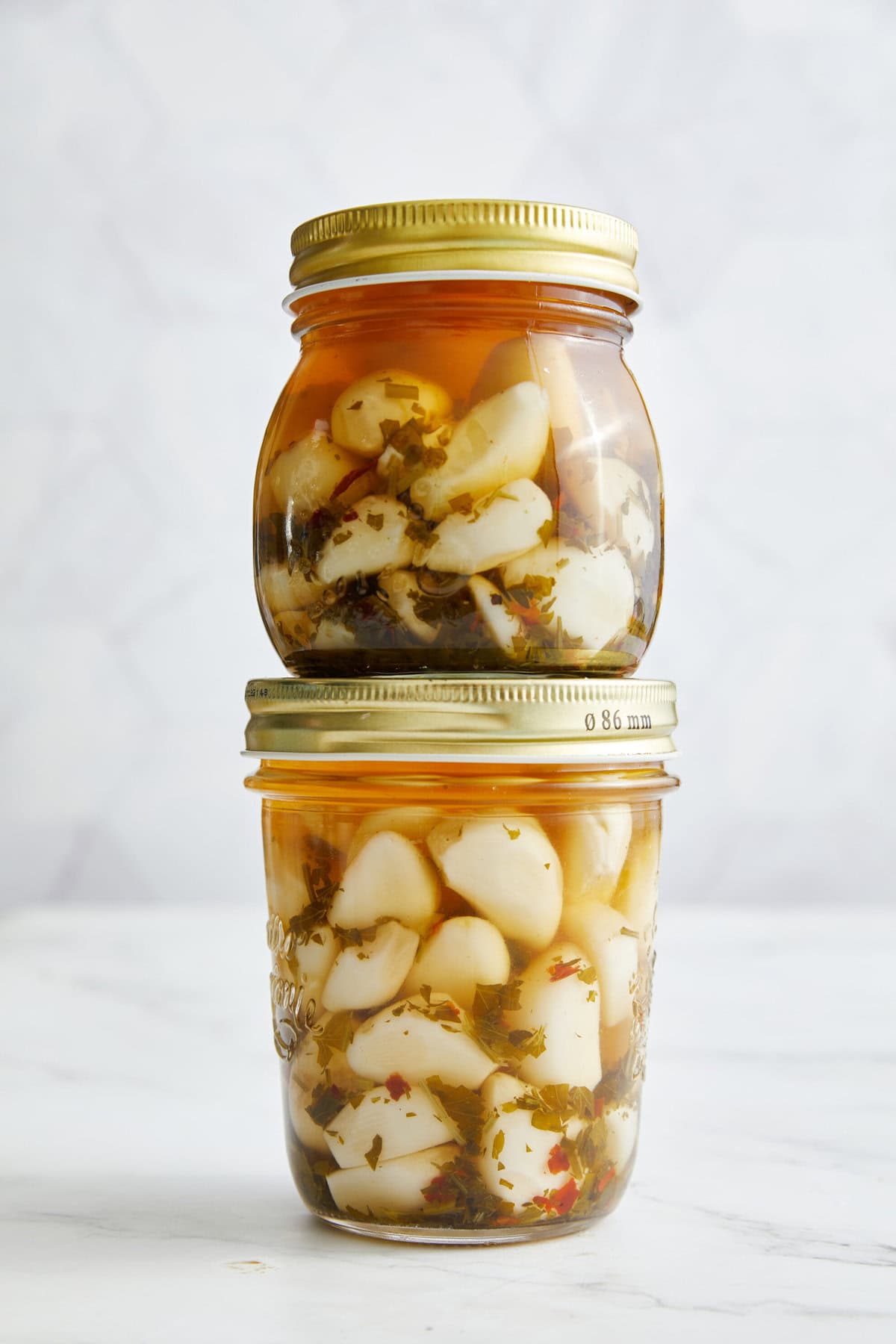
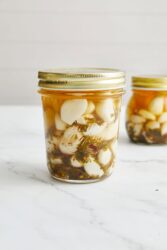
This recipe is designed to be made and stored in well-sealed, refrigerated jars for up to 3 months. Make sure to let the mixture pickle in the fridge for at least 1 week before digging in. Waiting 3 weeks is ideal and will pack the most enjoyable flavor into each bite. I don’t recommend freezing these, and it’s not really necessary since they naturally last so long in the fridge anyway.
Serving Suggestions
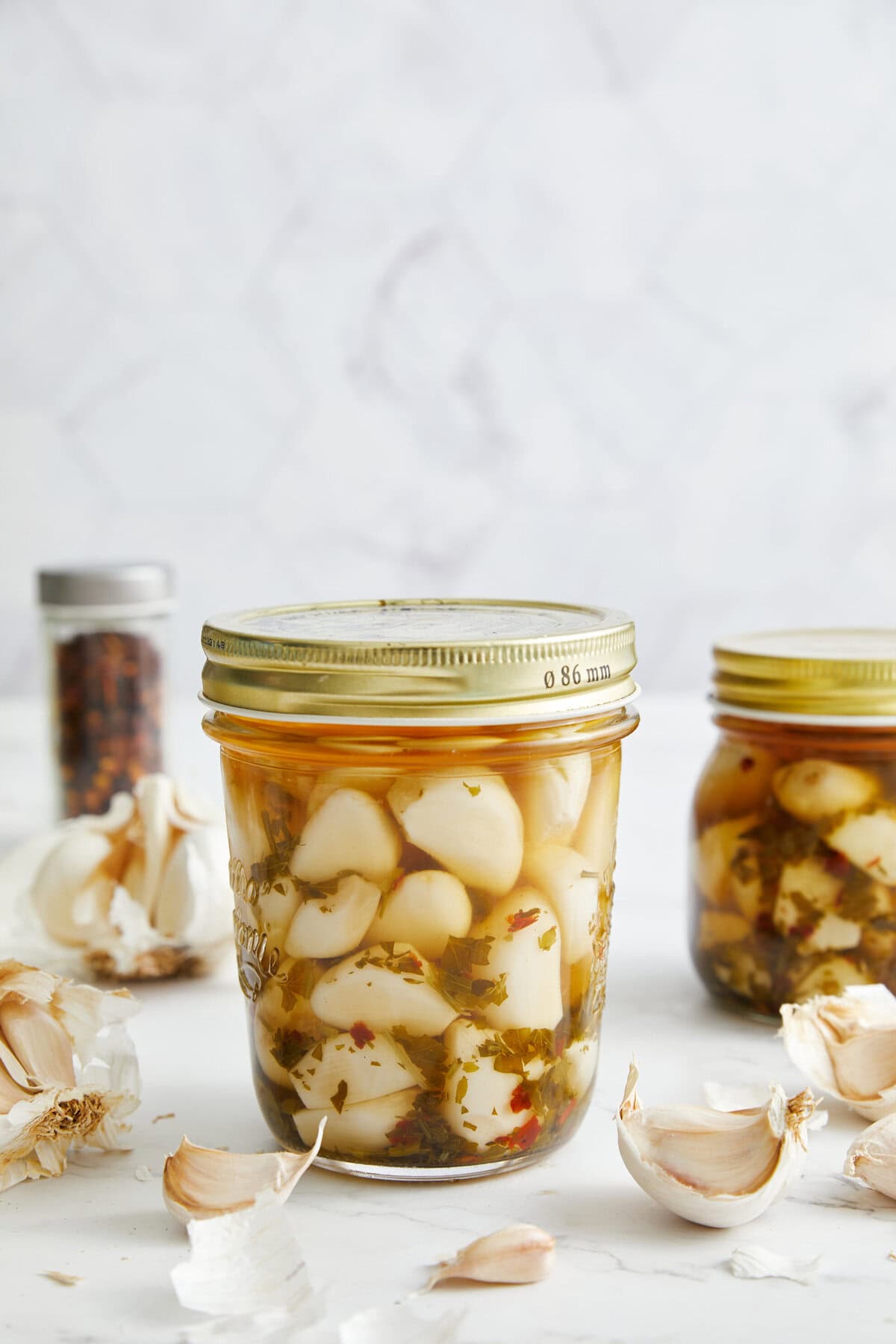
Aside from using pickled garlic in appetizer platters and antipasto salads, I find they go deliciously on top of The Best Pasta Salad for a burst of tangy goodness in your Italian picnic lunch. You can also serve them with Lamb Chops, a much richer dinner option.
Last, but definitely not least, I recommend using pickled garlic and its liquid as a base for dressing a Greek Cucumber Salad. It’s a vegetarian Mediterranean paradise!
Ingredients
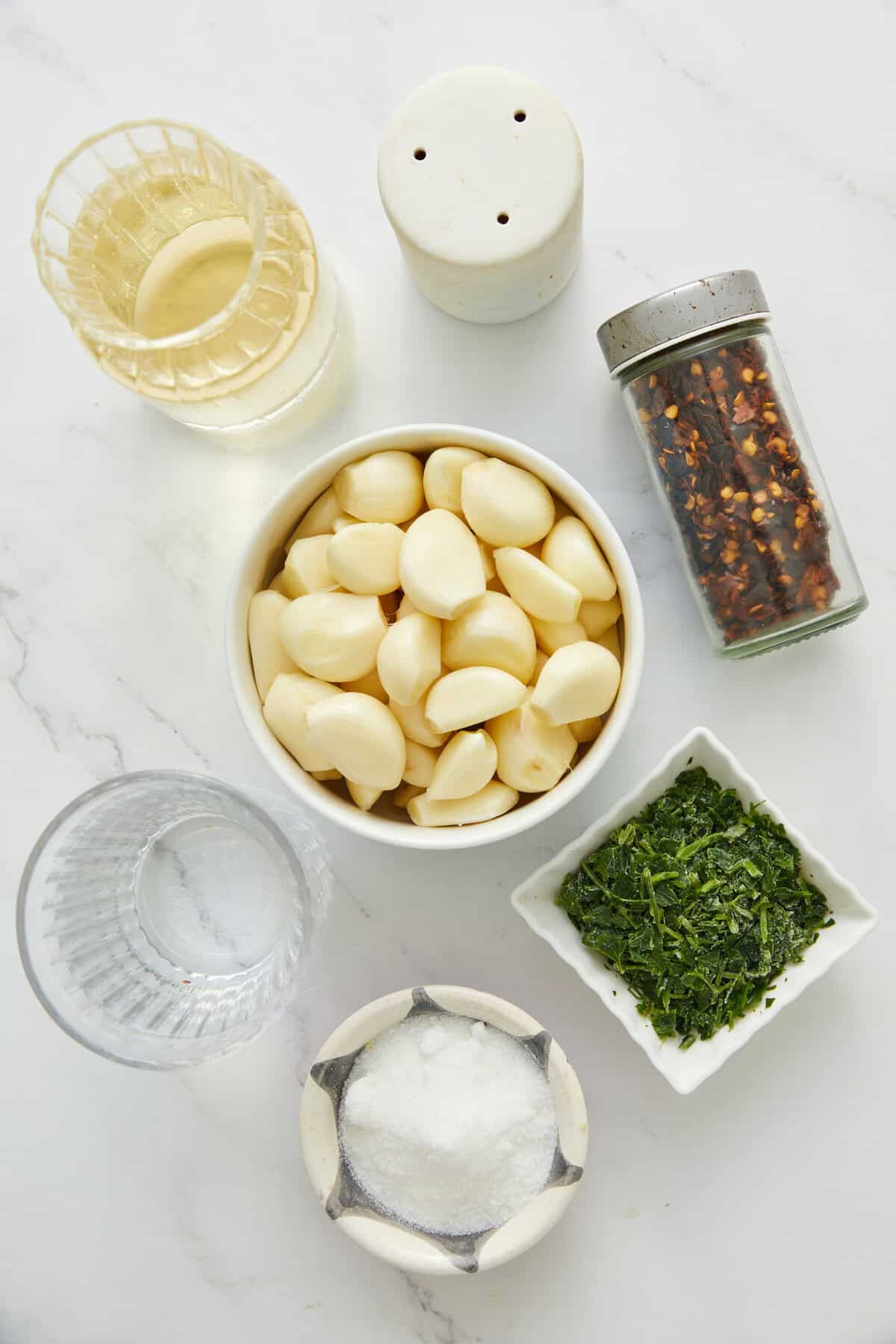
- 1 cup white vinegar
- 1 cup water
- 2 tablespoons sugar
- 1 tablespoon kosher salt
- 2 cups garlic cloves peeled
- 1 teaspoon red pepper flakes
- 1/4 cup fresh dill chopped
Instructions
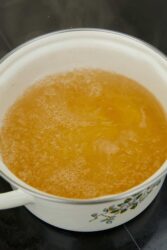
- In a medium saucepan, combine vinegar, water, sugar, and kosher salt. Bring the mixture to a boil over medium heat, stirring until the sugar and salt dissolve.
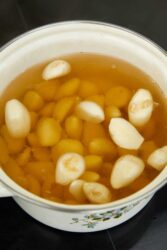
- Add the peeled garlic cloves to the boiling mixture and simmer for about 2 minutes.
- Remove from heat. Stir in red pepper flakes and fresh dill. Transfer the garlic and brine into sterilized jars, ensuring garlic is submerged in the brine.
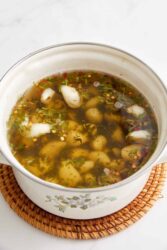
- Allow the jars to cool to room temperature, then seal and refrigerate. The pickled garlic will be ready to eat after 1 week and can be stored in the refrigerator for up to 3 months.
Nutrition Info:
Nutrition information are estimates only and may vary based on the specific brands, ingredients, and portion sizes you use. This data is provided for informational purposes only.


Leave a Comment