

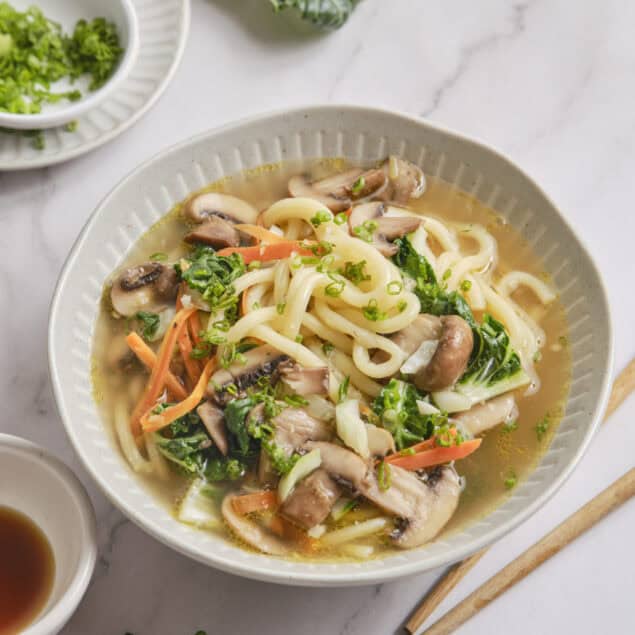
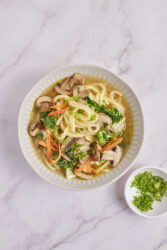
Take veggie noodle soup to the next level with this ultra-flavorful and easy-to-make Mushroom Ramen.
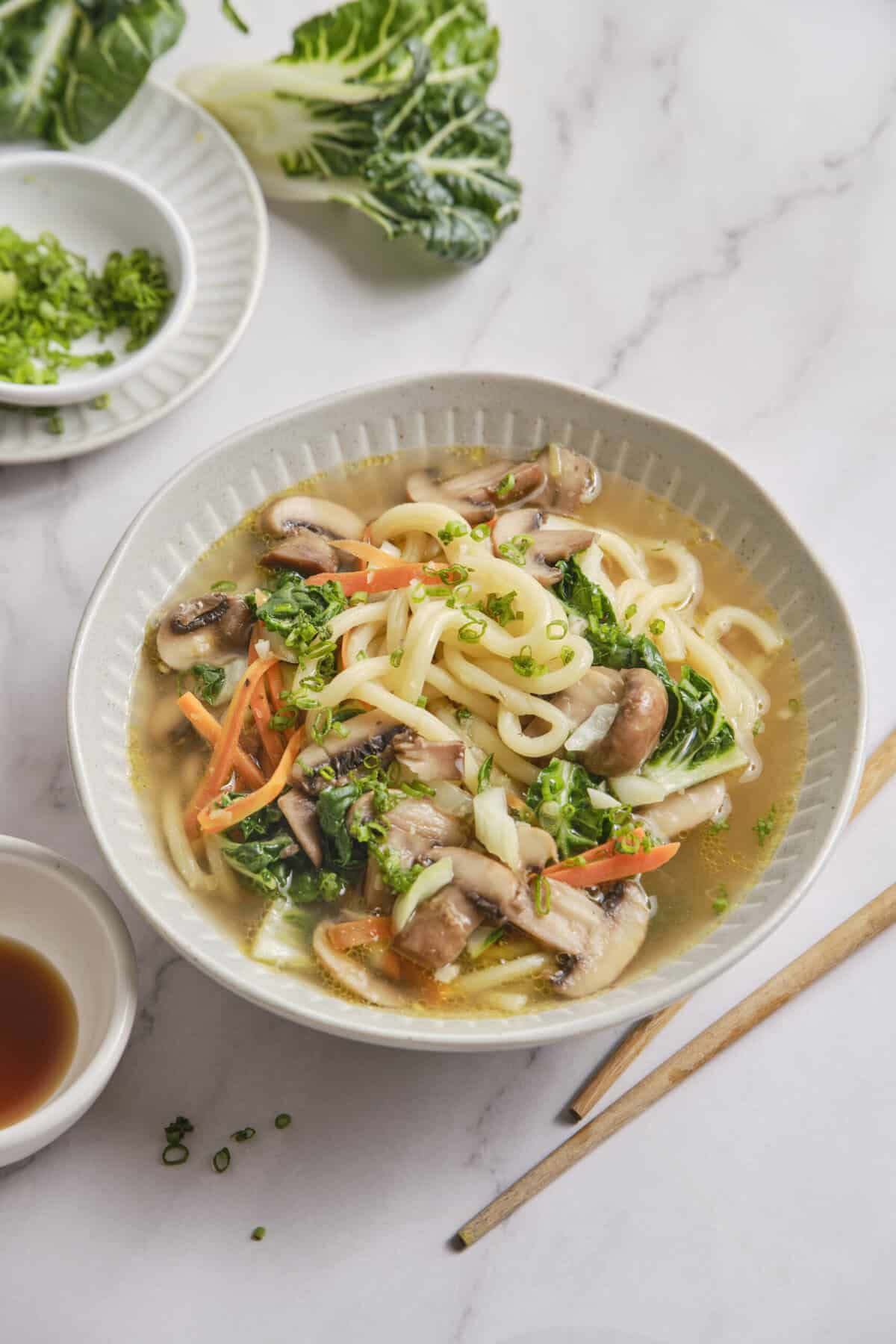
If you think a veggie-based dish has to be bland, think again. Mushroom ramen is here to prove that assumption wrong. This dish is steamy, succulent, and bursting with umami flavor. It’s packed with classic seasonings like garlic, ginger, and soy sauce—plus a colorful array of veggies—all soaked in a mouthwatering veggie broth.
Sometimes, I wish my mom had made mushroom ramen when we were kids. She, like so many other busy moms, opted for the flavored store-bought ramen packs. Those chicken-flavored noodles certainly came in handy. But this mushroom ramen recipe features ingredients like fresh mushrooms, bok choy, carrots, and onions.
I don’t know about you, but I prefer my food fresh and full of natural ingredients. Homemade mushroom ramen can help us achieve that goal easily in a restaurant-worthy dish made in the comfort of our own kitchens.
Is Mushroom Ramen Healthy?
This vegan-friendly dish is full of veggies and other nutritious ingredients. Although mushroom ramen boasts plenty of fresh ingredients, this meal may not be ideal for a low-sodium diet. To reduce the salt content of this dish, consider substituting a low-sodium vegetable broth. For extra plant protein, top it off with Crispy Baked Tofu. For our gluten-free diners, opt for gluten-free noodles, broth, soy sauce, and miso paste.
Which Mushrooms To Choose?
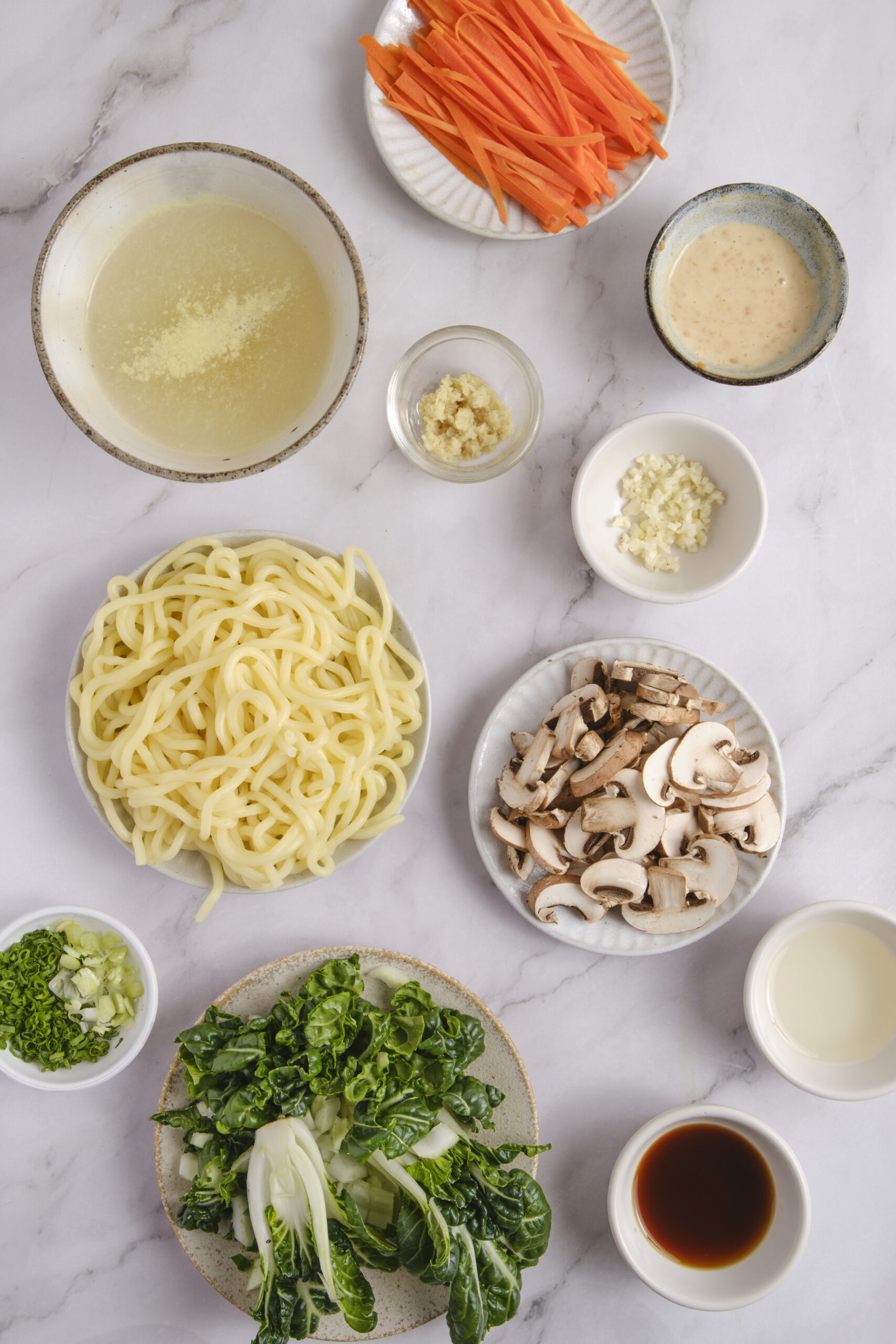
Traditional mushroom ramen is topped with wood ear (kikurage) or shiitake mushrooms, but enoki and shimeji can also be used. That being said, this particular mushroom ramen recipe calls for cremini mushrooms, which originated in Europe, as they are more readily available, and still provide the perfect texture and aromatic flavor needed for a dish like mushroom ramen. Stick to our recipe, or experiment with one of the more traditional options above; the choice is yours.
How do I store leftovers?
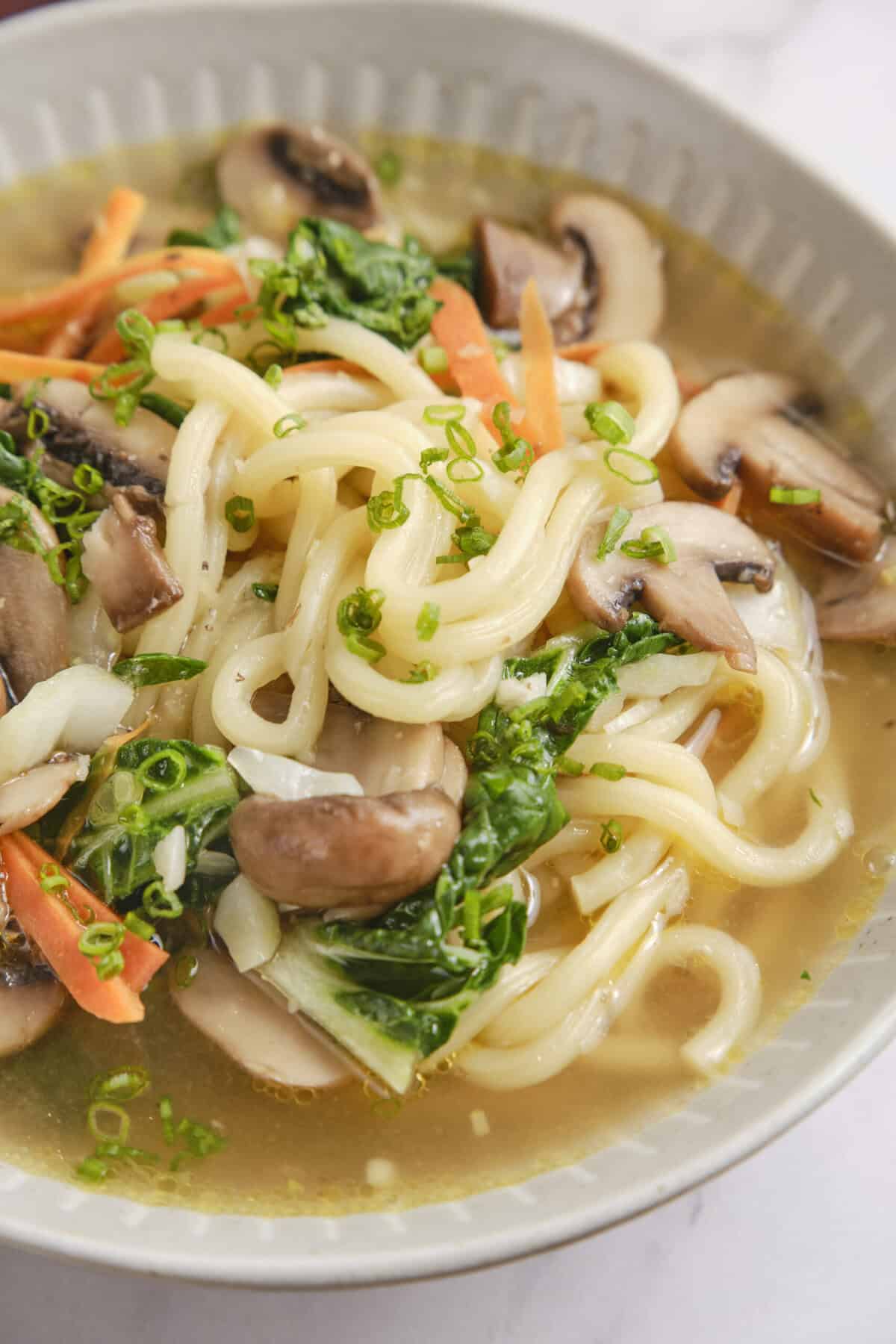
Once cooled, mushroom ramen can be refrigerated in an airtight container for up to 3 days. Alternatively, you can transfer this dish to a freezer-safe container and freeze for up to 3 months. If you do this, make sure to thaw your ramen in the fridge overnight before reheating. Pour refrigerated ramen into a pot on the stove and cook at medium heat, stirring occasionally. When it starts to simmer, it’s ready to be savored a second time.
Serving Suggestions
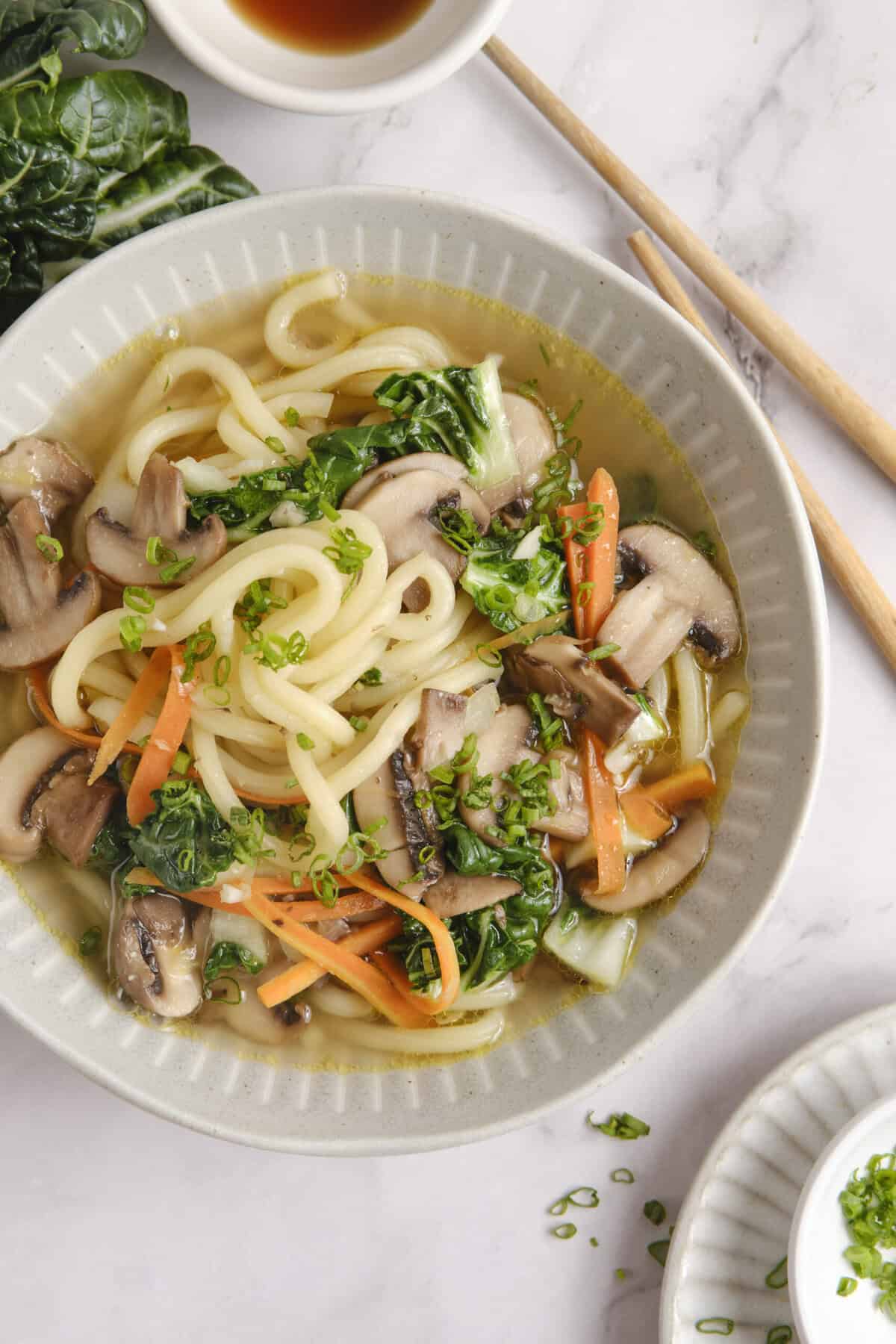
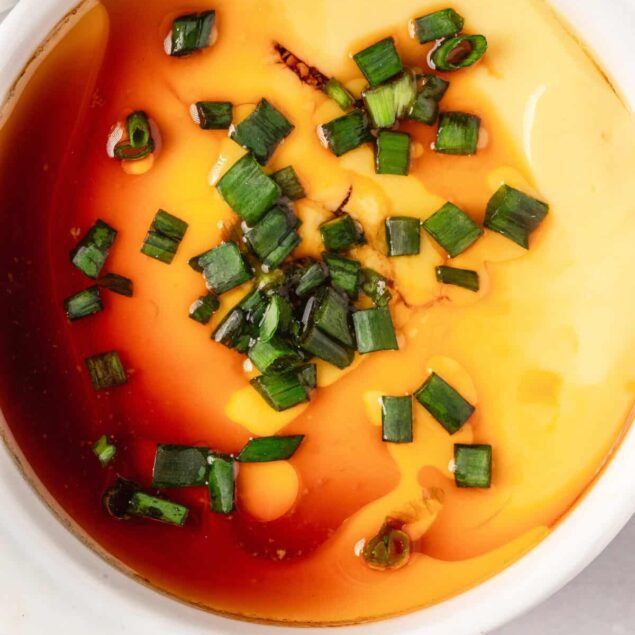
Want to create a classy dining experience for you and your family or guests? Top your mushroom ramen with freshly chopped green onions and serve it with Sunomono (Japanese Cucumber Salad), Sweet Potato Sushi Roll, Asian Cabbage Salad, or Air-Fryer Shishito Peppers. And if you’re looking for vegetarian sides with a bit more protein, try pairing your mushroom ramen with Okonomiyaki (Japanese Pancakes) or Soy Sauce Eggs.

Ingredients
- 1 tablespoon vegetable oil
- 3 cloves garlic minced
- 1 tablespoon fresh ginger grated
- 8 ounces cremini mushrooms sliced
- 4 cups vegetable broth
- 1 1/2 tablespoons low-sodium soy sauce
- 2 tablespoons white miso paste
- 2 cups baby bok choy chopped
- 1 cup shredded carrots
- 2 green onions thinly sliced (white and green parts separated)
- 8 ounces ramen noodles discard seasoning packets if using instant ramen
- 1 tablespoon chili garlic sauce or sriracha optional
Instructions
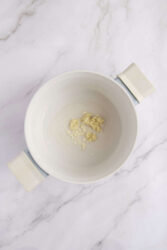
- Heat the vegetable oil in a large pot over medium heat. Add the minced garlic and grated ginger. Sauté for 1-2 minutes until fragrant.
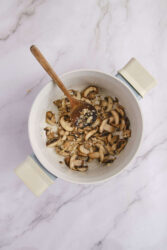
- Stir in the sliced mushrooms to the pot. Cook for 5-6 minutes until the mushrooms are tender and lightly browned.
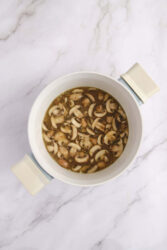
- Pour in the vegetable broth and let it boil. Lower the heat to medium-low and mix in the soy sauce and miso paste until fully dissolved.
- Mix in the chopped bok choy, shredded carrots, and the white parts of the green onions to the broth. Simmer for 5-7 minutes until the vegetables are tender.
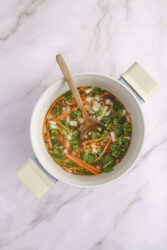
- Add the ramen noodles to the broth and cook according to package instructions, usually about 3 minutes, until the noodles are tender.
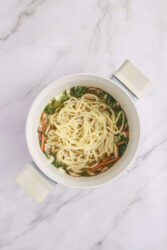
- Add the chili garlic sauce or sriracha, if using, to taste.
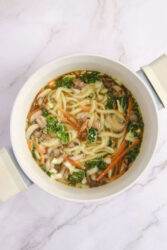
- Ladle the ramen into bowls. Garnish with the green parts of the green onions.
Nutrition Info:
Nutrition information are estimates only and may vary based on the specific brands, ingredients, and portion sizes you use. This data is provided for informational purposes only.



Leave a Comment