

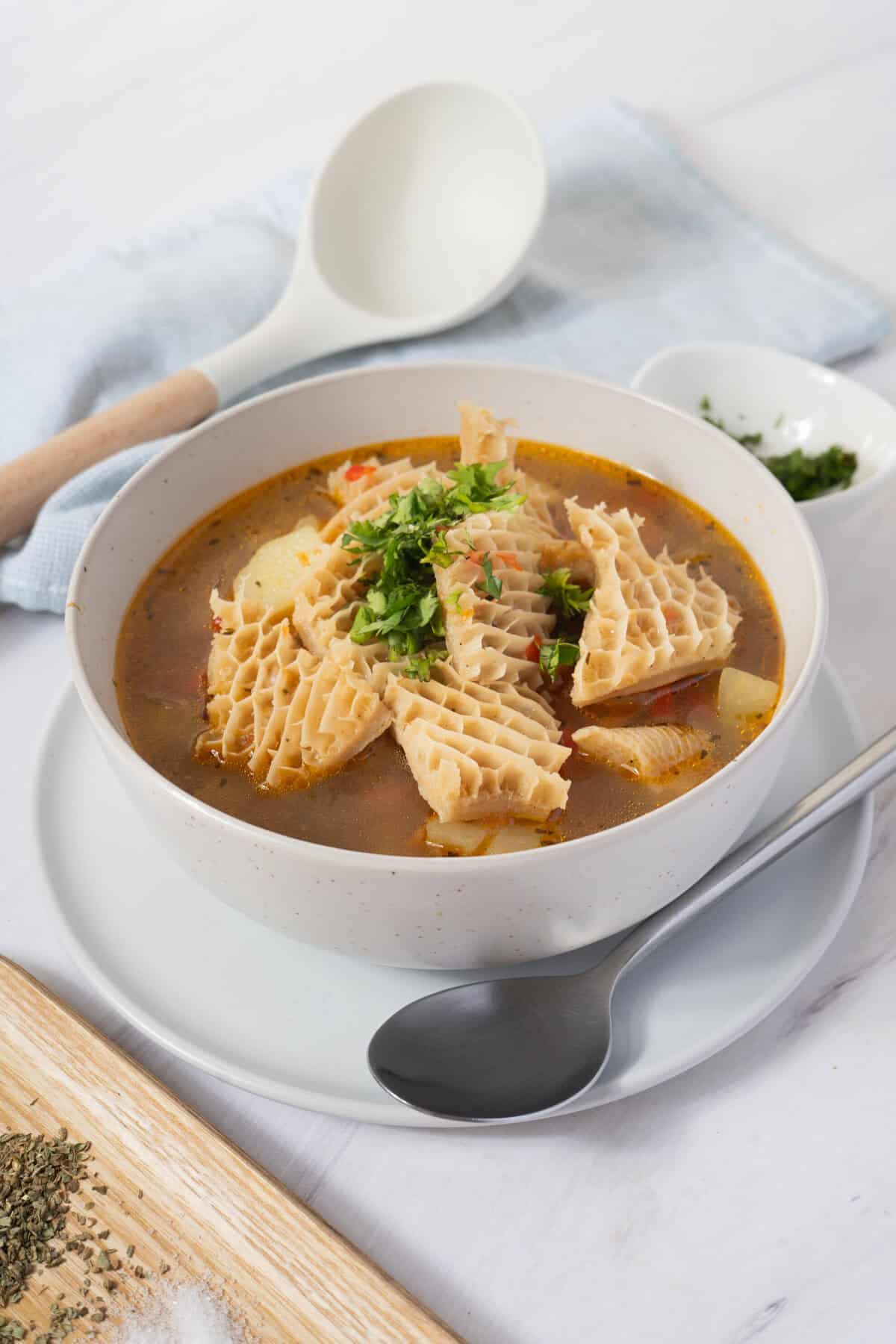
Mondongo is the belly-warming, beloved Latin American stew you never knew you needed.
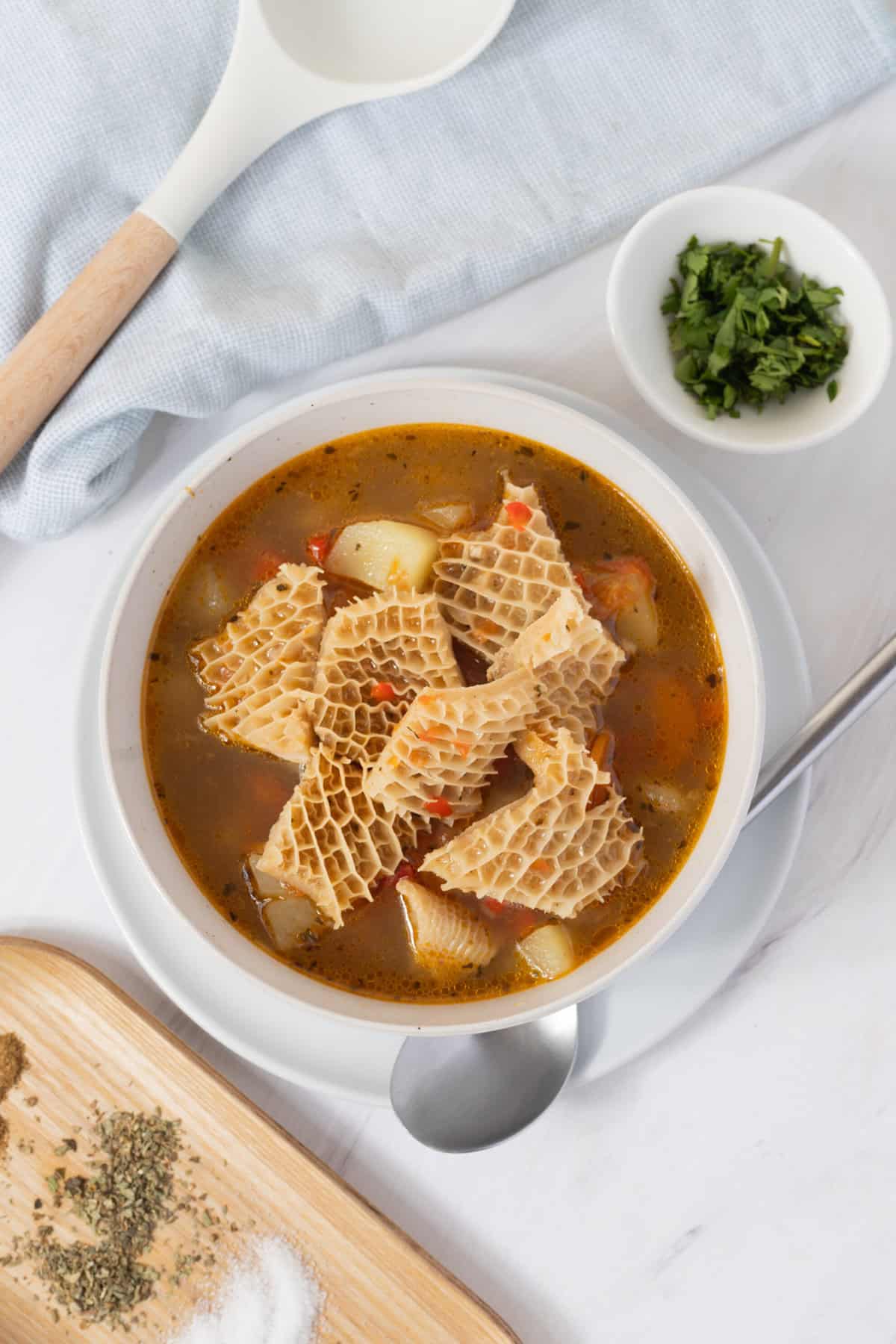
Popular throughout Central and South America and the Caribbean, mondongo is known for its rich broth and tender meat and is even said to have hangover-curing powers (I’ll leave you to be the judge of that). It’s eaten after long nights out in Venezuela, for breakfast in the Dominican Republic, and on weekends in Puerto Rico.
Tripe—the edible lining of a cow’s stomach—may not win any popularity contests, but it’s long been a staple in many cultures thanks to its affordability, nutrition, and deep flavor. In mondongo, tripe transforms into something comforting and crave-worthy.
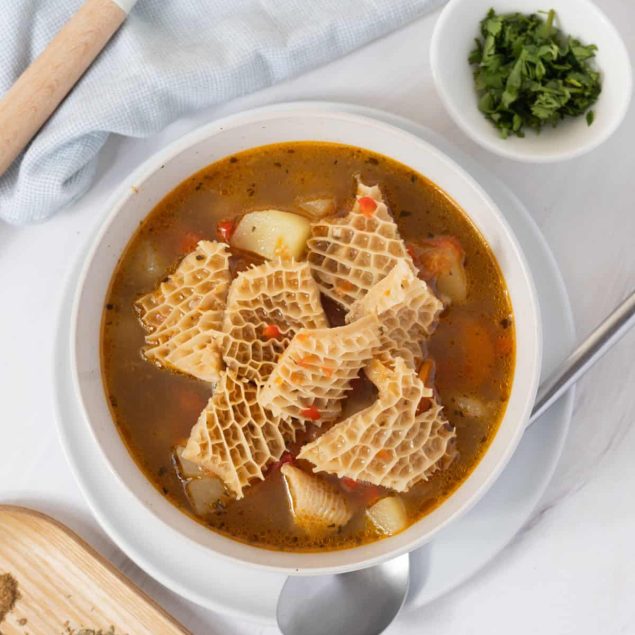
This hearty stew gets its flavorful base from long-simmered tripe, aromatics, and a mix of herbs and spices I reach for constantly. With potatoes and carrots added to the mix, every spoonful is warm, satisfying, and full of character. If you’re into menudo, a similar spicy stew, or call yourself an adventurous eater, this one’s for you.
Is Mondongo Healthy?
Tripe is loaded with nutrients and is surprisingly low in calories. It’s a solid source of iron, vitamin B12, zinc, calcium, potassium, and magnesium—key players in bone health and muscle function. Since it’s also high in protein and low in fat, tripe fits neatly into a balanced diet.
Mondongo itself is relatively healthy. You can also bulk up the veggies or add plantains or pumpkin for more fiber, nutrients, and variety.
Why Honeycomb Tripe?
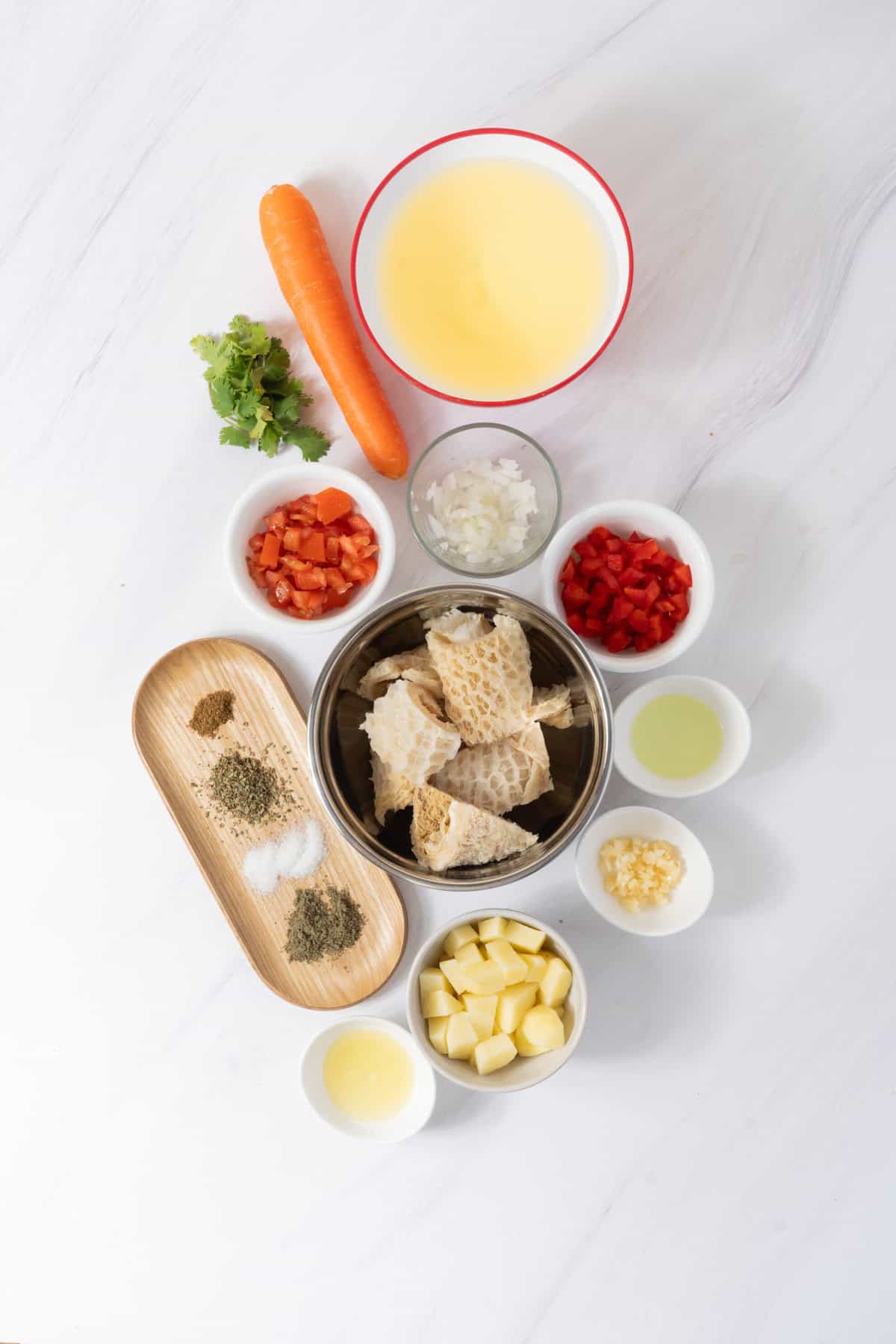
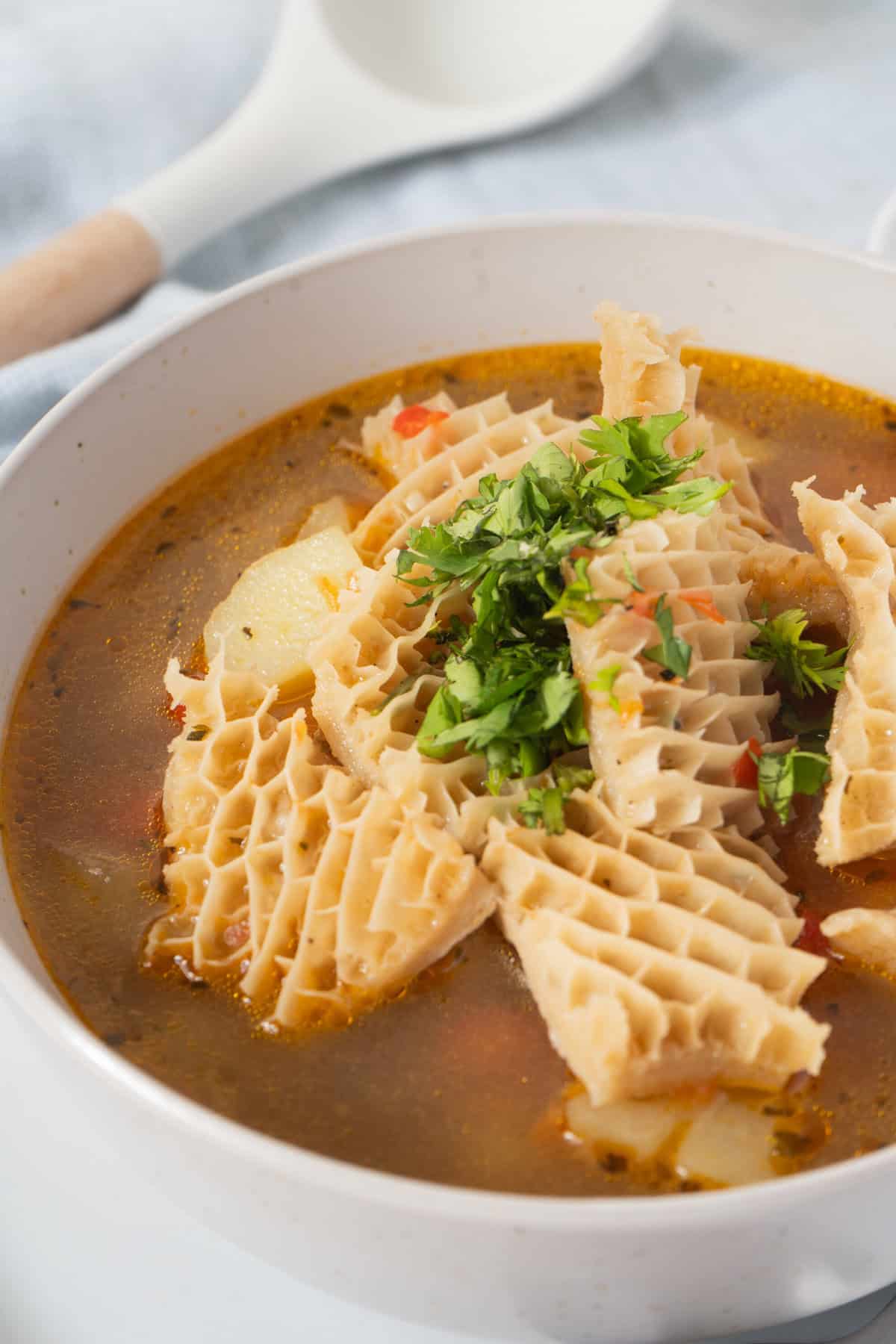
Out of the various types of tripe—blanket, book, reed, and honeycomb—it’s honeycomb that reigns supreme in stews like mondongo. Coming from the cow’s second stomach, this variety has a spongy texture that soaks up broth like a dream, making every bite burst with flavor. It’s also more tender and mild compared to other cuts, which helps ease in any tripe skeptics.
How Do I Store Leftovers?
In my kitchen, mondongo keeps well in the fridge for up to 3 days. In fact, I find mondongo often tastes better the next day, once the flavors have had time to mingle. Store it in an airtight container and reheat gently on the stovetop or in the microwave. Leftovers can also be frozen for up to 2 months—just thaw overnight in the fridge before reheating.
Serving Suggestions
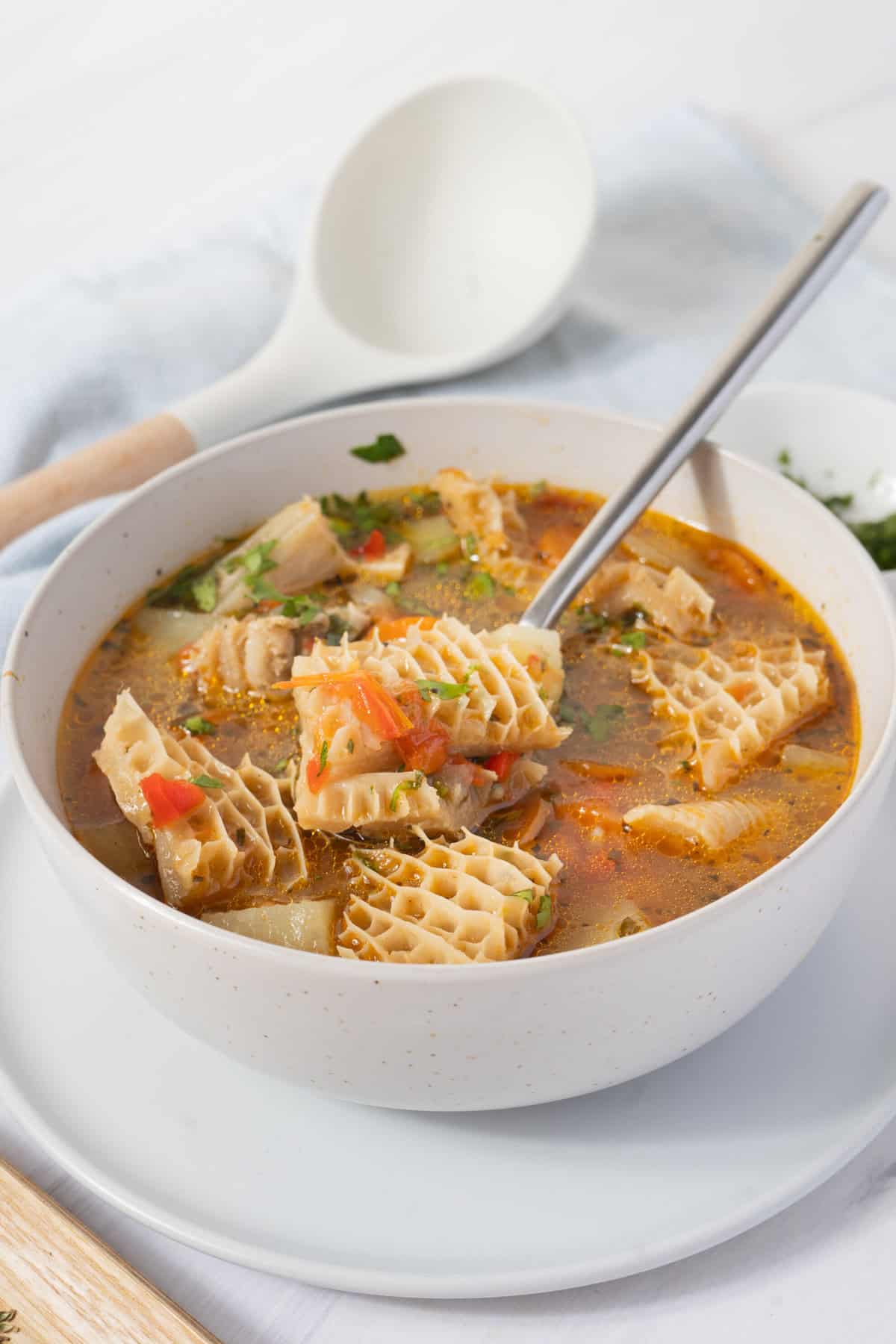
Mondongo is often served with a side of fluffy Steamed Rice, which helps balance the bold flavors. For a truly Caribbean experience, pair it with Air-Fryer Plantains—sweet or savory. Feeling adventurous? Give Menudo a try next, or check out this Crock-Pot Beef Stew for another cozy classic.
Ingredients
- 2 pounds beef or pork honeycomb tripe cleaned and cut into bite-size pieces
- Juice of 2 limes
- 2 tablespoons vegetable oil
- 1 large onion chopped
- 4 cloves garlic minced
- 1 bell pepper diced
- 2 large tomatoes diced
- 1 teaspoon dried oregano
- 1/2 teaspoon ground cumin
- 6 cups beef broth
- 2 large potatoes peeled and cubed
- 1 large carrot peeled and sliced
- Salt and pepper to taste
- Fresh cilantro chopped, for garnish
Instructions
- Rinse the tripe under cold water. In a large pot, cover the tripe with cold water, add the lime juice, and bring to a boil. Reduce heat and simmer for 2 hours, until tender. Drain and set aside.
- In the same pot, heat the oil over medium heat. Add the onion, garlic, and bell pepper. Cook until the onion is translucent. Add the tomatoes, oregano, and cumin and cook until the tomatoes soften.
- Return the cooked tripe to the pot along with the beef broth, potatoes, and carrot. Season with salt and pepper. Bring to a boil, then reduce heat and simmer for 30 minutes, until the vegetables are tender. Garnish with fresh cilantro before serving.
Nutrition Info:
Nutrition information are estimates only and may vary based on the specific brands, ingredients, and portion sizes you use. This data is provided for informational purposes only.



Leave a Comment