

Sweet roasted squash and tangy peanut sauce just might be the flavor match you’ve been waiting for!
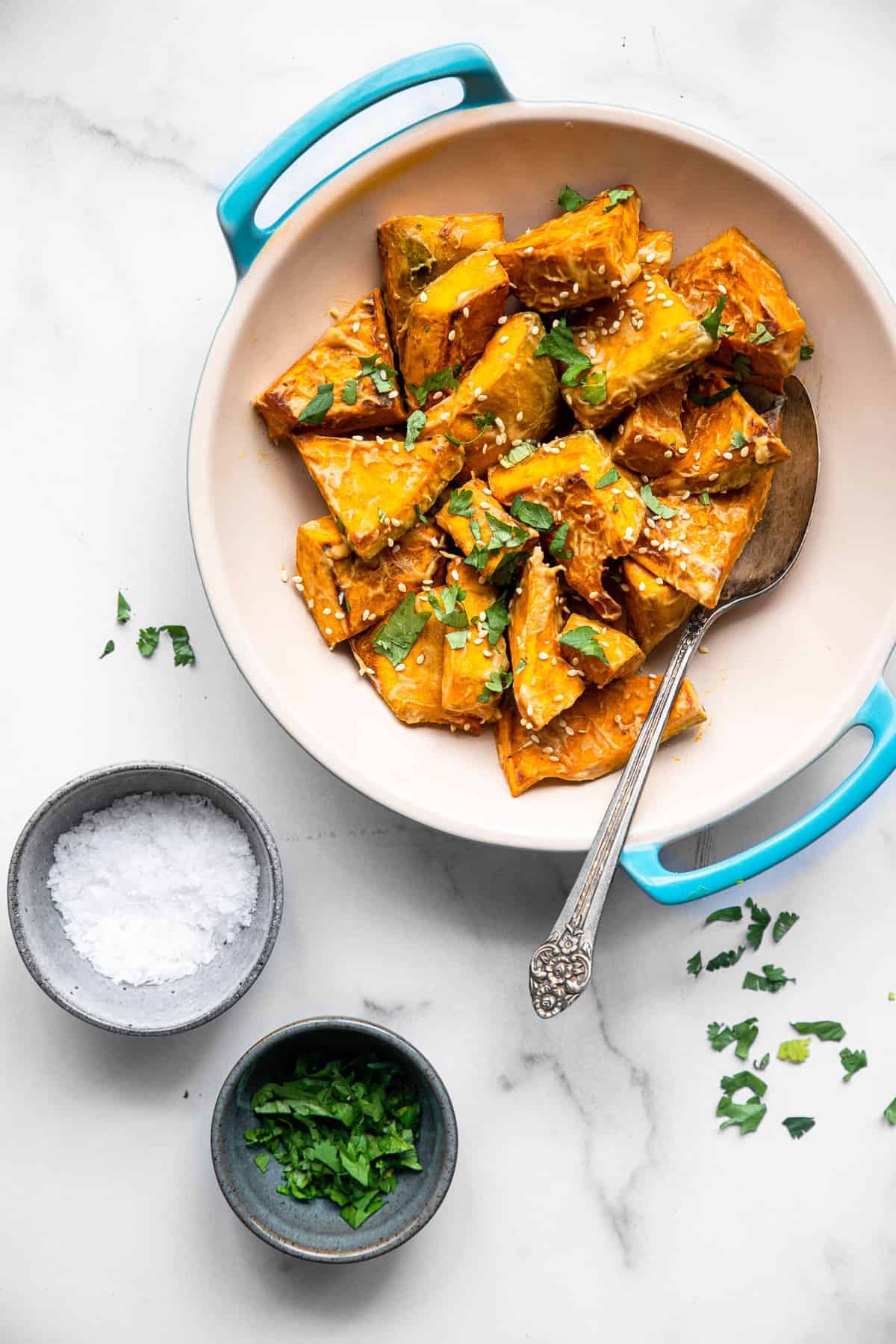
This recipe is so delicious and easy that it’s become a staple in my weekly rotation. Honestly, I sometimes make it several times a week. Tender, brilliantly orange kabocha squash is fantastic for roasting. The high heat softens it, enhances its natural sweetness, and caramelizes it into something incredibly delicious. Few vegetables can compare. Additionally, a tangy, creamy peanut sauce is the perfect complement, adding nuttiness, a touch of sweetness, and a welcome hit of ginger and soy.
This dish is actually a mash-up of two dishes I really love. The first is simple roasted kabocha, a go-to side dish when winter squash is in season and available at markets, and the second is a Thai-inspired peanut sauce I usually serve with chicken skewers for an easy satay. Put them together, and it’s pure heaven! Plus, this flavor combination works beautifully with just about any winter squash, making it a firm favorite at my house. It’s a recipe my whole family loves, and I’m convinced yours will, too!
Is Oven-Roasted Kabocha Squash With Peanut Sauce Healthy?
If you’re trying to work more vegetables into your diet, then this dish is a delicious way to do it. Kabocha squash is a rich source of fiber, vitamin C, beta-carotene, potassium, and other vital nutrients. The olive oil and peanut butter add heart-healthy fats. The full-fat coconut milk, however, contributes saturated fat. You can easily swap it out for soy milk or oat milk instead.
You can make the recipe gluten-free by selecting a gluten-free soy sauce, and you can make a vegan-friendly version by replacing the honey with agave syrup. Use unsweetened almond butter in place of peanut butter, and it’s also suitable for most interpretations of the Paleo and Whole30 diets.
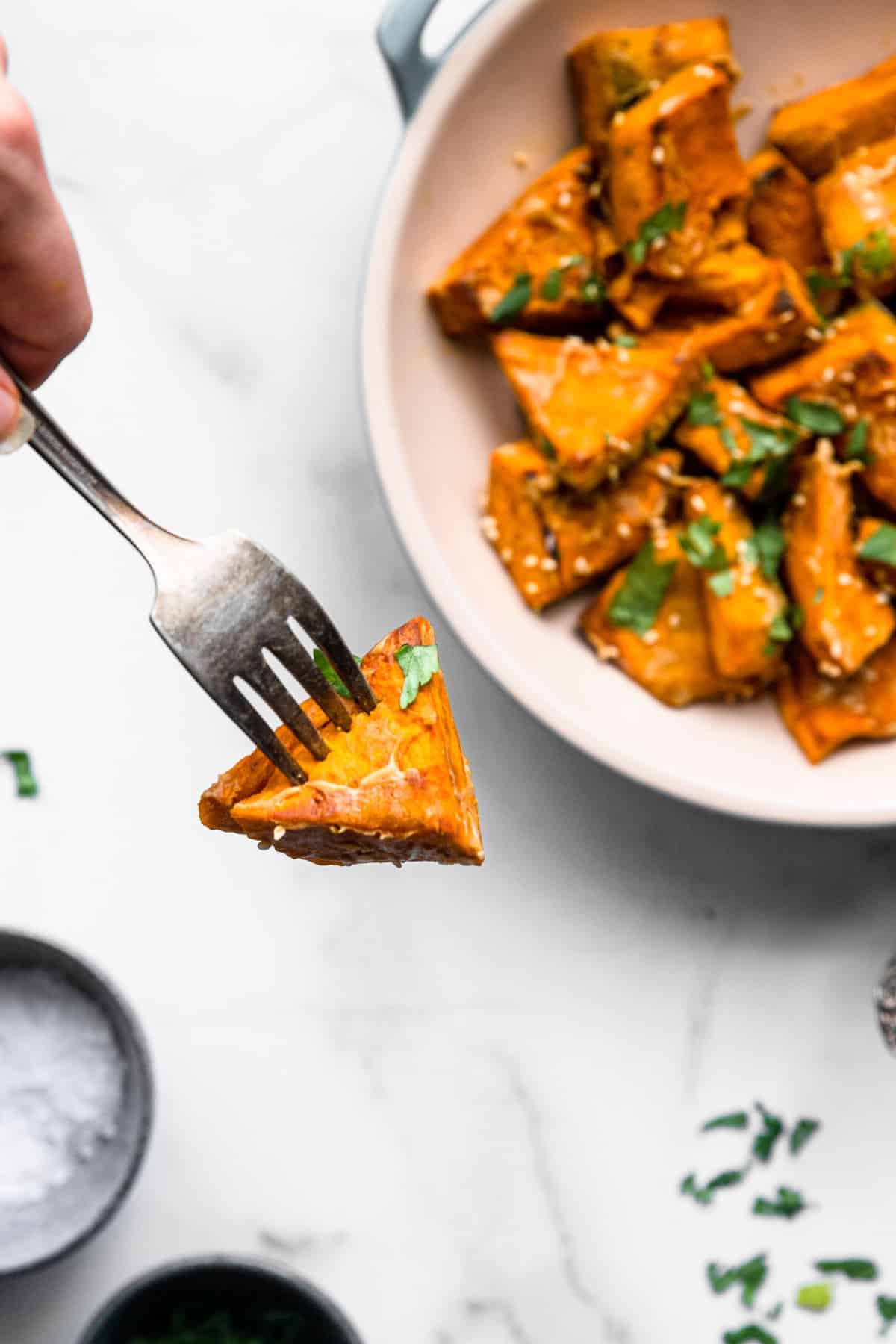
What is Kabocha Squash?
Also called Japanese pumpkin, this small to medium winter squash looks a little like a dappled green pumpkin. But cook with it, and you’ll find that its taste and texture are closer to sweet potato than to pumpkin or most other varieties of squash. Its bright orange flesh has a silky texture and a distinct honey-like flavor. Like other winter squash, it’s available most abundantly in the fall and winter, although you can often find it year-round. Other medium-sized squash varieties like butternut, calabaza, or Hubbard are good substitutes.
How Do I Store Leftovers?
Leftovers can be stored in an airtight container in the fridge for up to 3 days. While you can freeze leftovers for up to 3 months, they’re likely to be watery when defrosted. The dish can be eaten cold (over salads and grain bowls) or warm as a side dish.
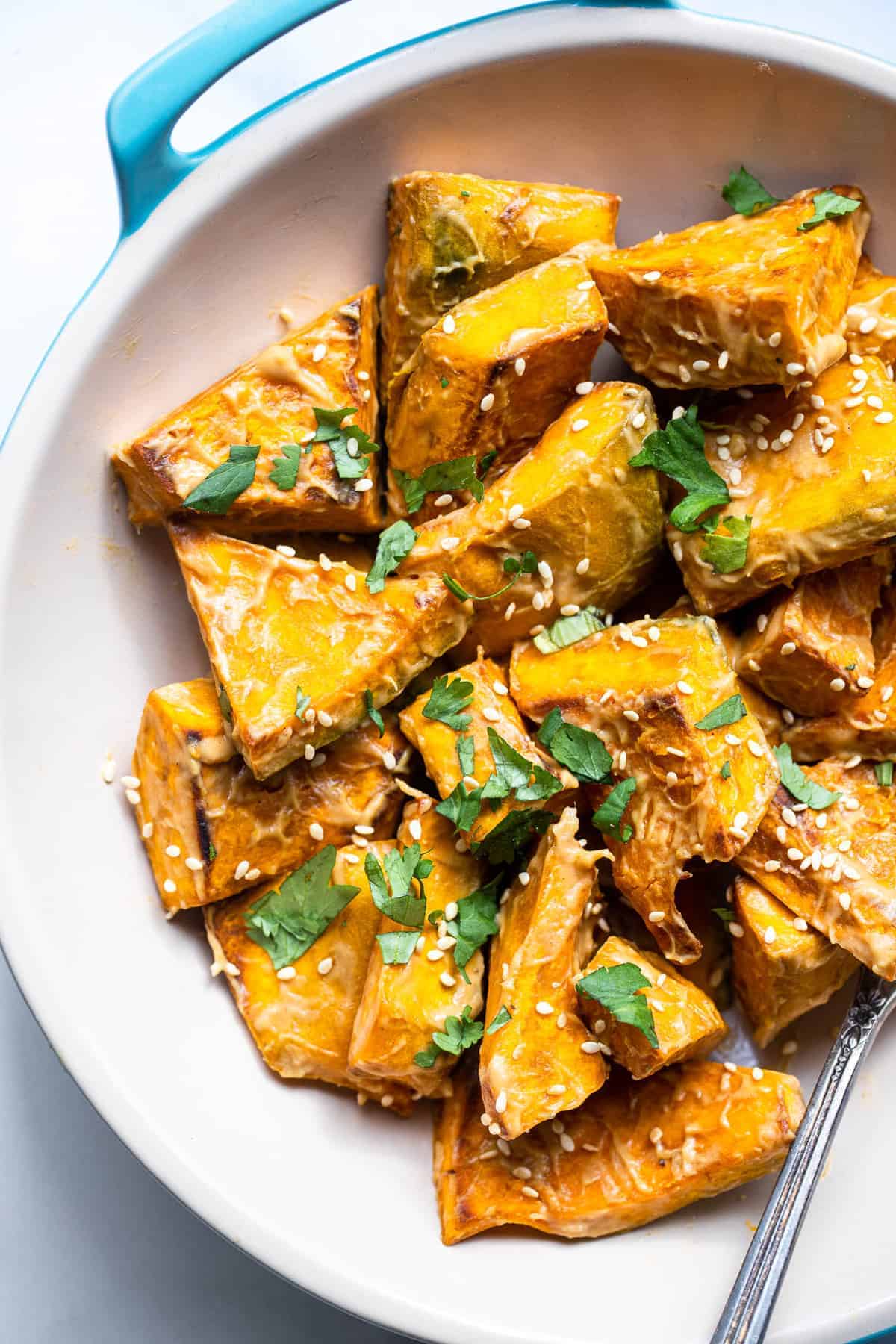
Serving Suggestions
This recipe makes a hearty side dish next to Air-Fryer Turkey Breast or a robust Vegan Meatloaf. It also works well as a tasty addition to grain bowls and salads. I love it over a bowl of Instant-Pot Quinoa topped with crisp, Roasted Chickpeas.
Can’t get enough of kabocha squash? Try this simple recipe for Roasted Kabocha Squash. Kabocha Squash Soup is one of the coziest recipes out there, and Kabocha Squash With Apple Cider Glaze is packed with flavor and perfect for fall celebrations.
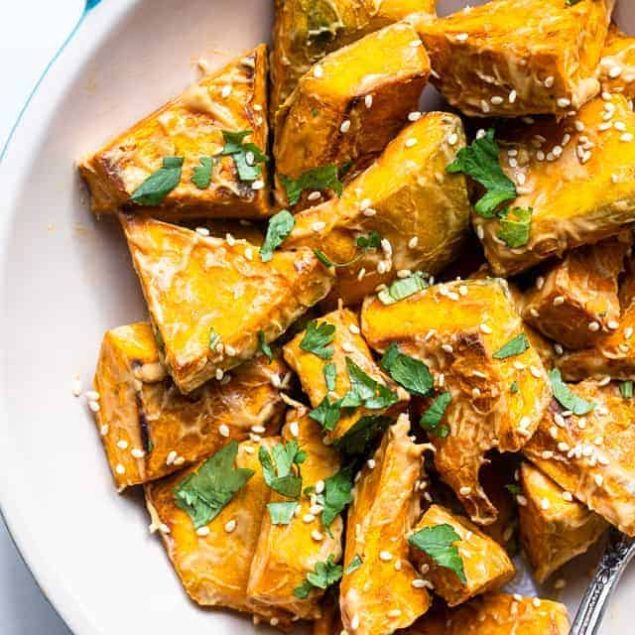
Ingredients
- 1 medium kabocha squash (about 4 lbs)
- 1 tablespoon olive oil
- Salt
For The Sauce:
- 2 tablespoons peanut butter (almond butter for paleo)
- 4 teaspoons full-fat coconut milk
- 1 tablespoon reduced-sodium soy sauce (gluten-free, if needed)
- 2 teaspoons rice vinegar
- 1 teaspoon honey
- 1/2 teaspoon fresh ginger minced
- Cilantro for garnish
- Sesame seeds for garnish
Instructions
- Preheat oven to 400°F.
- Chop the squash. Cut it in half, then scoop out all the seeds and stringy parts from the inside. Cut each half in half again, so you end up with 4 quarters. Using a paring knife, peel the skin off each quarter. Then, chop the squash into 1-inch cubes
- Place the squash in a large bowl, toss with the oil, and sprinkle with salt.
- Place the cubes on a large baking tray.
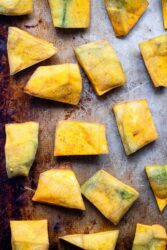
- Bake on the middle rack of the oven for 20-25 minutes, checking often to make sure they are not getting burned. The squash is done when the underside has a nice browned color and it is fork-tender.
- Whisk all the sauce ingredients in a small bowl.
- Pour the sauce all over the cooked squash and toss to coat.
- Sprinkle with cilantro and sesame seeds, if desired, and DEVOUR
Nutrition Info:
Nutrition information are estimates only and may vary based on the specific brands, ingredients, and portion sizes you use. This data is provided for informational purposes only.



Leave a Comment