

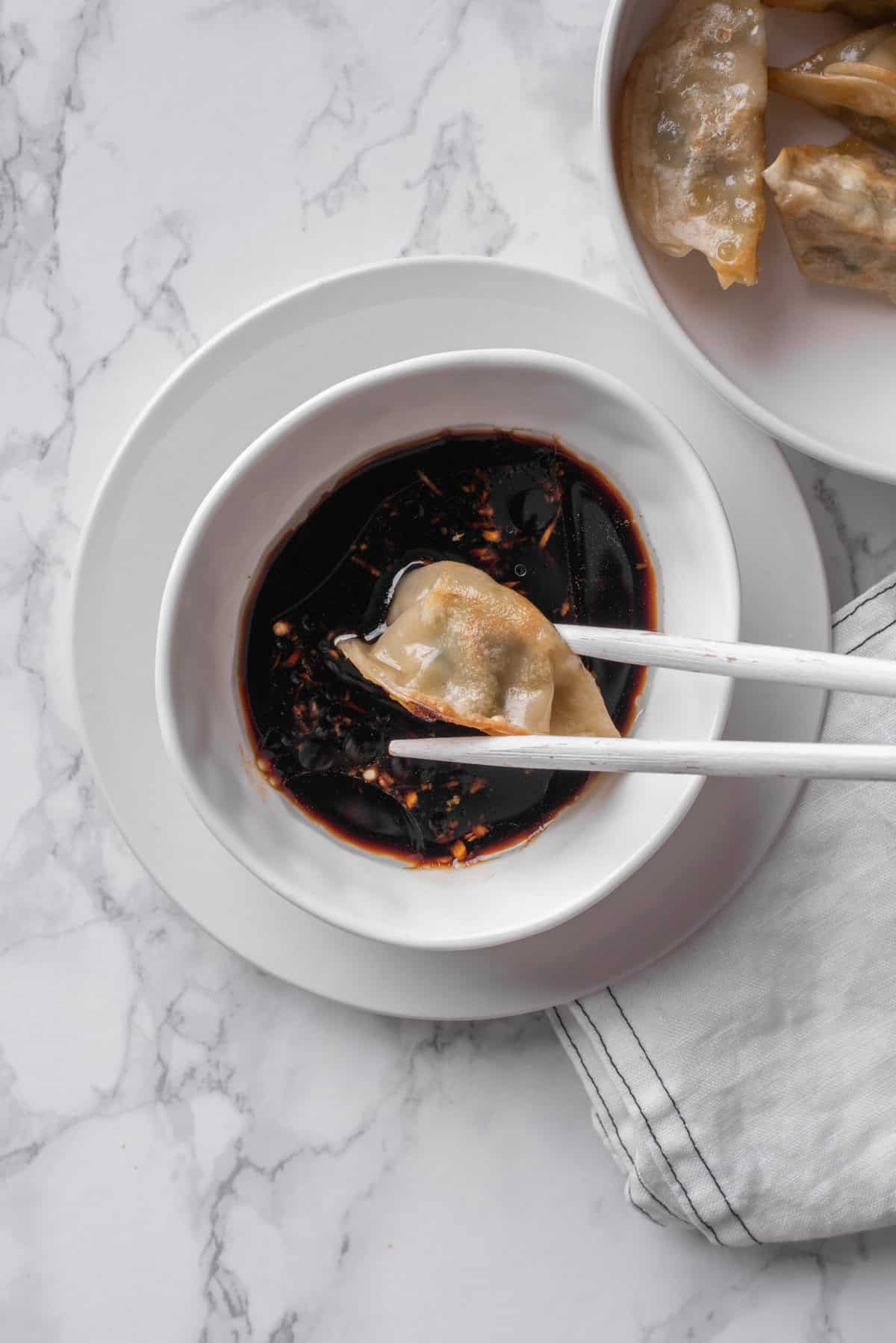
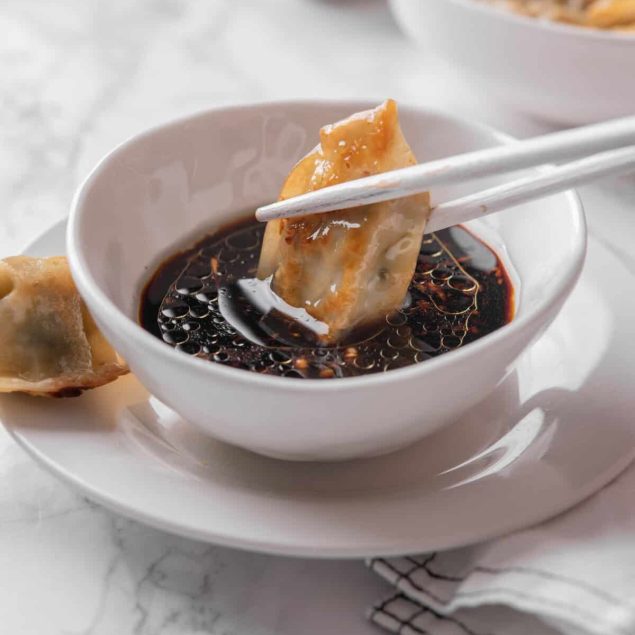
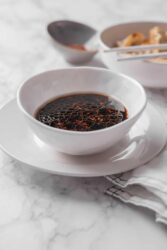
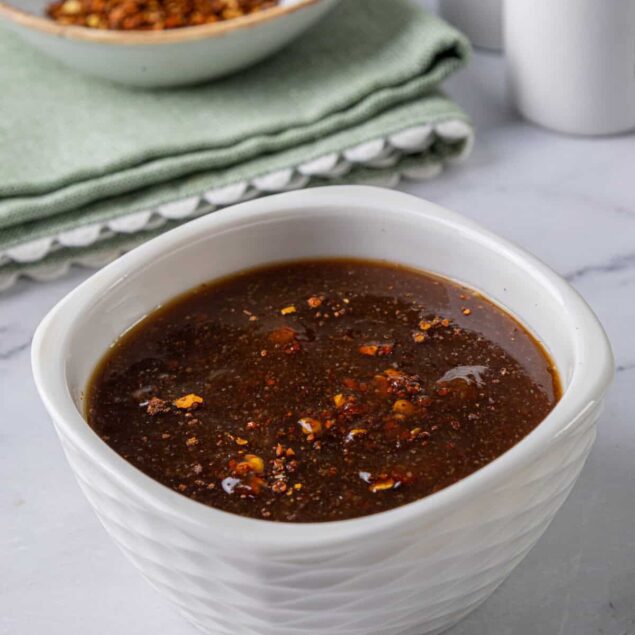
This savory Gyoza Sauce pairs perfectly with Japanese dumplings, offering a rich, balanced flavor with each dip.
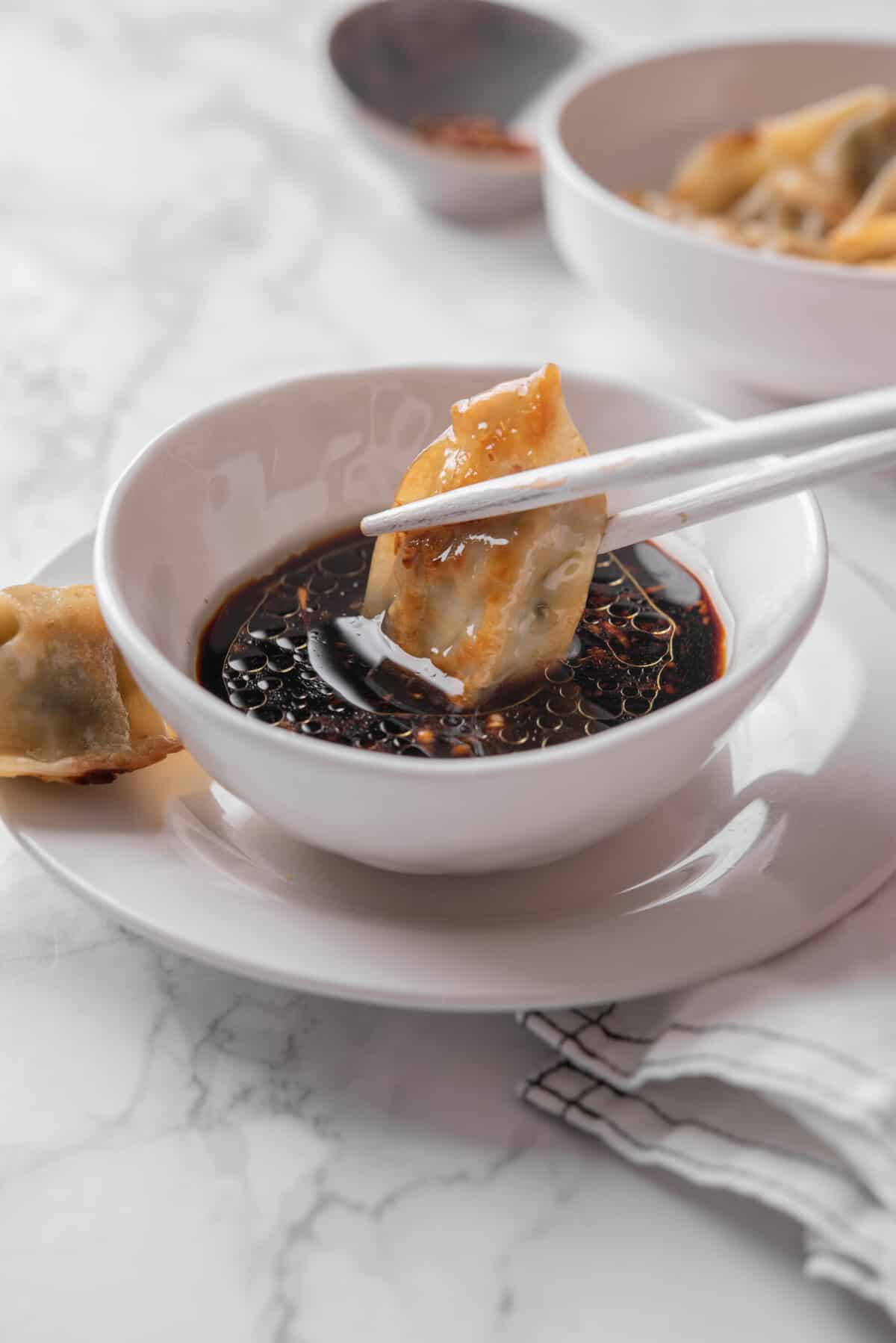
Every time I enjoy a small platter of Japanese dumplings, or gyoza, I can’t help but recall the first time I tried them. Lined vertically on a porcelain dish before me, I anxiously held my chopsticks. Grabbing one with my chopsticks, I gently swirled it in the gyoza sauce and brought the dumpling to my lips. I can only describe the flavor as beautiful. Subtle notes of garlic and ginger with a hint of sesame oil complemented the juicy, vibrant filling perfectly. I felt like Anton Ego in Ratatouille! And while the gyoza were certainly delicious by themselves, the sauce is what truly made the dish.
This simple gyoza sauce is perfectly balanced. The soy, the vinegar, the sesame, the garlic, the ginger—it all works together in culinary harmony. It’s elegant, delicious, and easy to make, so I urge you to try it and dunk your favorite dumplings. I promise that you will not be disappointed.
Is Gyoza Sauce Healthy?
Low in calories, carbs, and fat, gyoza sauce is relatively healthy. Rice vinegar contains some vitamins and minerals, and sesame oil contains antioxidants and heart-healthy fats. Moreover, garlic and ginger are also a source of antioxidants and said to have anti-inflammatory properties, though the small amounts in this sauce aren’t likely to yield many benefits. Finally, it’s important to note that gyoza sauce is high in sodium due to the soy sauce. You can use a low-sodium soy sauce or sub in coconut aminos.
What Is The Difference Between Gyoza And Potstickers?
Gyoza and potstickers have a few key differences. While both are pan-fried dumplings, gyoza, originating from Japan, have thinner wrappers that result in a crispier outer texture. The filling is often made of finely minced pork, cabbage, garlic, and ginger, all of which pairs beautifully with a simple gyoza dipping sauce.
Potstickers, on the other hand, are a type of Chinese dumpling. They have a thicker wrapper and are usually larger, making them a bit heartier. The filling tends to be more on the robust side, featuring pork, shrimp, or veggies with bold seasoning. Since they’re sturdier, they can also handle more, or thicker, sauce.
How To Make Ahead And Store
Your homemade gyoza sauce can last in the fridge for up to 1 week in a tightly covered glass jar, such as a mason jar with a lid. You can also freeze the sauce in individual portions (such as in a silicone ice cube tray), transfer them to a freezer-safe bag, and keep frozen for up to 3 months.
Serving Suggestions
I think it goes without saying that gyoza sauce is the perfect pairing for gyoza. As discussed above, you can also enjoy gyoza sauce with Chinese Potstickers due to their similarity to gyoza. But if you’re interested in a full meal, I have additional suggestions. Of course, a steaming bowl of Sushi Rice and a side of Din Tai Fung-Inspired Cucumber Salad would be lovely. You could also try gyoza sauce on top of Lettuce Wraps or some Soy And Ginger Salmon.
Ingredients
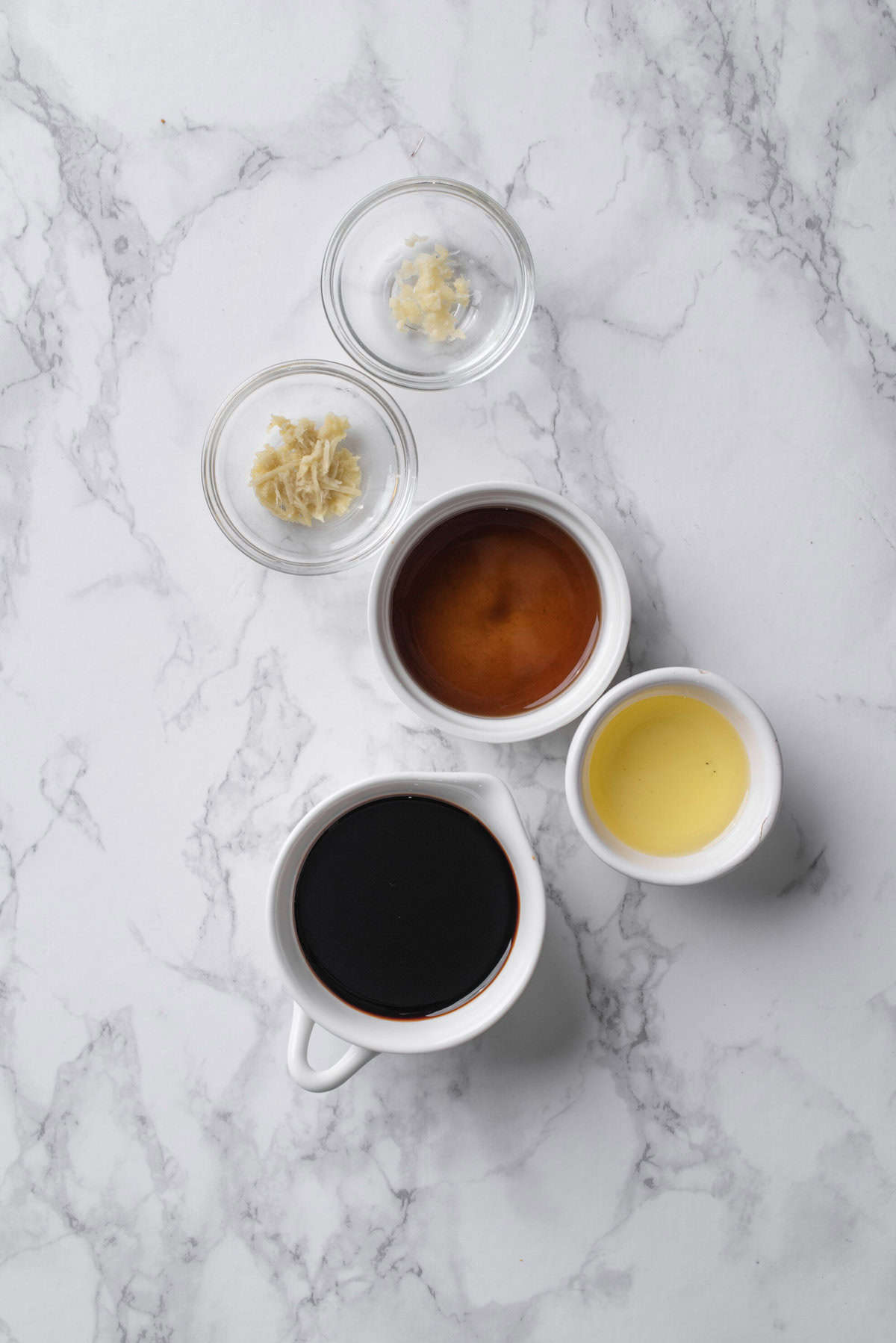
- 1/4 cup soy sauce
- 2 tablespoons rice vinegar
- 1 teaspoon sesame oil
- 1 clove garlic minced
- 1/2 teaspoon fresh ginger minced
Instructions
- In a small bowl, whisk together soy sauce, rice vinegar, and sesame oil.
- Add minced garlic and ginger to the mixture and stir to combine.
- Allow the sauce to sit for a few minutes to meld the flavors before serving with your favorite dumplings.
Nutrition Info:
Nutrition information are estimates only and may vary based on the specific brands, ingredients, and portion sizes you use. This data is provided for informational purposes only.


Leave a Comment