

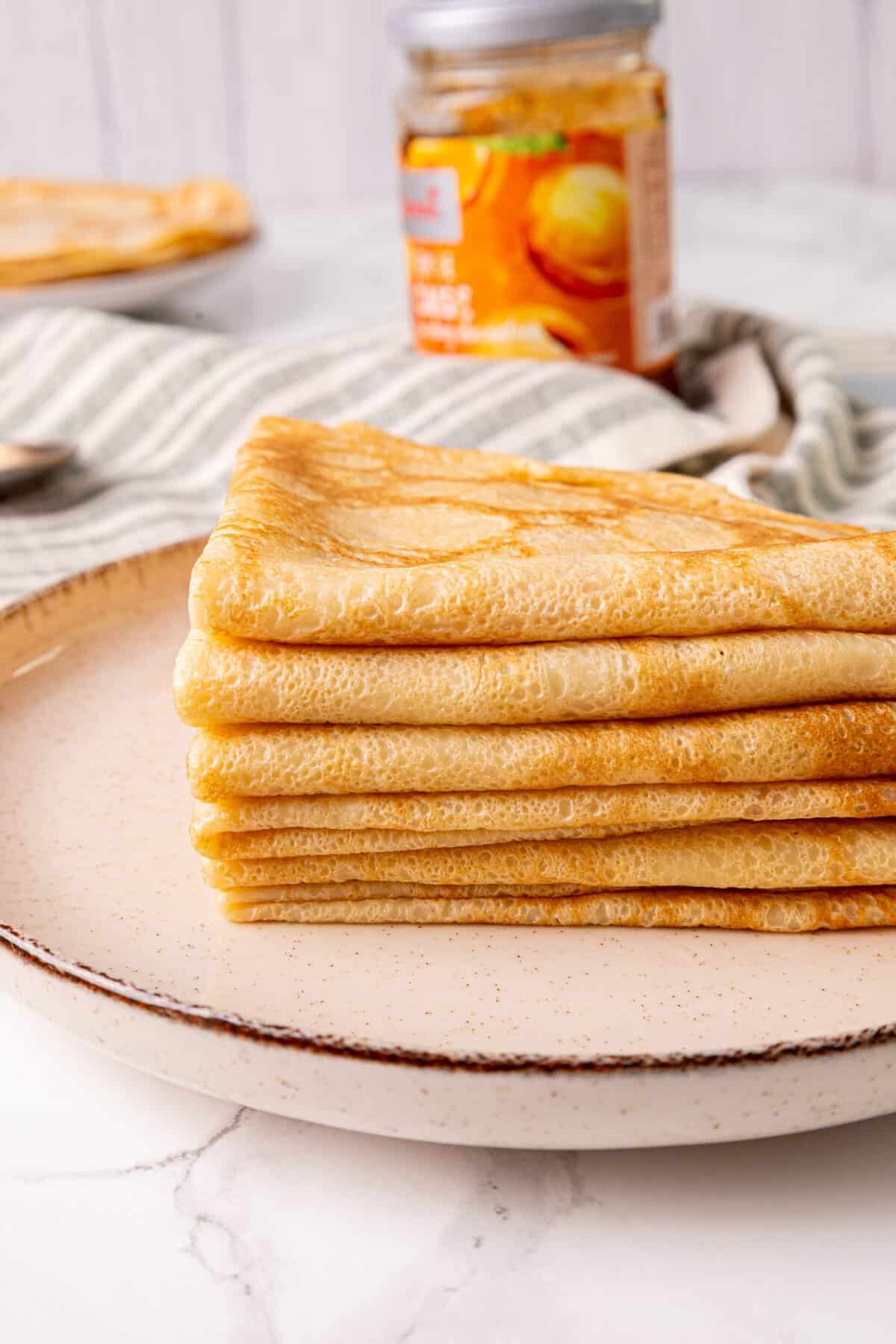
Bring the sophistication of French cuisine to your kitchen with this delicate and buttery French Crêpe Recipe!
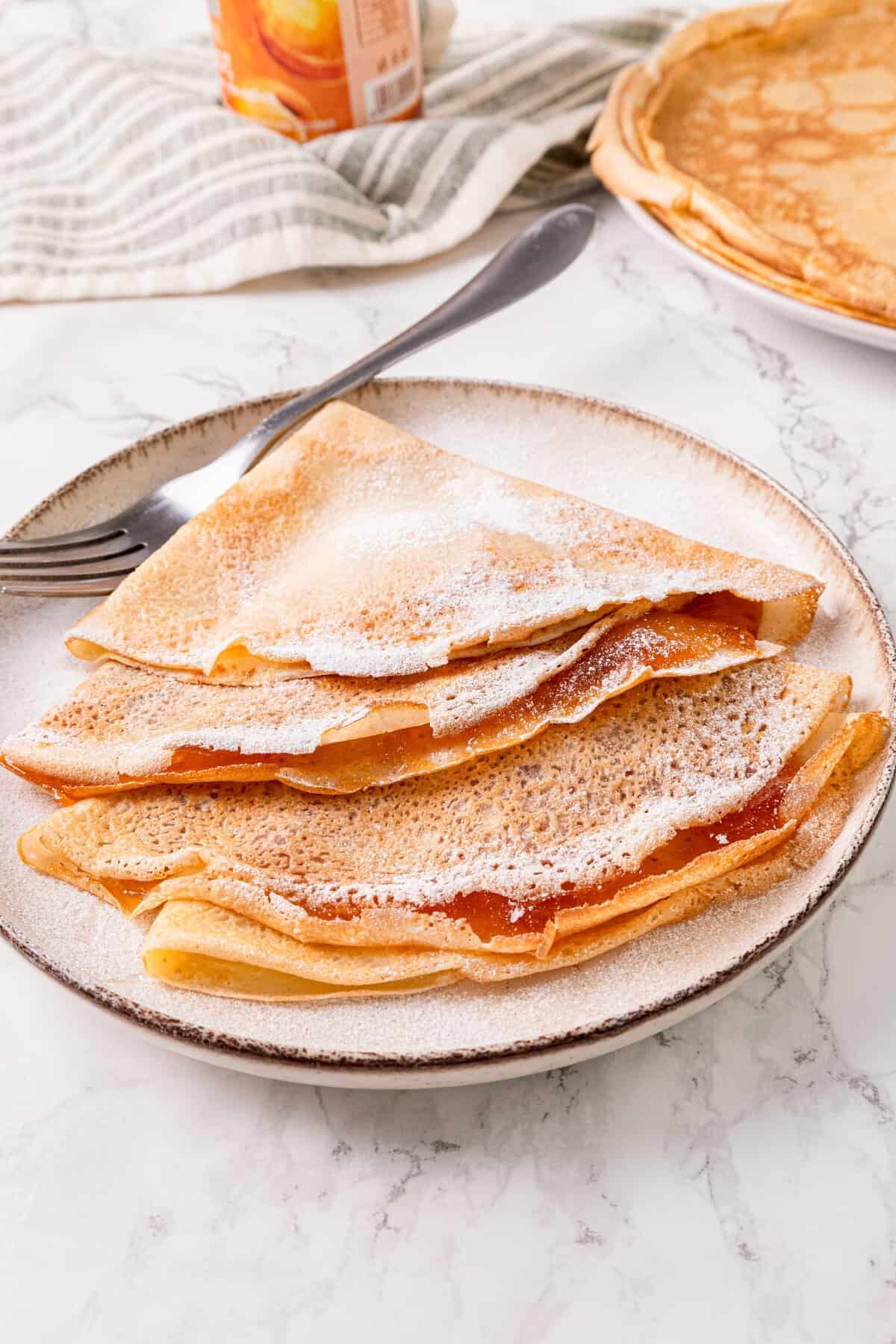
Oh là là! Crêpes are a classic snack in France, where they’re served at crêperies (cafés specializing in these paper-thin pancakes) and at stands in fairs and street markets. Whether enjoyed at a cozy crêperie with a café crème (coffee with hot milk), a bowl of cider (a tradition in Brittany, where crêpes originated), or hot off the pan from a stand and served on a paper plate, crêpes are a true indulgence. It’s no wonder they’ve gained popularity worldwide!
When I was pregnant with my daughter, my husband and I took a ‘babymoon’—our last trip as a couple before the baby arrived—to Paris. I absolutely adore Paris—the history, the architecture, the romantic atmosphere, and, most of all, the food.
During that trip, I ate my weight in mille-feuille, éclairs, macarons, and, of course, crêpes. Breakfast often consisted of flaky croissants, a Nutella-filled crêpe, and my one allotted café crème for the day. Later, as we wandered the charming streets, I’d grab another crêpe as a snack. Every time we passed a crêperie I hadn’t tried, I’d seize the opportunity to sample yet another. As the day went on, I’d switch it up with a savory crêpe, like one filled with ham and Gruyère.
The idea of making crêpes at home sounded exciting, but also daunting. Could I ever replicate the soft, buttery perfection I’d savored in Paris? Determined to try, I threw caution to the wind, played some French music to set the mood, and created this delectable recipe. To my delight, if I closed my eyes, I could almost picture myself back in Paris, falling in love with the city—and crêpes—all over again.
Not all French cuisine is complicated or requires a Cordon Bleu diploma, and this recipe is proof.
Are French Crêpes Healthy?
Relatively low in calories and fat and made without sugar, crêpes can be enjoyed as part of a healthy diet, whether as a light snack or meal. Of course, their healthiness largely depends on how you choose to serve them. Pairing them with fresh berries or sautéed vegetables (for a savory option) keeps them light and nutritious. On the other hand, indulging in a thick layer of salted caramel or gooey melted cheese—while undeniably delicious—leans more toward a treat!
If you’re lactose intolerant, you can easily adapt the recipe by using soy milk instead of whole milk and swapping butter for a plant-based alternative.
Decadent Fillings
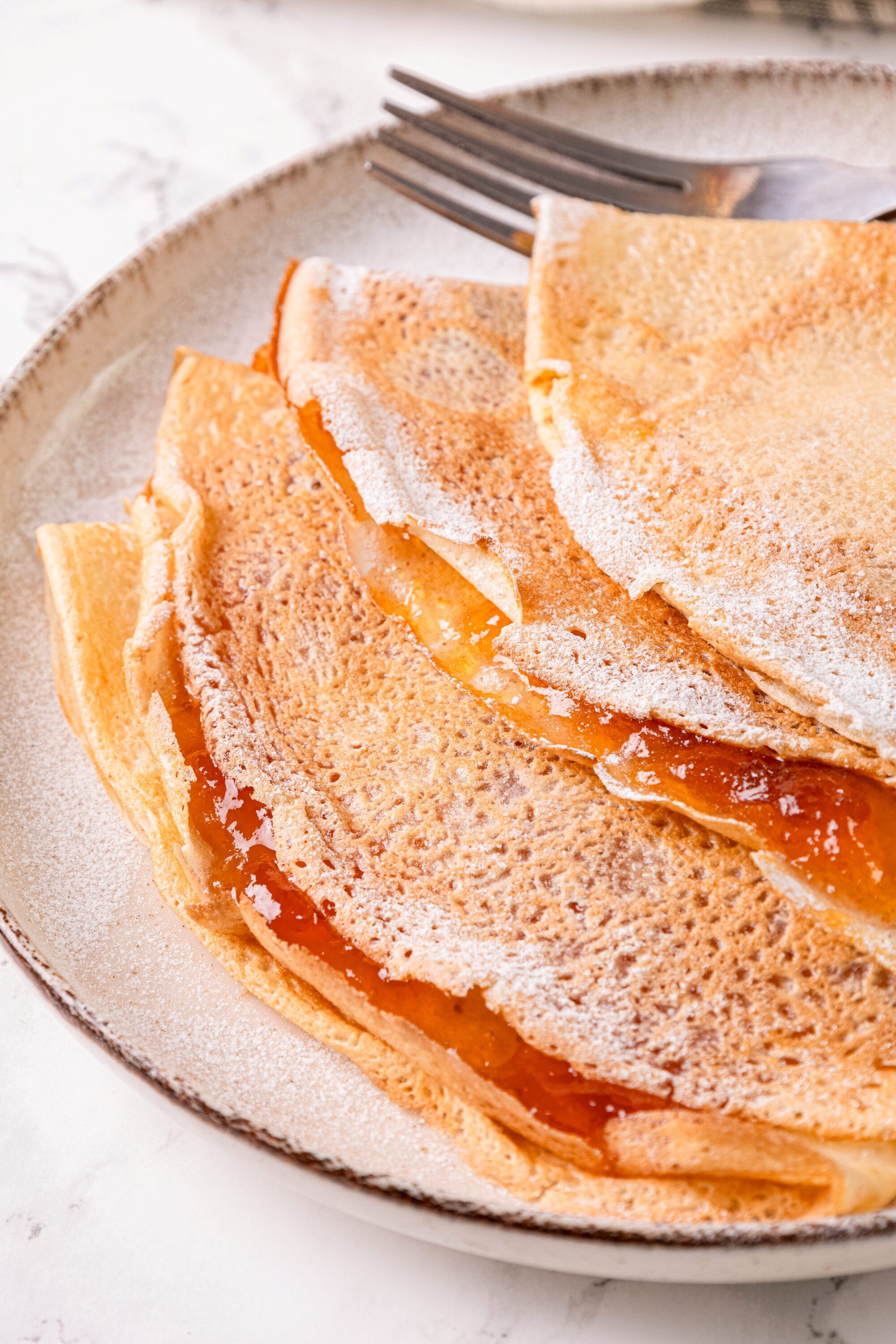
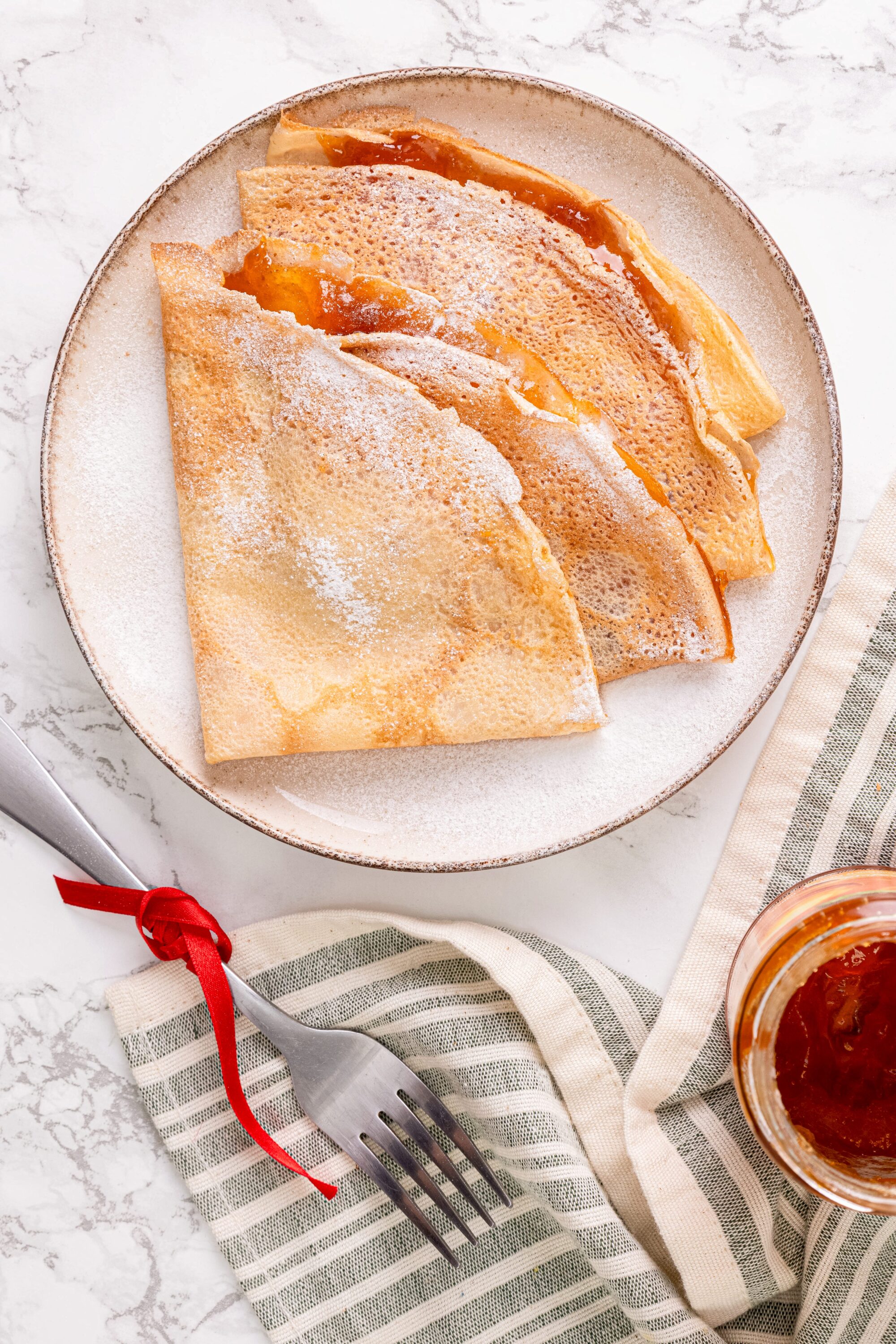
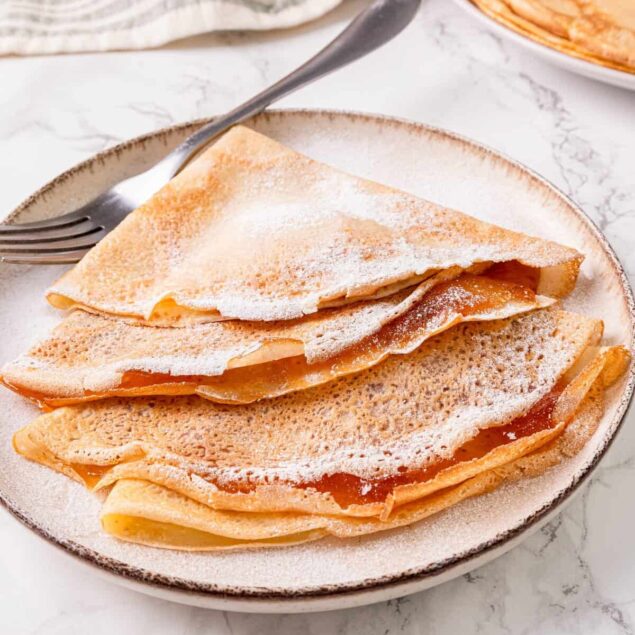
Sure, you could stick to the classics and serve your crêpes with jam, caramel au beurre salé (that’s ‘salted caramel’ in French), Nutella, or powdered sugar. But why not dress up these delicate delights into chef-worthy creations?
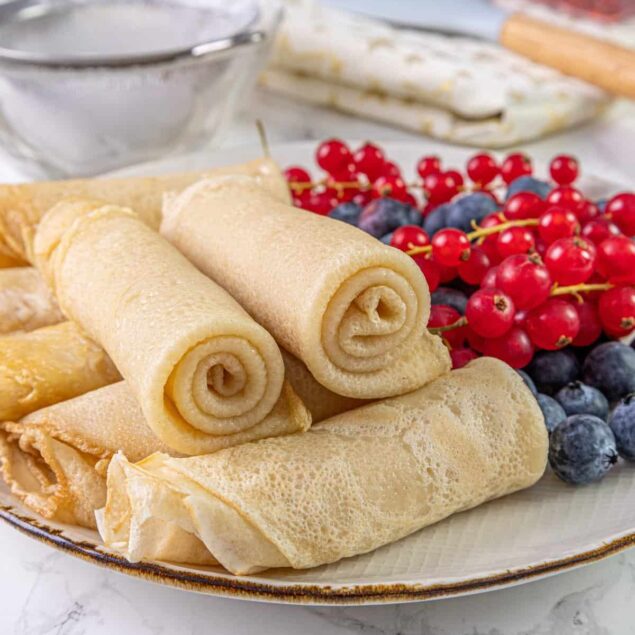
If it’s sweet you’re after, spread a luscious layer of dark chocolate ganache over your crêpe and top it with fresh raspberries or strawberries. In the mood for something lighter and brighter? Swirl a dollop of tangy lemon curd on your crêpe and top it with mixed berries. I’m quite fond of crêpes served with caramelized apples sautéed in brown sugar, cinnamon, butter, and a splash of rum. Of course, we can’t forget a classic, citrusy crêpes suzette. The recipe calls for cooking the crêpes in a buttery orange sauce and then flambéing them with a splash of Grand Marnier.
If savory crêpes are more your style, try sautéed wild mushrooms (I especially love porcini and chanterelles) and melted Comté, seasoned with a whisper of garlic and fresh thyme. I wouldn’t hesitate to drizzle a little truffle oil over these crêpes just before serving. Another elegant option is thinly sliced smoked salmon layered with lemon-infused crème fraîche, fresh dill, and a scattering of capers.
These decadent ideas will turn your crêpes into an impressive creation worthy of a chic Parisian café.
How to Make Ahead and Store
French crêpes are best enjoyed fresh, but you can make them ahead. You can make the batter 1 to 2 days in advance and store it in an airtight container in the fridge. After making the crêpes, place parchment paper between each one and store them in an airtight container in the fridge for up to 2 days or in the freezer for up to 3 months.
Serving Suggestions
Looking for more recipes that will transport your taste buds to a cozy brasserie in the City of Light? Try this classic French Onion Soup made with gently caramelized onions and topped with cheesy toast. And why not do as the French and enjoy an apéritif (pre-dinner drink) such as this elegant French 75 Cocktail? If it’s rustic French country cuisine you’re in the mood for, try making this Bacon Quiche Recipe (better known as a ‘quiche Lorraine’ in France) or a succulent Poulet Rôti. Bon appétit!
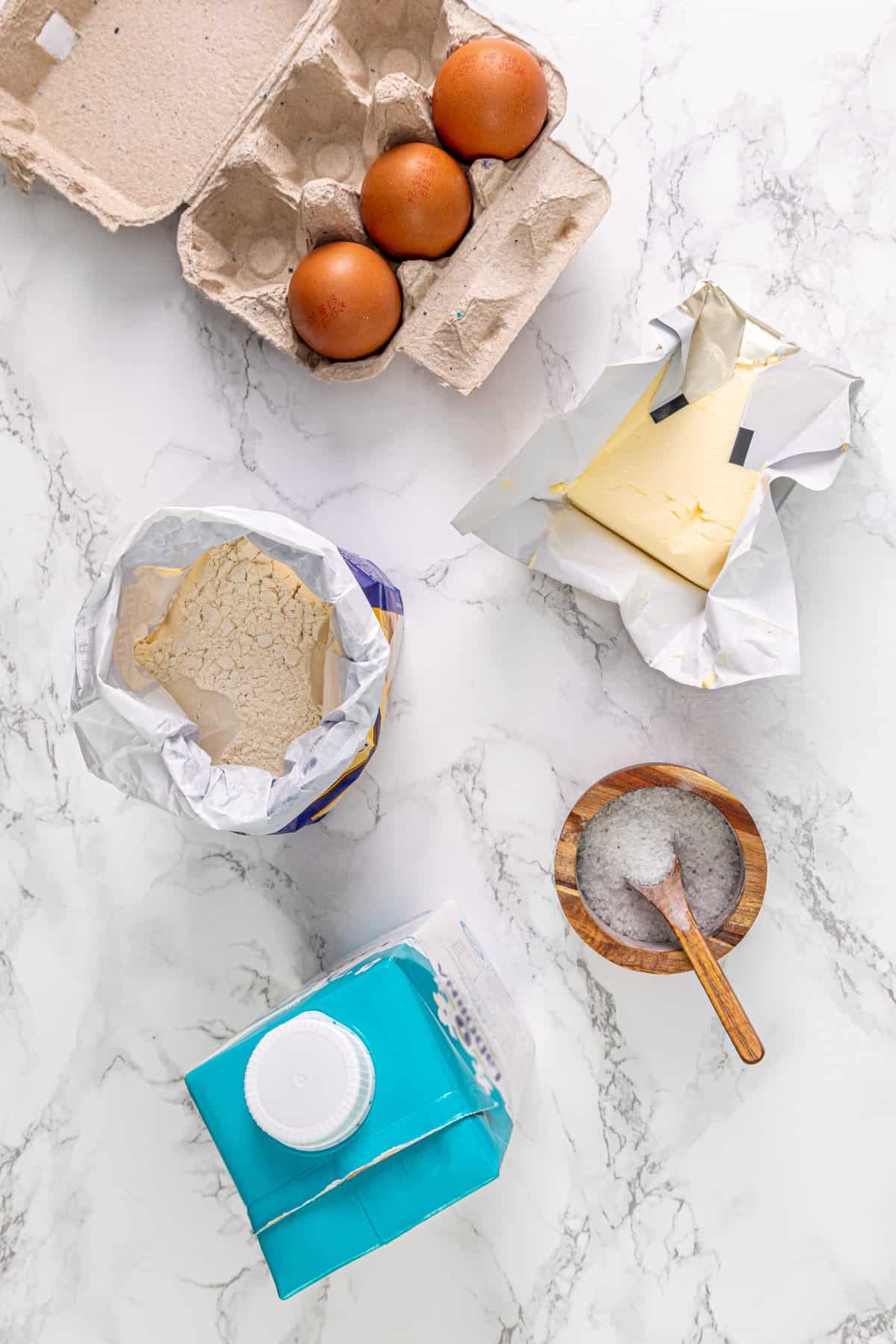
Ingredients
- 2 cups all-purpose flour
- 3 large eggs
- 1/4 teaspoon salt
- 2 cups whole milk
- 2 tablespoons unsalted butter melted
Instructions
- In a large mixing bowl, whisk together the flour, eggs, and salt.

- Gradually pour in the milk, whisking constantly, until the batter is smooth and free of lumps.

- Stir in the melted butter until well combined. Let mixture sit for at least 15 minutes.

- Heat a nonstick skillet over medium heat, and lightly coat with butter or oil.
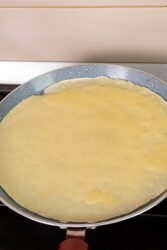
- Pour a small amount of batter into the center of the skillet, tilting and swirling the pan to spread the batter thinly and evenly.

- Cook for 1 to 2 minutes, or until the edges begin to curl and the bottom is lightly golden. Flip and cook the other side for an additional minute.
- Remove from the skillet and repeat with the remaining batter. Serve warm with your choice of sweet or savory fillings.

Nutrition Info:
Nutrition information are estimates only and may vary based on the specific brands, ingredients, and portion sizes you use. This data is provided for informational purposes only.



Leave a Comment