

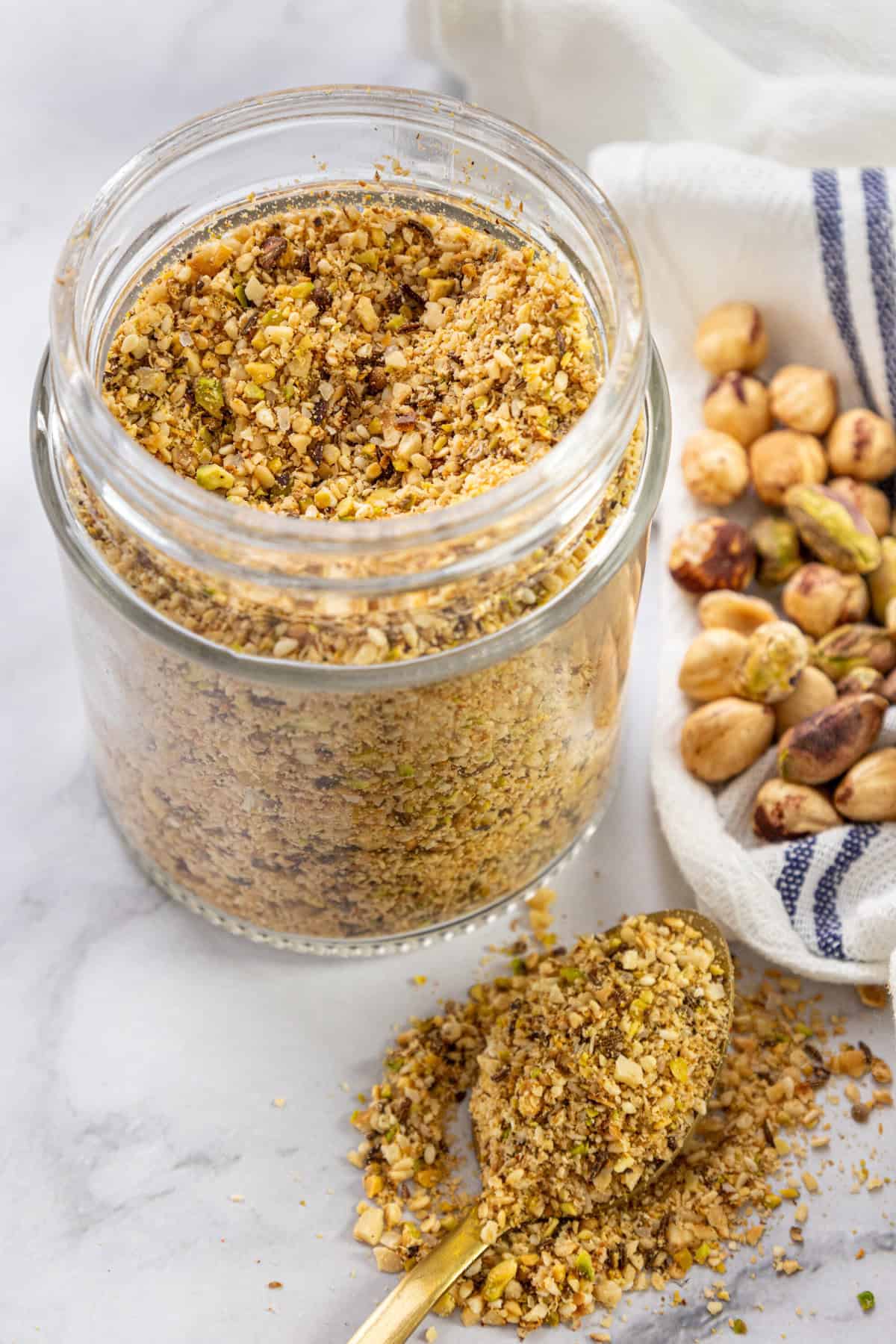
Egyptian Dukkah, a tasty medley of spices, seeds, and nuts, will enhance your cooking with a unique balance of crunch and flavor.
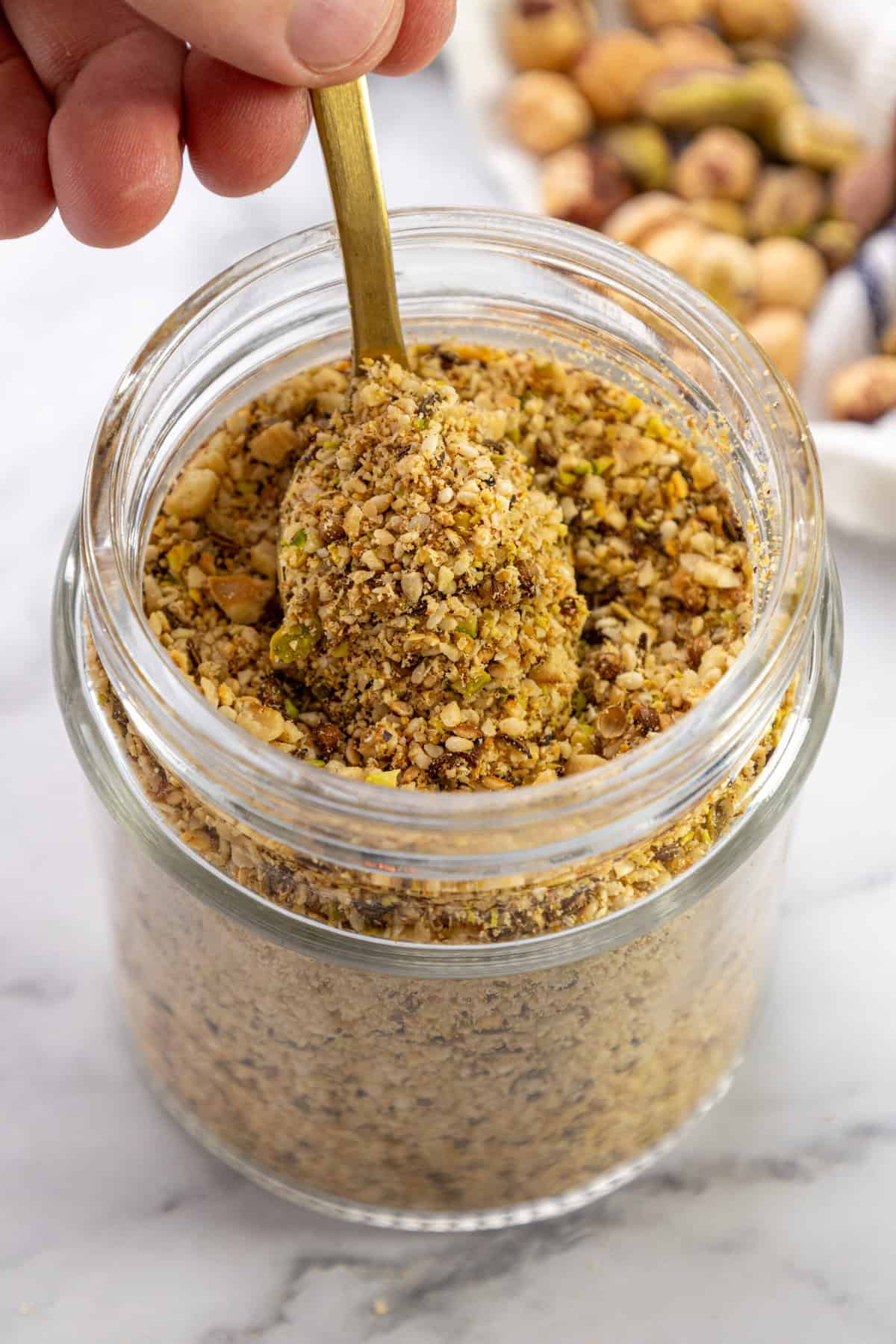
Dukkah was first made in ancient Egypt as a seasoning for bread. Supposedly, each ingredient that was added to the dukkah mix held a symbolic meaning and the resulting mixture was popular among all classes of Egyptians. Dukkah later spread across Northern Africa and eventually throughout the Middle East, too.
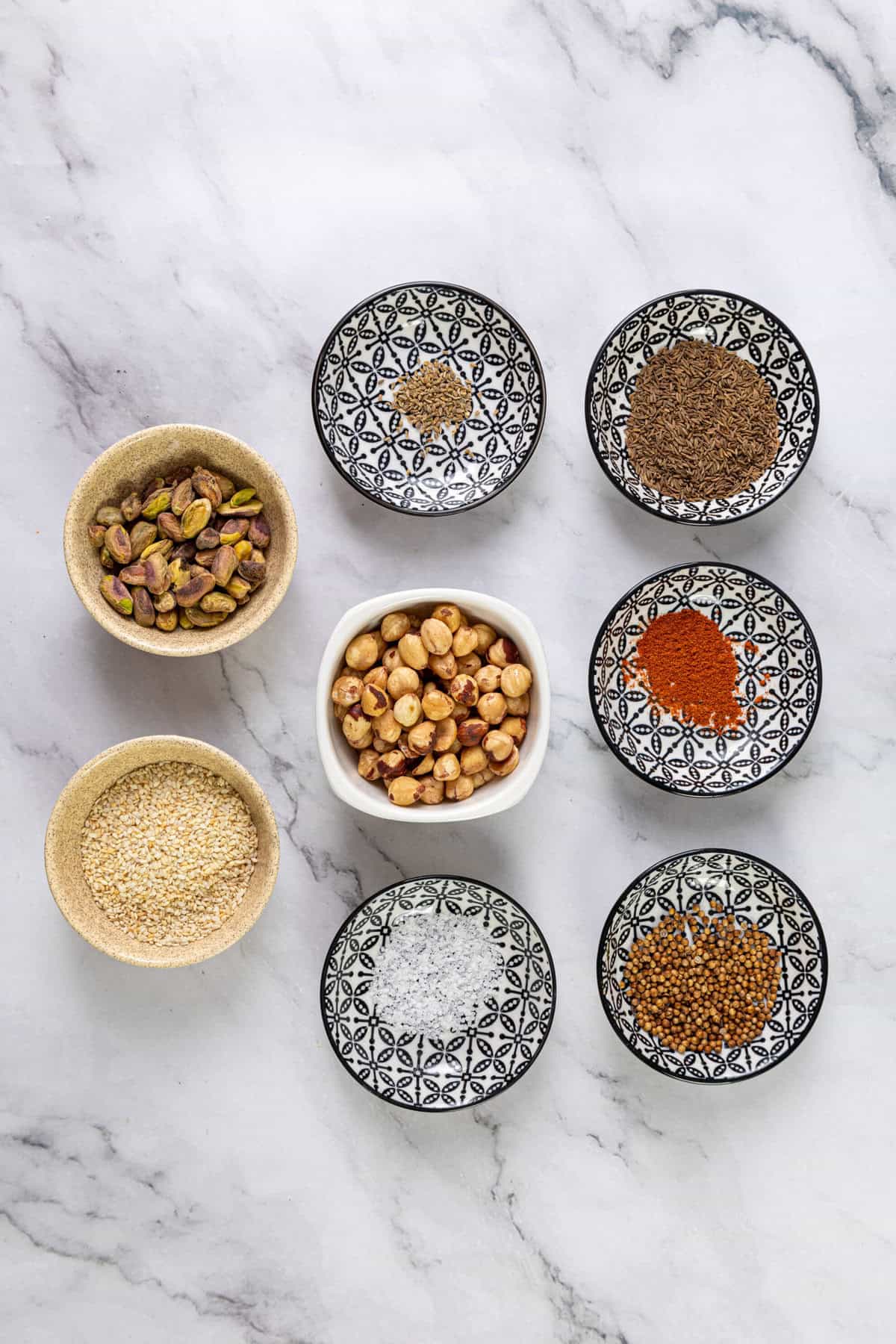
Originally, dukkah was made by pounding whatever spices, nuts, and seeds were on hand. The word dukkah is Arabic and means “to pound.” While the exact ingredients may vary, it traditionally consists of hazelnuts, sesame seeds, caraway seeds, cumin, coriander, and ground chili pepper. This array of flavors gives a combination of sweet, spicy, nutty, and salty that is totally incomparable. I would say the flavors are reminiscent of baked falafel, tahini, and pistachio butter, but… it can be sprinkled. Can you imagine that? Maybe? Ok, just go ahead and make it. It’s great.
A batch of homemade dukkah will last about a month and works great as a topping, dip, or coating. I love new recipes that are so versatile. Especially one like dukkah, which is so unique, has that wow factor, AND is simple to make. You’re just pounding toasted nuts and seeds or (better yet) tossing them in the food processor, but you get an exotic bite.
Is Dukkah Healthy?
Yes, dukkah is healthy. This crunchy mix adds a medley of flavors without adding empty calories or saturated fat. The nuts contain protein and healthy fats and are low in carbs. Additionally, the spices used in this recipe — cumin, coriander, and cayenne — are rich in antioxidants which may have beneficial health properties.
Is Dukkah the Same as Za’atar?
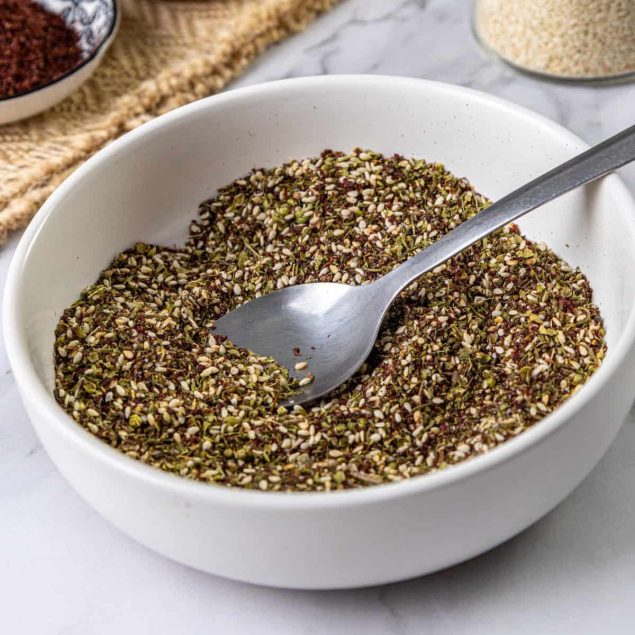
While both dukkah and za’atar are Middle Eastern and have similar ingredients, there are distinct differences. Dukkah is coarse and crunchy, made with mainly nuts and seeds. This gives it a nutty and almost sweet flavor. Za’atar is more of a seasoning consisting of thyme, oregano, and other herbs and spices and is finer like a powder. Both are great, worldly mixes you should add to your spice rack and cooking collection.
How to make ahead and store
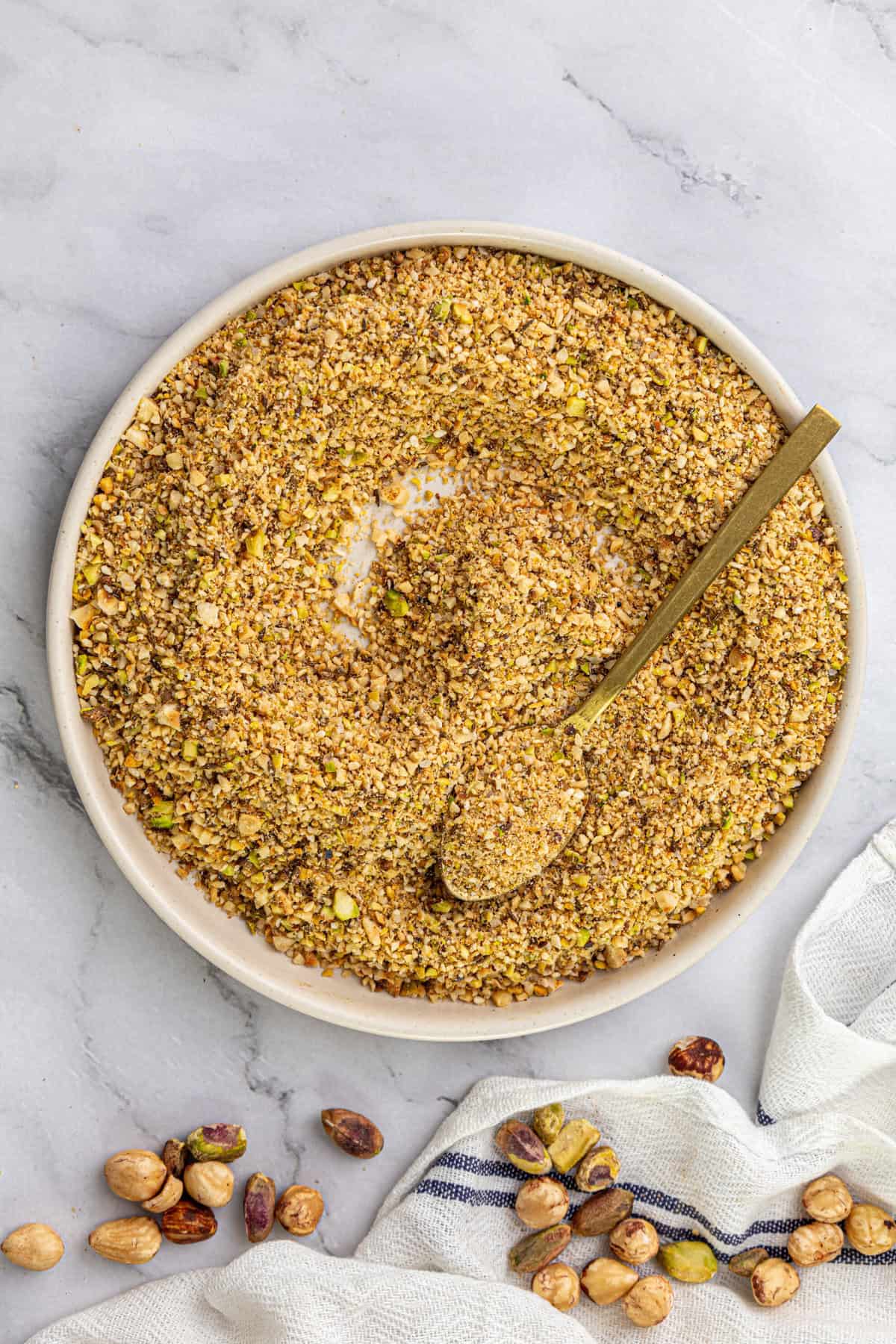
Dukkah should be stored in an airtight container in a cool, dry place for up to a month. You can also store it in the freezer.
Serving Suggestions
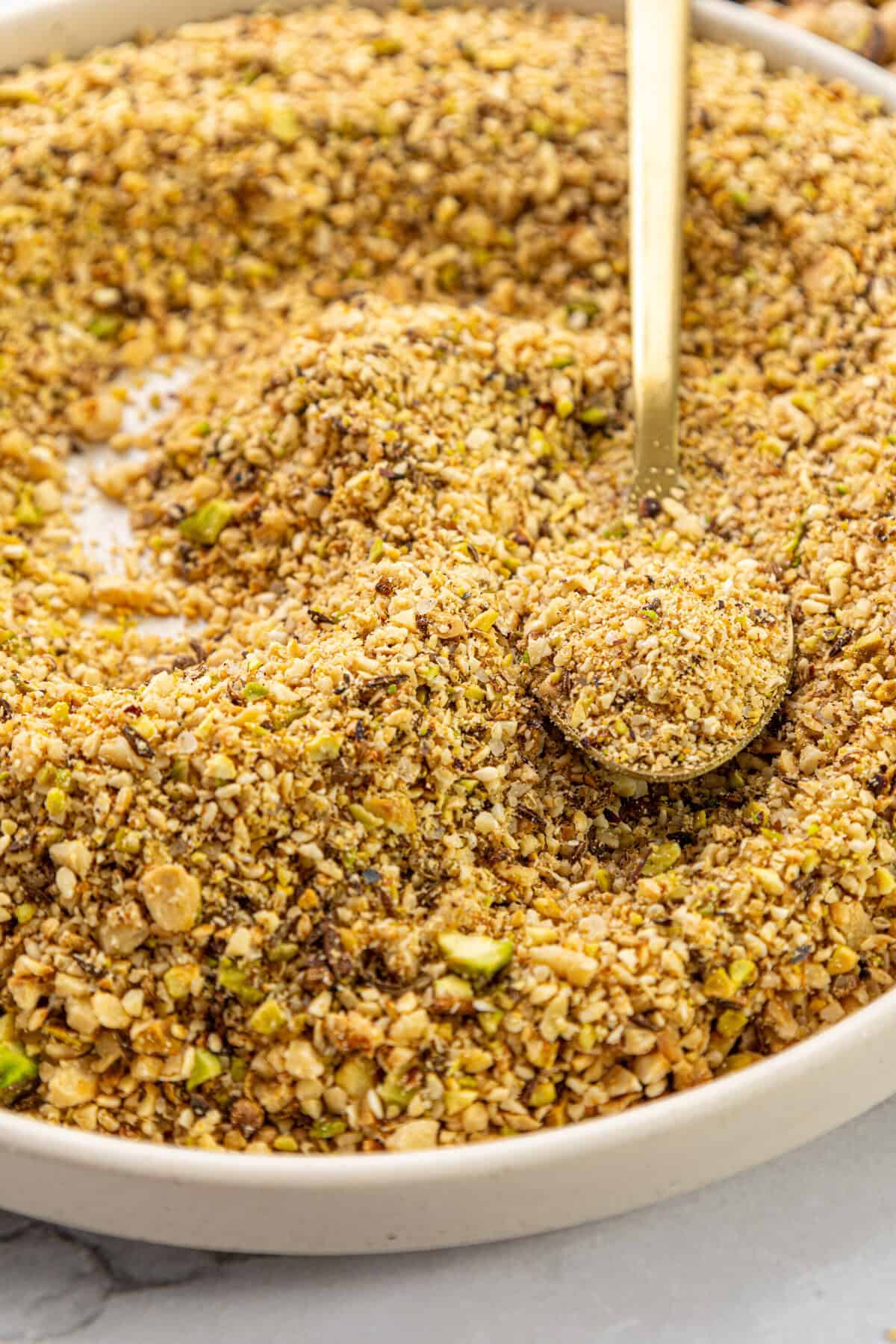
Returning to dukkah’s origins, serve it with naan or pita bread and olive oil. Try this garlic-infused olive oil or fancy bread-dipping oil for an added layer of flavor. Dukkah is also a perfect addition to breakfast. Use it like granola to top Greek yogurt, or add it to avocado toast with eggs. Finally, for an extra crunch in your salads, use dukkah as you would croutons or nuts. The flavorful mix goes well with Mediterranean fattoush salad or eggplant salad.

Ingredients
- 1/2 cup hazelnuts
- 1/4 cup sesame seeds
- 1/4 cup pistachios
- 1 tablespoon cumin seeds
- 1 tablespoon coriander seeds
- 1/4 teaspoon fennel seeds
- 1/2 teaspoon sea salt
- 1/4 teaspoon ground cayenne pepper
Instructions
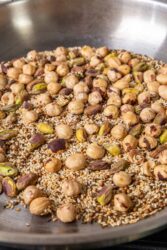
- Toast the hazelnuts, pistachios, sesame seeds, cumin seeds, and coriander seeds in a dry skillet over medium heat until fragrant and slightly golden, about 5 minutes.
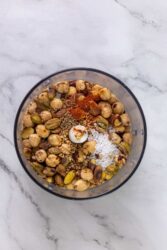
- Transfer the toasted nuts and seeds to a food processor. Add fennel seeds, sea salt, and cayenne pepper. Pulse until coarsely ground, not too fine.
- Store the dukkah in an airtight container in a cool, dry place for up to a month.
Nutrition Info:
Nutrition information are estimates only and may vary based on the specific brands, ingredients, and portion sizes you use. This data is provided for informational purposes only.


Leave a Comment