

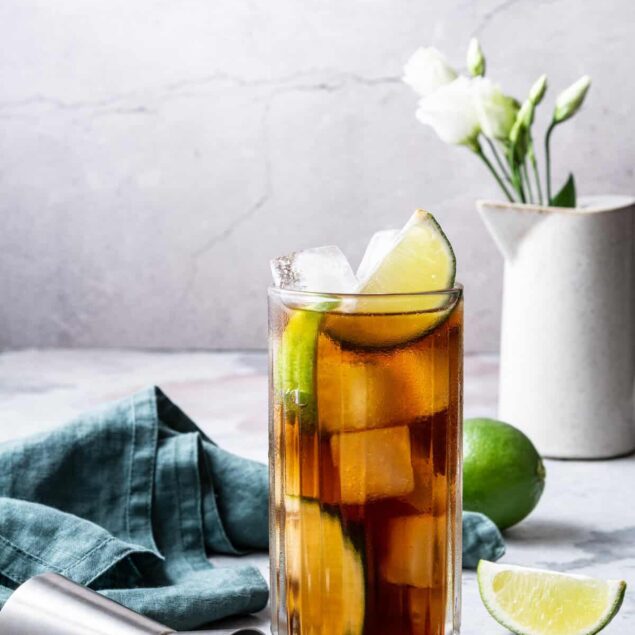
Transform an ordinary highball into a celebration of independence with this quick and easy recipe for a historic, rum-laced cocktail!
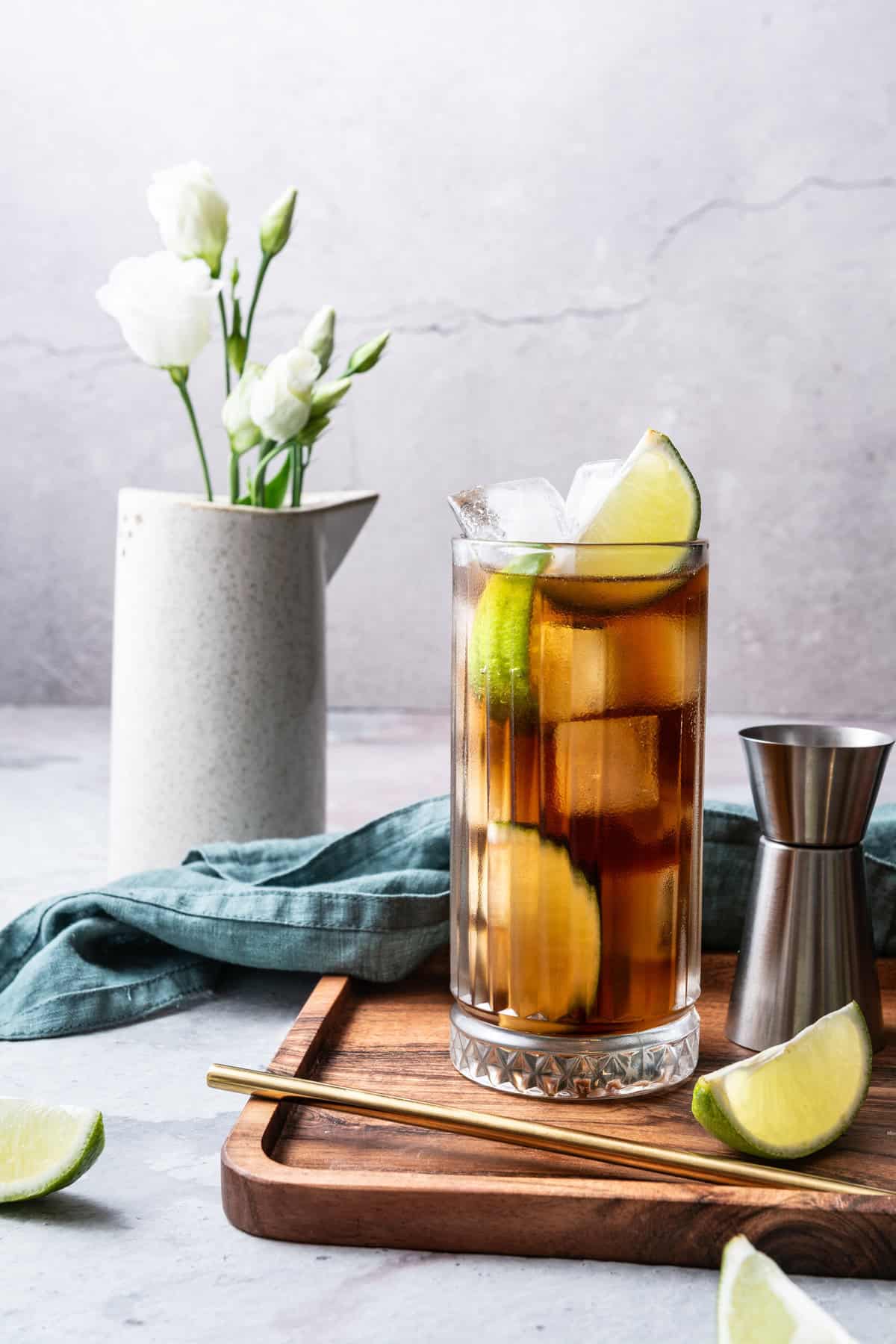
When I was younger, I liked sweet drinks. My go-to in college was a rum and coke. The syrupy soda masked any hint of alcohol—and rum is made from sugar, so it suited my undeveloped palate just fine. As I matured, I gravitated toward drinks with less sugary profiles, like whiskey sours and gin and tonics. Then a friend who’d spent some time in Havana suggested I try a Cuba Libre. The first sip felt like a grown-up version of my fave from university!
This Cuba Libre drink recipe honors that full-circle experience. It combines the rum-and-cola duo of my youthful days with freshly squeezed lime juice for an elevated yet refreshing experience.
You might think a little citrus isn’t enough to make a big difference, but it’s the key to this iconic beverage. The acidity of lime juice helps temper the sweetness from both the cola and the rum, transforming it from an ordinary highball into a distinct cocktail with a unique character. I strongly recommend freshly squeezed over bottled for the crispest tang.
Dark rum adds deeper caramel and vanilla notes, while light rum keeps the drink clean and refreshing. And any cola will do as the mixer—but Mexican Coke is the classic choice. It’s made with cane sugar instead of high-fructose corn syrup, so it delivers a flavor profile closer to versions served in Havana.
The spirited history of this drink
The Cuba Libre cocktail carries a story as spirited as its flavor—a symbol of both celebration and independence. Most historians trace its origins to Havana around 1900. The Spanish-American War had just ended, and Cuba had become a U.S. protectorate while pursuing formal independence from Spain. Along with U.S. soldiers and entrepreneurs, American products began arriving on the island—like that symbol of American indulgence, Coca-Cola. Legend has it that one evening, an American serviceman ordered a mix of Bacardi rum, Coca‑Cola, and fresh lime at a Havana bar. As he raised his glass to toast Cuba’s freedom, he cried ¡Por Cuba libre!—”for a free Cuba!”—and the cocktail’s name was born.”
The drink’s popularity spread quickly, blending American influence with Cuban pride in a way that captured the optimism of a new nation. That spirit of freedom and friendship gave the Cuba Libre its lasting identity as a liquid toast to independence.
How do I store leftovers?
I find leftover Cuba Libres do not store well because the carbonation from the cola fades quickly. However, you can refrigerate a leftover drink in an airtight container or bottle for up to 24 hours—it’ll taste fine but be less fizzy. I give it a splash of fresh soda and a squeeze of lime to revive its brightness.
Freezing this drink isn’t ideal either, unless your intent is a slushy-style cocktail. Combine all the ingredients, pour the mixture into a freezer-safe bag or container, and freeze for up to 1 month. When you’re ready to enjoy, give the frozen mix a quick whirl in the blender.
To batch for a party, I mix just the rum and fresh lime juice ahead of time and chill it in a sealed bottle or pitcher for a few hours. Portion and add the cola only right before serving to preserve its fizz.
Serving suggestions
I serve Cuba Libres alongside dishes that celebrate its international roots. A Cubano Sandwich is a natural pairing, but Shrimp Tacos also pair beautifully with the drink’s citrusy character. For true multicultural vibes, go for this Grilled Mexican Quesadilla Recipe With Lentils or spicy Slow-Cooker Jerk Chicken Curry.
Ingredients
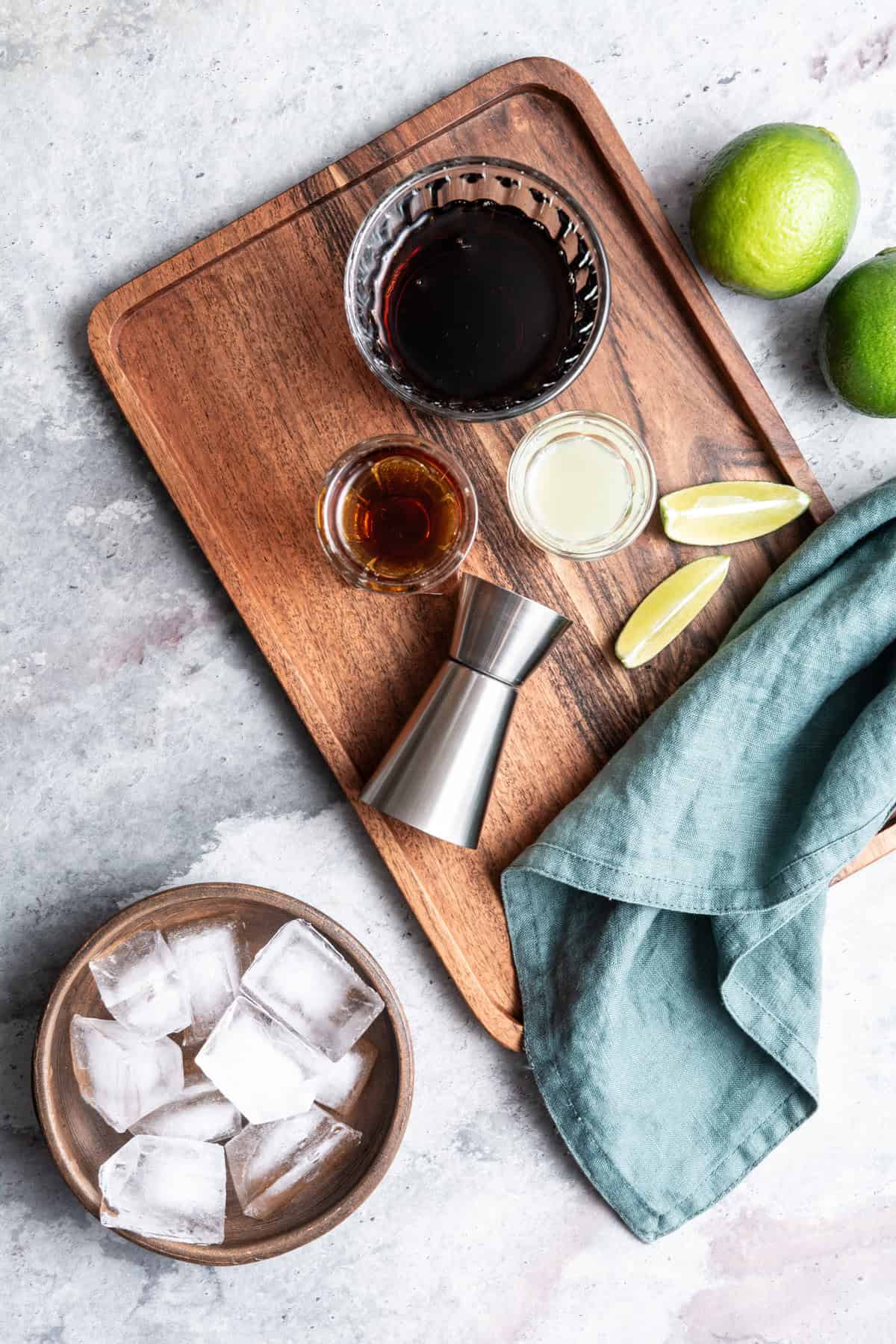
- 2 ounces rum light or dark
- Juice of half a fresh lime
- Cola chilled, to top
- Lime wedge or wheel optional, for garnish
Instructions
- Fill a highball glass with ice cubes.
- Add the rum and freshly squeezed lime juice.

- Top with chilled cola, pouring slowly to preserve fizz.

- Stir gently to combine.

- Garnish with a lime wedge or wheel, if desired. Serve immediately.
Nutrition Info:
Nutrition information are estimates only and may vary based on the specific brands, ingredients, and portion sizes you use. This data is provided for informational purposes only.


Leave a Comment