

A more nutritious way to enjoy the rich flavors of this classic, comforting dish.

Growing up, beef stroganoff was a family dinner staple on busy weeknights. In winter especially, it was always a comforting, savory dish that everyone loved. For over 150 years, it’s been a staple on so many other tables around the world, too. Beef stroganoff originated in Russia and was named after the prominent Stroganov family. The first known recipe appeared in 1871, in a Russian cookbook by Elena Molokhovets titled A Gift to Young Housewives. The dish would go on to spread to France in the late 19th century by a French chef working in Saint Petersburg who submitted it to a French culinary magazine. It also became a popular dish at hotels and restaurants in China before the start of World War II. By the 1950s, Russian and Chinese immigrants had brought beef stroganoff over to the United States, where it rose in popularity as well.
Today, the dish is well known across the world, with variations also present in Brazil, Japan, and Scandinavia. The key word here, though, is variation. As time has passed and beef stroganoff has travelled the globe, ingredients have frequently changed. Though the original Beef Stroganoff is recorded to have been made with “beef cubes,” then “strips” in the French instance, the version of beef stroganoff I ate as a kid was almost always made with ground beef, a more accessible and wallet-friendly option for busy families. Yet ground beef isn’t exactly the healthiest option. So, for this recipe, we’re going to return to this dish’s roots to create a healthy beef stroganoff with lean beef sirloin.
You’ll also be using mushrooms for this recipe, an ingredient absent from the original beef stroganoff but one that has found its way into most modern takes on the dish. We’ll also be returning to beef stroganoff’s roots with the use of Greek yogurt (sort of). Traditional beef stroganoff uses smetana, a type of sour cream popular in Eastern Europe, but this started to frequently be replaced with cream in the 20th century. The Greek yogurt is not only a closer match to smetana, as it will replicate the creamy tanginess of traditional stroganoff, but also acts as a healthier alternative to cream.

What is sirloin steak?
If you’re not familiar with different cuts of beef, let’s get to know sirloin steak. This cut of meat comes from the top, rear part of the cow, running from the 13th rib to the end of the hip bone. This area of the animal is categorized by top sirloin or bottom sirloin (the latter usually just referred to as sirloin). Sirloin is considered to be a leaner cut of beef, though top sirloin steak or top loin steak from the same area of the cow is known to be even leaner but more expensive. So for this recipe, opting for lean sirloin steak is good enough in my books, especially as it’s more affordable. Sirloin is usually broken down into boneless cuts, so when you’re cooking with it, you won’t have to worry about working with any bone.
When it comes time to prepare your sirloin steak for this Healthy Beef Stroganoff, make sure to cut it against the grain—which means cutting into the meat along the opposite direction of its muscle fibers. By doing so, you’ll make the meat more tender and easier to chew by shortening the muscle fibers.
How do I store leftovers?
If you have leftovers of your stroganoff, you can store them in an airtight container in the fridge for up to 4 days. For longer storage, you can keep your leftovers in the freezer, also in an airtight container, for up to 3 months. Whichever you choose, make sure your leftovers are completely cooled before storing.
To reheat, I suggest doing so on the stovetop at medium heat, stirring often and being careful not to overheat the mixture, as it could make the beef become rubbery. You could also add a touch more beef broth when reheating if you find your leftovers aren’t as saucy as they were after the initial cooking.

Serving suggestions
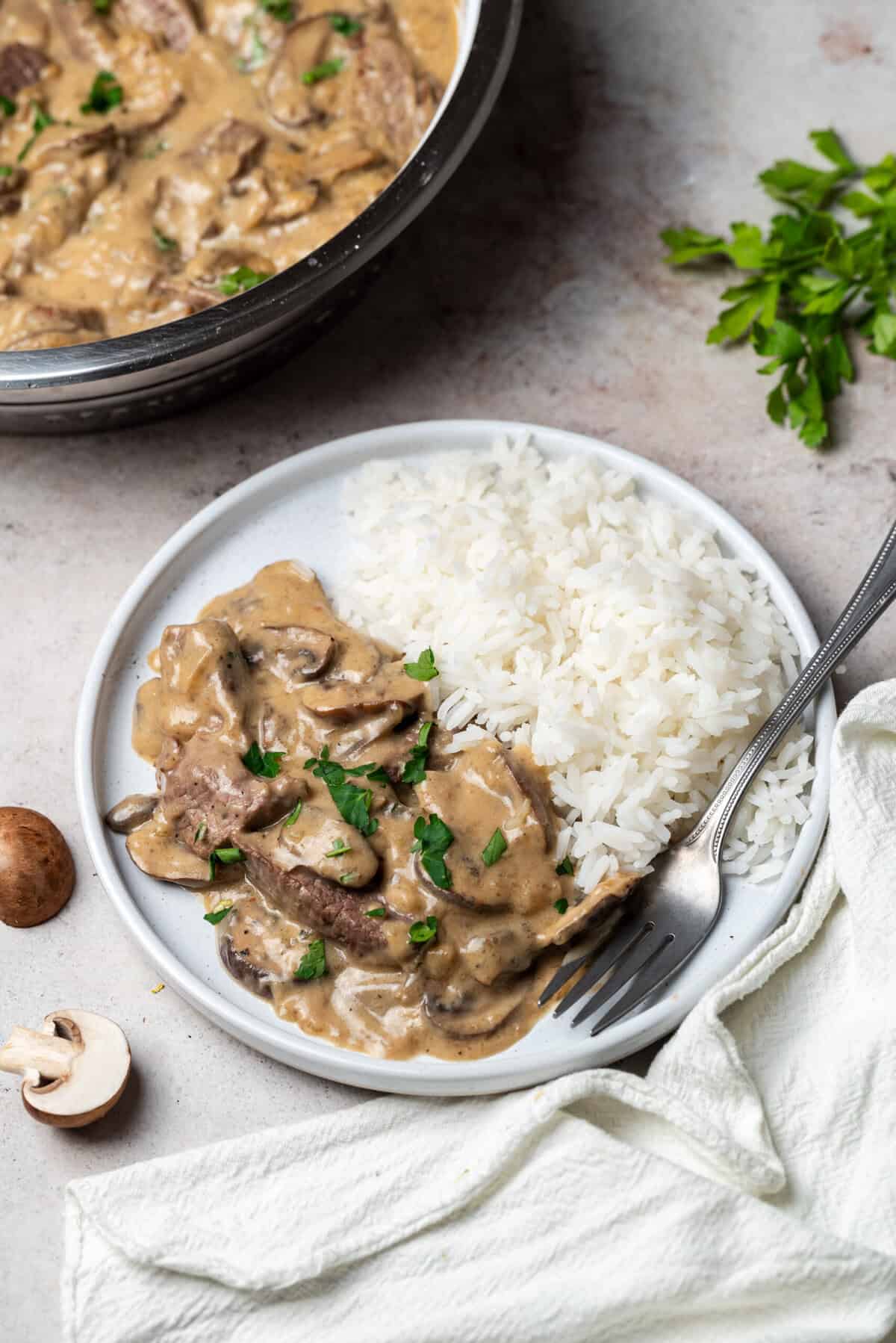
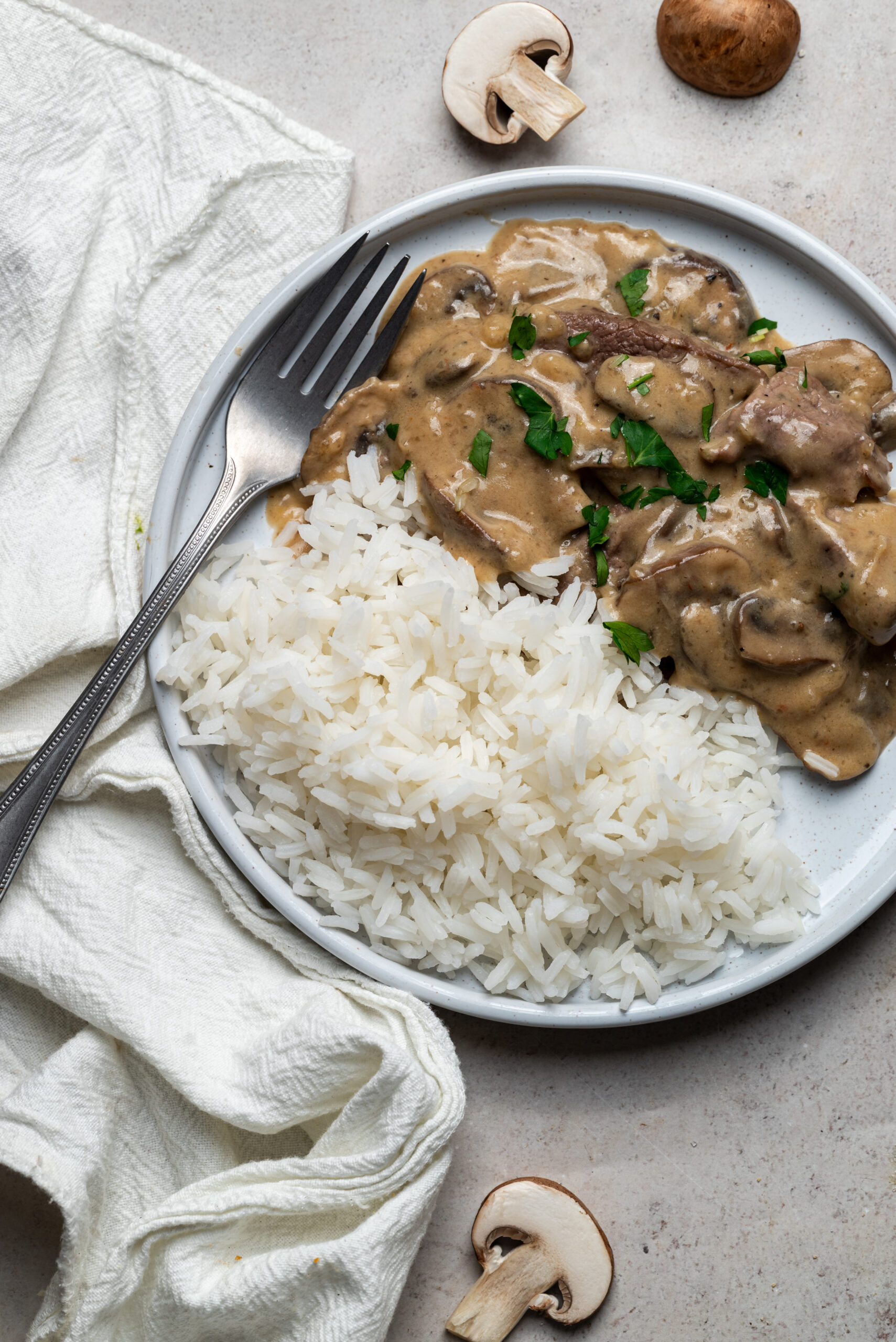
Beef stroganoff is usually served with egg noodles or rice, but it’s really up to you how you want to enjoy yours. If you want to keep this recipe as healthy as possible, you could have Brown Rice instead of white rice, or even go for Cauliflower Rice. Try Roasted Cauliflower Rice with garlic, onion, and rosemary, or if you really want to lean into the mushroom flavors, give this Mushroom Cauliflower Rice a shot.

Ingredients
- 1 pound lean beef sirloin sliced thinly against the grain
- ½ teaspoon kosher salt divided
- ¼ teaspoon black pepper divided
- 2 tablespoons olive oil divided
- ½ large yellow onion thinly sliced
- 10 ounces baby bella mushrooms sliced
- 4 cloves garlic minced
- 2 tablespoons all-purpose flour
- 1 tablespoon Worcestershire sauce
- 4 teaspoons Dijon mustard
- 1 pinch ground nutmeg
- 2 cups low-sodium beef broth
- ⅔ cup plain 2% Greek yogurt room temperature
- Fresh chopped parsley for garnish, optional
Instructions
- Season the beef with ¼ teaspoon salt and ⅛ teaspoon pepper. Heat 1 tablespoon olive oil in a large skillet over medium-high heat. Add the beef strips in a single layer and quickly sear for about 1-2 minutes per side until browned. Remove the beef and set aside.

- Add the remaining olive oil to the same skillet. Add the sliced onion, mushrooms, and minced garlic and cook for 5-7 minutes, or until the vegetables are tender and starting to brown.
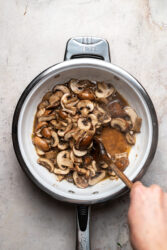
- Sprinkle the flour over the vegetables and stir for 1 minute. Add the Worcestershire sauce, Dijon mustard, nutmeg, and the remaining salt and pepper.

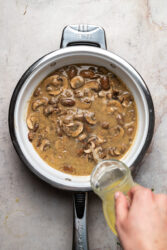
- Gradually pour in the beef broth while whisking to eliminate any lumps. Simmer for about 5 minutes until the sauce thickens slightly.
- Return the beef to the skillet and stir to combine. Reduce the heat and whisk in the Greek yogurt until the sauce is creamy. Adjust seasoning if needed.
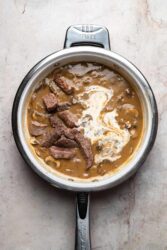
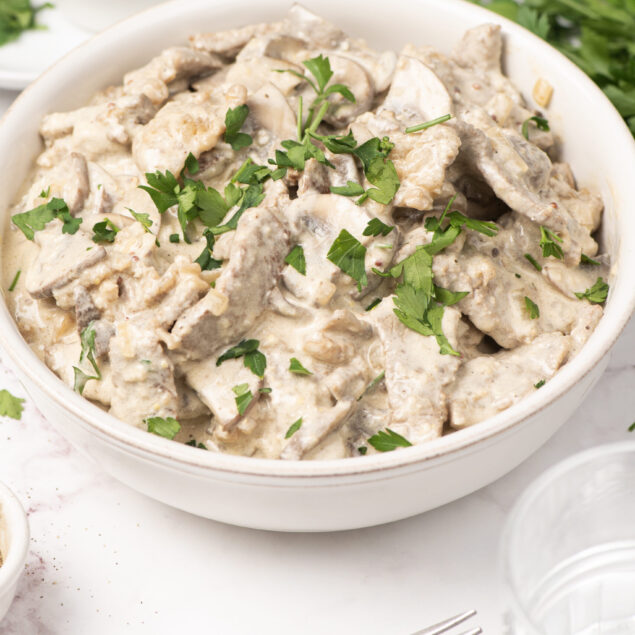
- Garnish with fresh chopped parsley, serve over your favorite noodles or rice, and DEVOUR.
Nutrition Info:
Nutrition information are estimates only and may vary based on the specific brands, ingredients, and portion sizes you use. This data is provided for informational purposes only.



Leave a Comment