

Smoky, spicy, fruity, and tangy, this spread will show you a Tunisian good time.
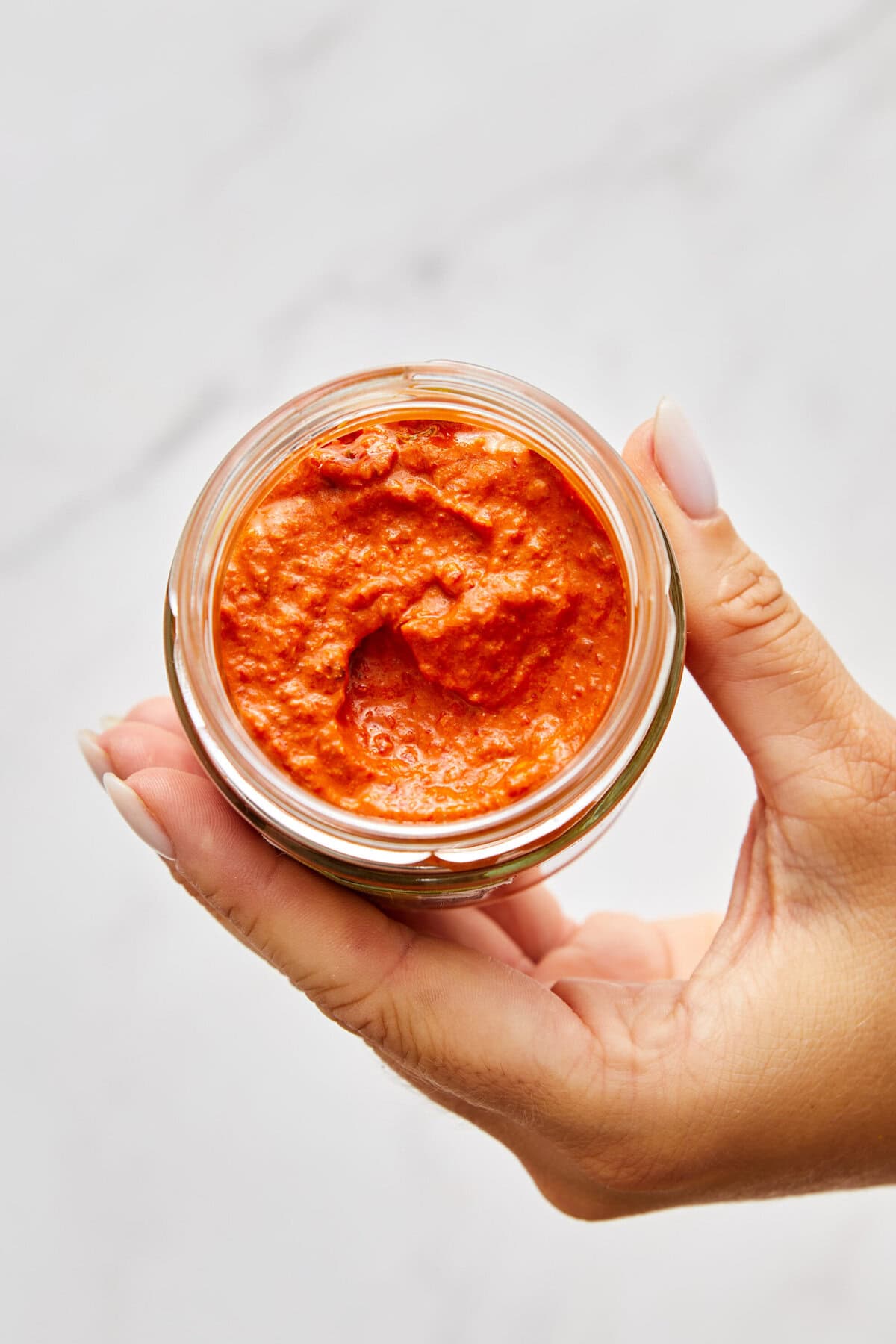
I lived with three roommates in the Lower Haight district of San Francisco for four years, including the first year of the pandemic. We banded together with nightly family dinners, a 5 p.m. cocktail hour, and an unbroken streak of 60 nights of homemade desserts. Roxie was the king of pickling, always testing out peppers, vinegars, and spices to see what would go best with his sourdough baking (the global sourdough craze of 2020 invaded our house, too). Wearing his apron and urging us to call him “Abuelita,” he eventually made harissa paste from scratch by soaking, roasting, and grinding peppers and seeds. After several rounds of Manhattans, the four of us consumed several loaves of homemade sourdough slathered with homemade harissa, killing the whole jar that night.
Harissa has its roots in the Maghreb, also known as Northwest Africa. For centuries, locals there smashed peppers and spices to create this rich spread. Nowadays, Tunisia is the biggest exporter of jarred harissa, and the United Nations Educational, Scientific, and Cultural Organization (UNESCO) has listed it as part of Tunisia’s Intangible Cultural Heritage.
The name harissa is derived from the word harassa, the Arabic verb meaning “to crush” or “to pound.” Tunisia uses the spicy dip as an ingredient in meat and fish stews and to flavor couscous. Algeria uses it as a rub for eggplant, while Morocco prefers a less-seasoned version for their tagines (a type of stew). The UNESCO designation helps to explain its rich cultural history, as Tunisian families lovingly recall laying out chilis to dry in the sun and making large vats of the paste together as a family.
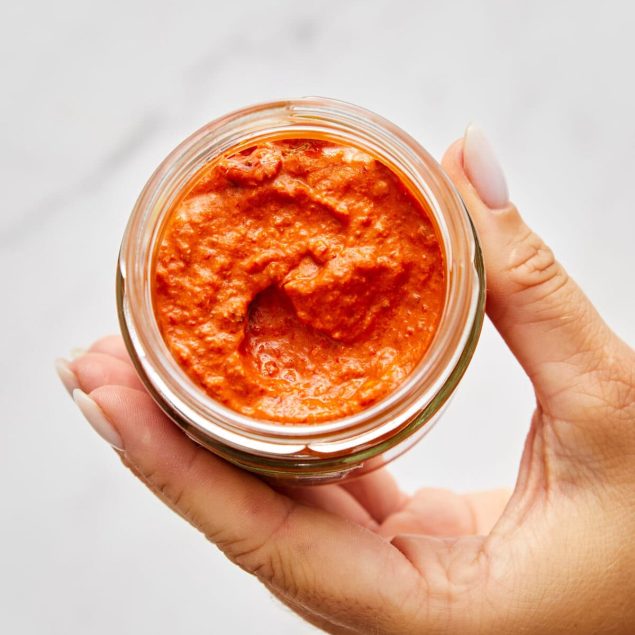
Harissa is incredibly tasty. It’s a spicy and smoky blend of peppers, seeds, spices, citrus juice, and oil to create this savory, creamy spread with just a hint of sweetness and a bit of fruitiness. A little goes a long way, so keep your spice radar finely tuned if you are sensitive. It is truly a one-of-a-kind flavor; nothing can replicate it.
Is Harissa Healthy?
Health-wise, you’ve just stumbled onto a winner. No preservatives, no sugar, no dairy… this is the real deal to get your dip fix. Olive oil is, of course, one of the healthiest oils, rich in monounsaturated fats. Red chilis are rich in vitamins and antioxidants, garlic has anti-inflammatory properties, and lemon juice provides vitamin C. The health benefits of harissa mean you have finally found a dip you can enjoy without the creamy calories of hummus or Lipton’s sour cream and onion dip. (Though I fully admit those are both still amazing!)
As a plus, this recipe is also suited to just about every dietary preference, including vegan, keto, Paleo, Whole30, dairy-free, and gluten-free.
Homemade Is Worth The Effort
If you’ve seen jars of harissa at your local grocery store, you may be wondering if a homemade version is worth the effort. But I’m here to tell you that it definitely is.
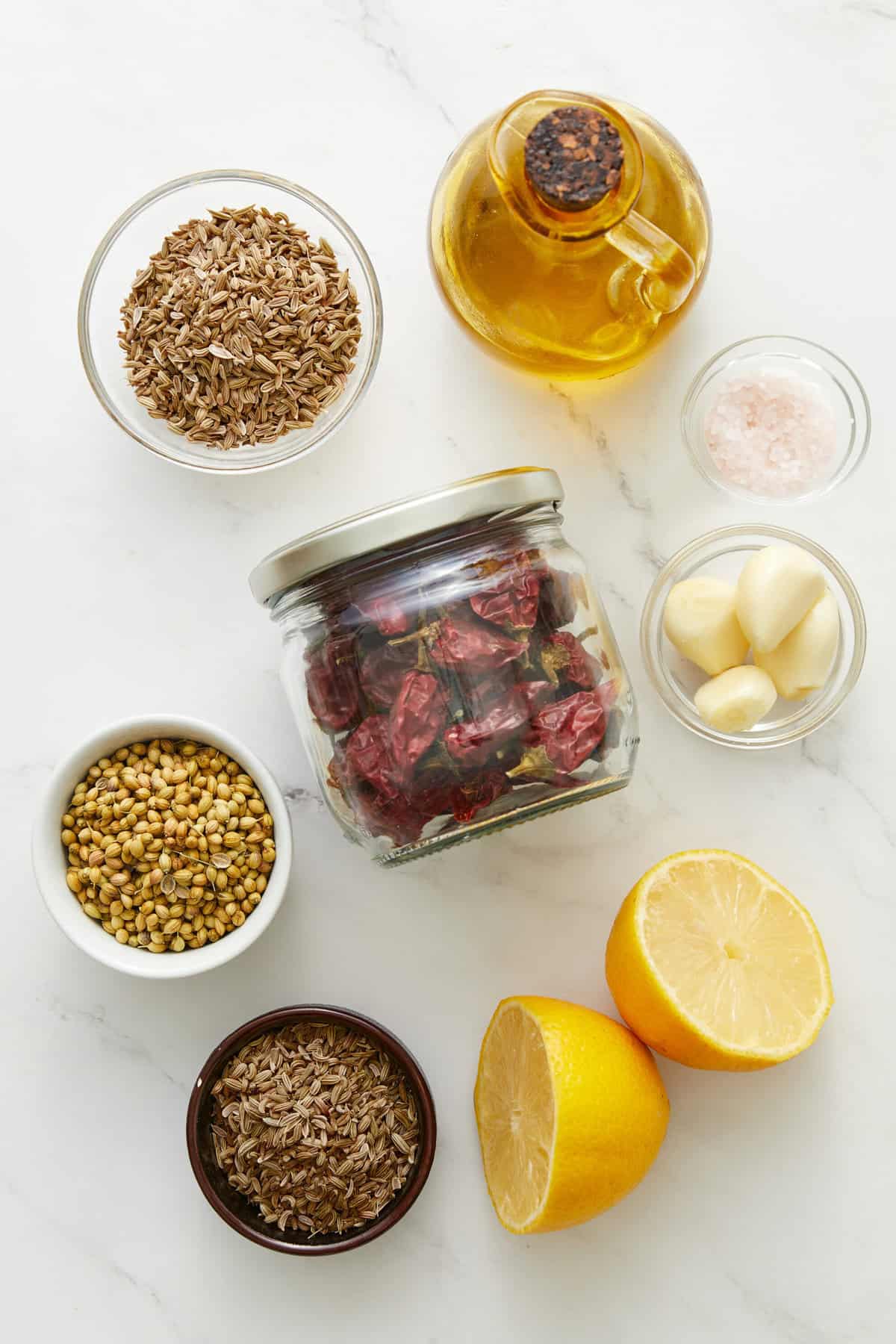
While store-bought harissa can be delicious, the homemade version takes those flavors to whole new heights. Once you make it yourself, there’s no going back. The dried chilis give it a deeper, smokier heat; the freshly toasted spices add warmth, depth, and complexity; and the fresh garlic and lemon juice make everything pop. Plus, when you’re making your own harissa, you can modify the spice level to your exact preferences. No more guessing what you’re going to get when you crack open a jar.
How Do I Store Leftovers?
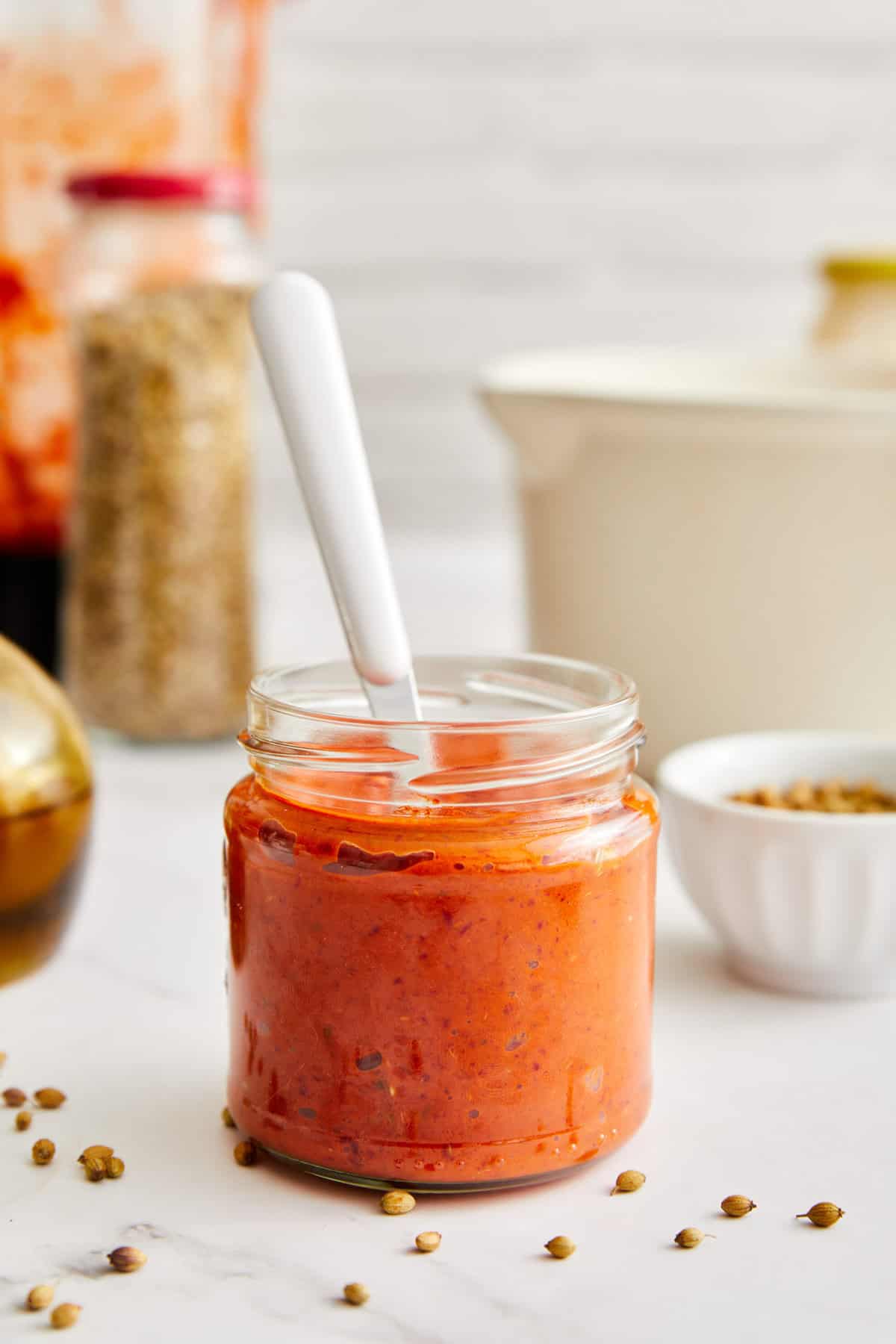
Store your homemade harissa in an airtight container in the fridge for about 1 month. Drizzle a thin layer of olive oil over the top to keep it fresh. Every time you use some, just add a little more oil before sealing it again. If you want it to last even longer, freeze it in small portions—ice cube trays work great for this.
Serving Suggestions
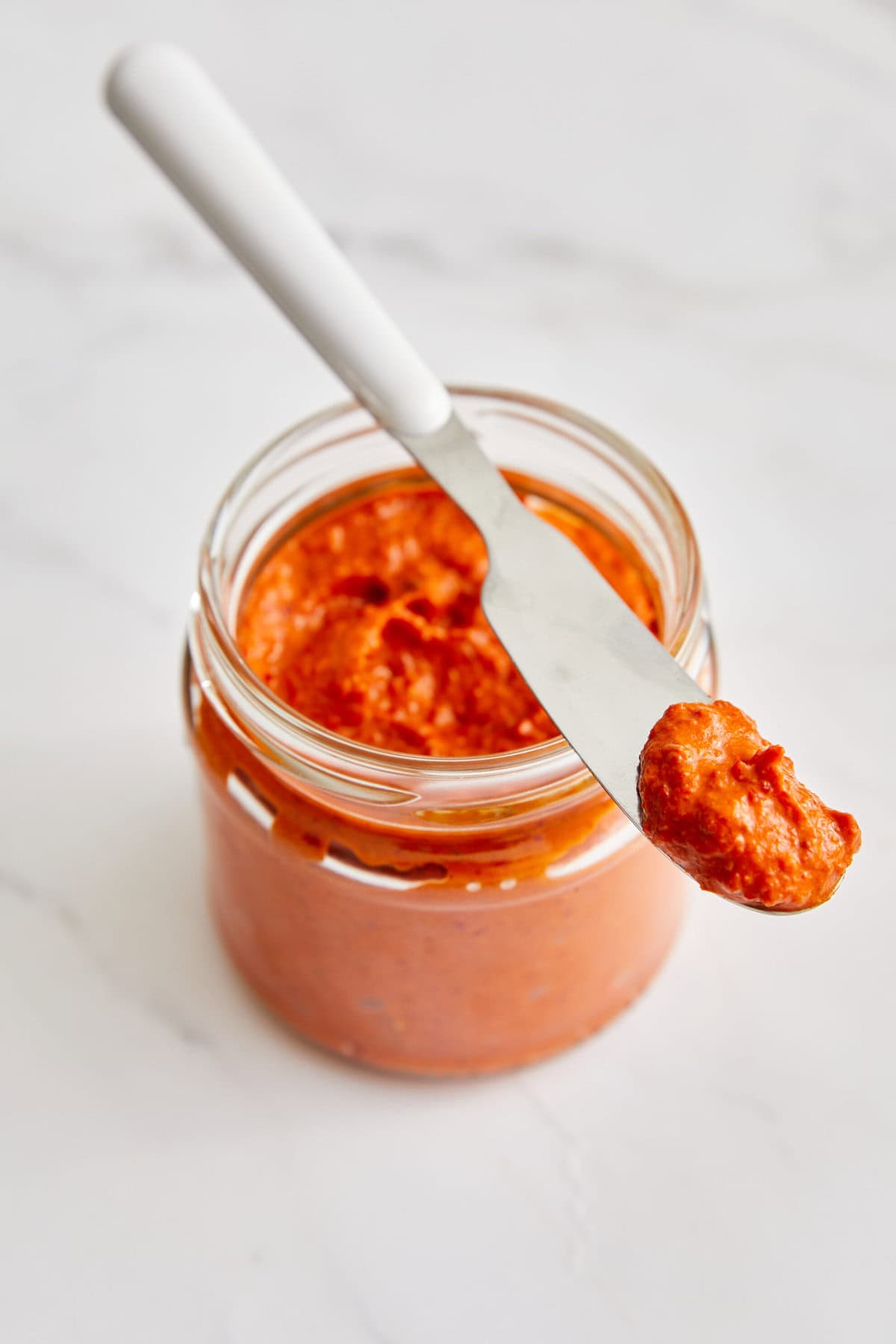
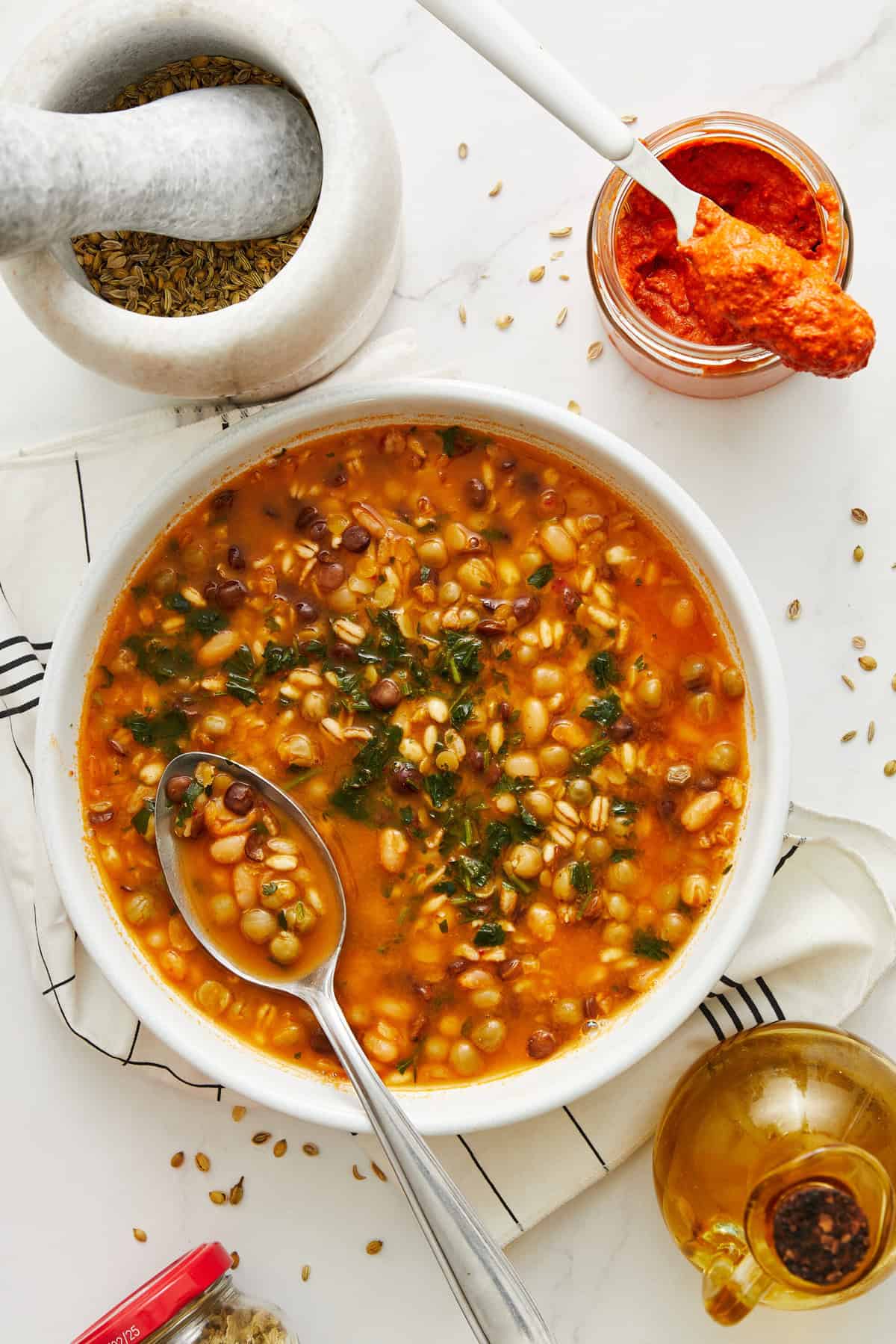
Tunisians eat harissa on everything from fish to eggs to bread. It is mixed into hummus and mayonnaise, used as a marinade for beef and lamb, and stirred into stews. Serve as a dip with pita bread and vegetables, or stir it into rice to give it an extra bite. There’s no wrong way to eat harissa.
For more harissa inspiration, try whipping up a Harissa Aioli. For keeping with your Maghreb meal theme, try this Classic Shakshuka, or make some Homemade Falafel and drizzle your harissa on top.
Ingredients
- 4 ounces dried chilis such as Guajillo
- 1 teaspoon caraway seeds
- 1 teaspoon coriander seeds
- 1 teaspoon cumin seeds
- 4 cloves garlic peeled
- 1 teaspoon kosher salt
- 2 tablespoons extra-virgin olive oil
- 1 tablespoon fresh lemon juice
Instructions
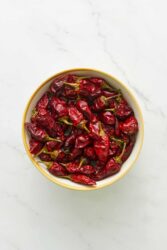
- Soften the chilis by placing them in a heatproof bowl and covering them with boiling water. Let soak for 30 minutes.
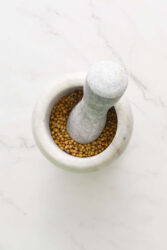
- Toast the caraway, coriander, and cumin seeds in a dry skillet over medium heat until fragrant, about 3 minutes. Grind the spices using a mortar and pestle or spice grinder.
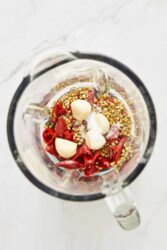
- Drain the chilis, remove and discard the stems and seeds. Combine the chilis, ground spices, garlic, and salt in a food processor. Process while slowly adding olive oil and lemon juice until a smooth paste forms.
Nutrition Info:
Nutrition information are estimates only and may vary based on the specific brands, ingredients, and portion sizes you use. This data is provided for informational purposes only.


Leave a Comment